Armed Forces Salaries and Allowances Increased by 100-138%, Says PM
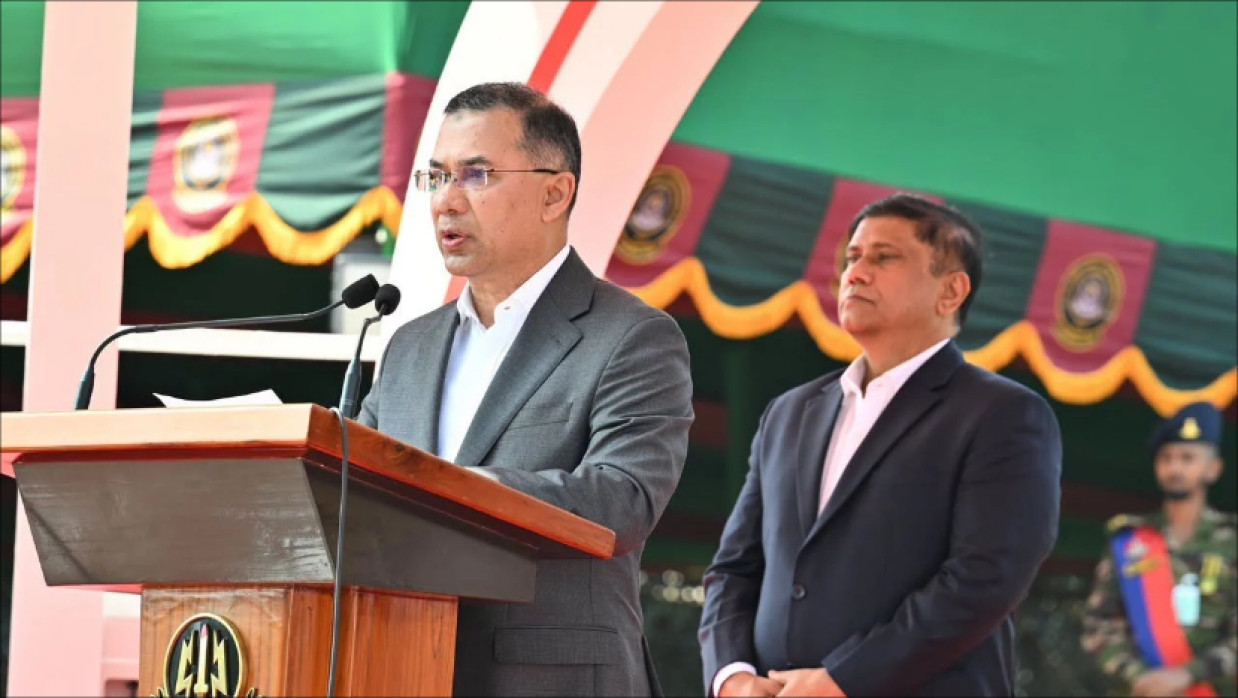
Prime Minister Tarique Rahman has said salaries and allowances for members of the armed forces have been increased by 100 to 138 per cent, while the government is working to implement the “One Rank, One Pension” system to improve the living standards of military personnel.
He also said the government was prioritising the establishment of a domestic defence industry to manufacture weapons, ammunition and other defence equipment within the country.
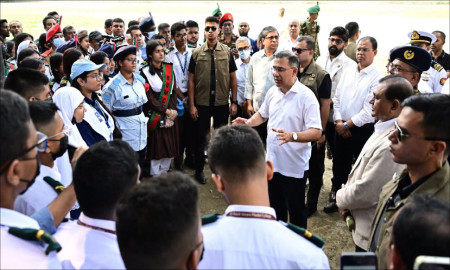
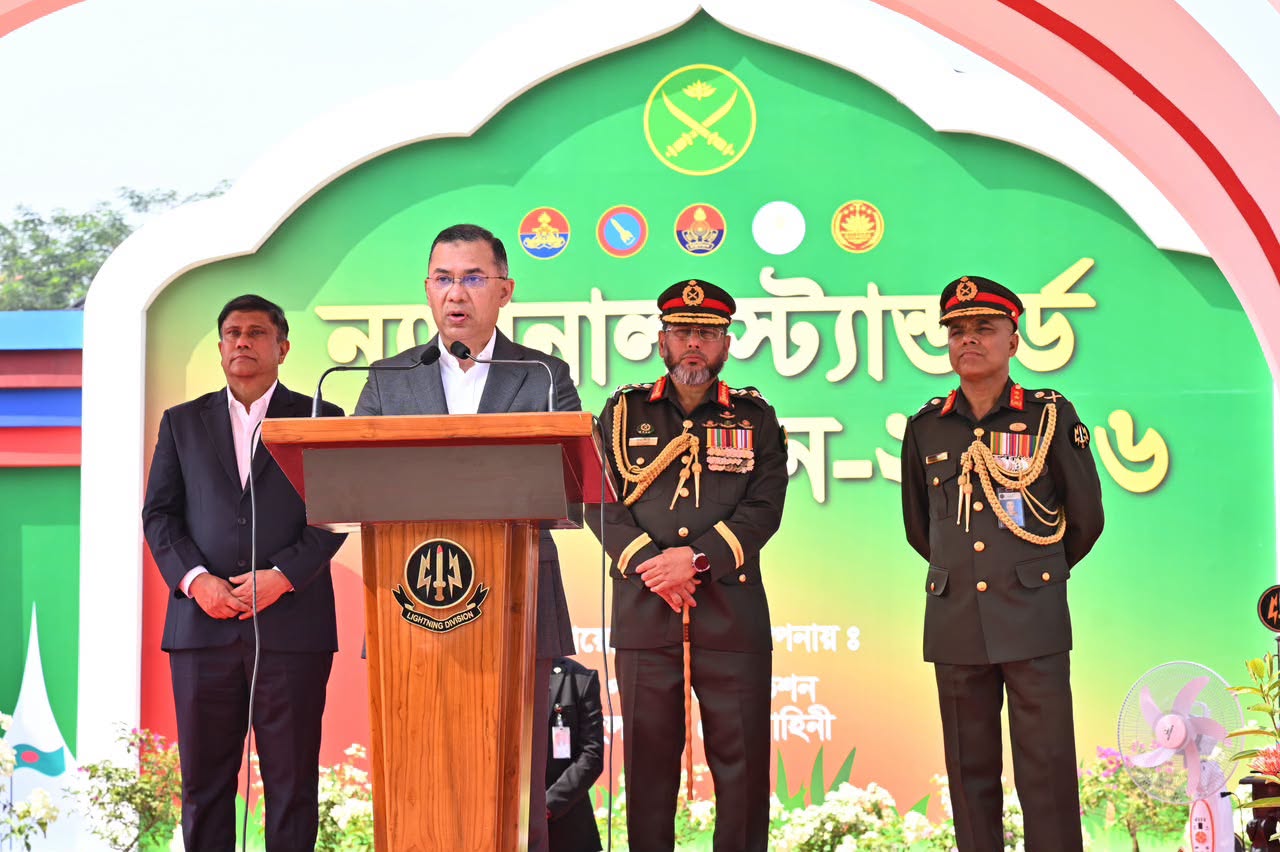
The prime minister made the remarks as the chief guest at a national standard presentation ceremony for several battalions and regiments on Sunday (October 18).
He said the government was giving serious consideration to the welfare of military personnel, including housing, healthcare, education, training, career development and social security after retirement.
Modernisation and discipline
Emphasising the modernisation of the armed forces, Tarique Rahman said the strength of a modern military was not limited to its weapons, equipment or manpower. Its real strength lay in discipline, competence, leadership, ethics, training and public trust.
“Above all, the chain of command is extremely important,” he said.
He said efforts to build a more technology-driven, skilled, disciplined, professional and modern armed forces were continuing. The public expected officers and soldiers at every level to remain committed to the Constitution, the law, military regulations and humanitarian values while performing their duties, he added.
Army's origins linked to Liberation War
Referring to the army's origins in the Liberation War, the prime minister said attempts had been made at different times to damage the image of the armed forces. However, he said, the Bangladesh Army was born out of the country's independence struggle and Liberation War.
He recalled that when Pakistani occupation forces launched a brutal attack on the people of Bangladesh on the night of March 25, 1971, Major Ziaur Rahman, then deputy commander of the 8th East Bengal Regiment in Chattogram, declared, “We revolt.”
Ziaur Rahman later returned to the 8th East Bengal Regiment, brought together Bengali-speaking officers and soldiers, and directed them to take part in the armed struggle, Tarique Rahman said.
Quoting Ziaur Rahman's article The Birth of a Nation, the prime minister said the former president had written that he addressed the battalion's officers, junior commissioned officers (JCOs) and soldiers at 2:15am on March 26, 1971, and instructed them to take up arms.
According to the prime minister, the personnel unanimously accepted the order.
Tarique Rahman said these accounts had been published in the now-defunct daily Bangla in 1972, the weekly Bichitra in 1974 and a special supplement of the daily Desh in 1980. He said the accounts demonstrated the close connection between Bangladesh's independence struggle and the birth of its army.
He also said Bengali-speaking members of the 1st, 2nd, 3rd, 4th and 8th East Bengal regiments had mounted armed resistance against Pakistani forces following the massacre launched on the night of March 25.
After the order to begin armed resistance was issued at 2:15am on March 26, Ziaur Rahman made another declaration of independence from Kalurghat Radio Station on March 27, which was broadcast at home and abroad, the prime minister said.
He described the role played by an army officer in Bangladesh's independence and Liberation War as a glorious and heroic chapter that continued to inspire the armed forces. Patriotic citizens who cherish independence regard the army's achievements as achievements for the country, he added.
Defence strategy amid changing security threats
Referring to the changing global security environment, Tarique Rahman said the nature and tactics of warfare were evolving rapidly.
Alongside land, sea and air operations, cyberspace, outer space, drones, artificial intelligence, electronic warfare and information-based capabilities had become important components of national security, he said.
The government was working to ensure that Bangladesh's defence preparedness kept pace with these changes, he added.
He said the government was prioritising the establishment of a domestic defence industry to produce essential weapons, ammunition and defence equipment while modernising all areas of the armed forces.
“Technology can never replace human beings,” he said, stressing the need for an integrated defence capability that would combine technological advancement with the ability of the army, navy and air force to operate together when required.
Armed forces' wider national and international role
Highlighting the armed forces' diverse responsibilities, the prime minister said they not only defended the country but also played important roles during disasters, floods, cyclones, fires and other national emergencies.
Bangladeshi military personnel also continued to serve with distinction in United Nations peacekeeping missions abroad, he said.
He added that protecting national interests, sovereignty and dignity would remain a central commitment for Bangladesh in the future. The country wanted to strengthen friendship and cooperation with all nations on the basis of mutual respect and equality, he said.
Six units receive National Standards
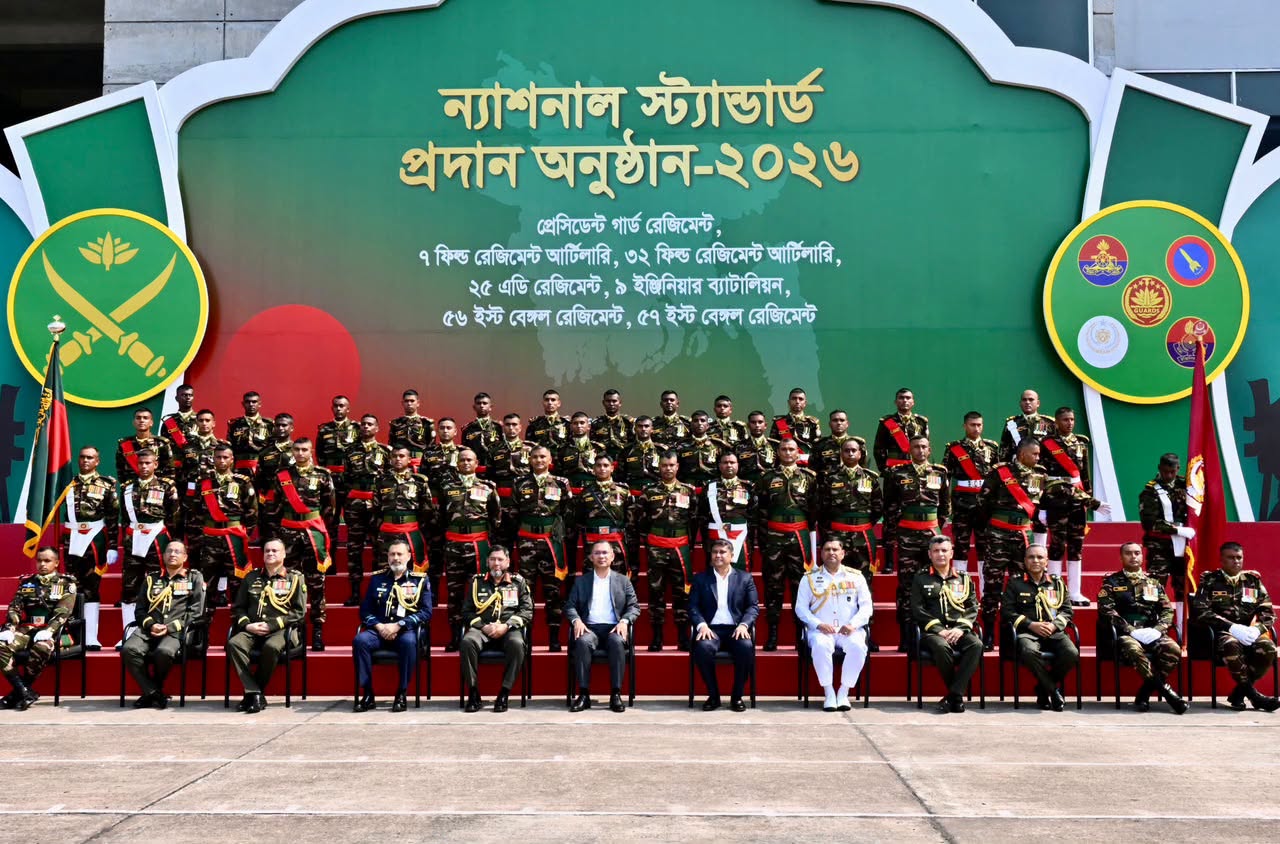
In recognition of their professional achievements, the 7th and 32nd Field Regiment Artillery, 25th Air Defence Regiment, 9th Engineer Battalion, 56th and 57th East Bengal regiments, and the President Guard Regiment received National Standards.
Congratulating the units, Tarique Rahman said a National Standard was more than a flag. It represented a unit's history, traditions, discipline, sacrifice, professionalism and commitment to the country.
Receiving the standard, he said, meant taking a renewed pledge to discharge assigned responsibilities with greater dedication. Safeguarding the honour of the flag was a sacred duty for every soldier, he added.
Cabinet members, advisers, the army chief, members of the diplomatic corps, serving and retired military officers, and personnel from different levels of the armed forces attended the ceremony.
The prime minister also thanked the relevant personnel of the 9th Infantry Division for organising the event.
 Follow The Daily Campus on Google News