Historic 7 March: The Speech That Set the Course for Bangladesh’s Independence
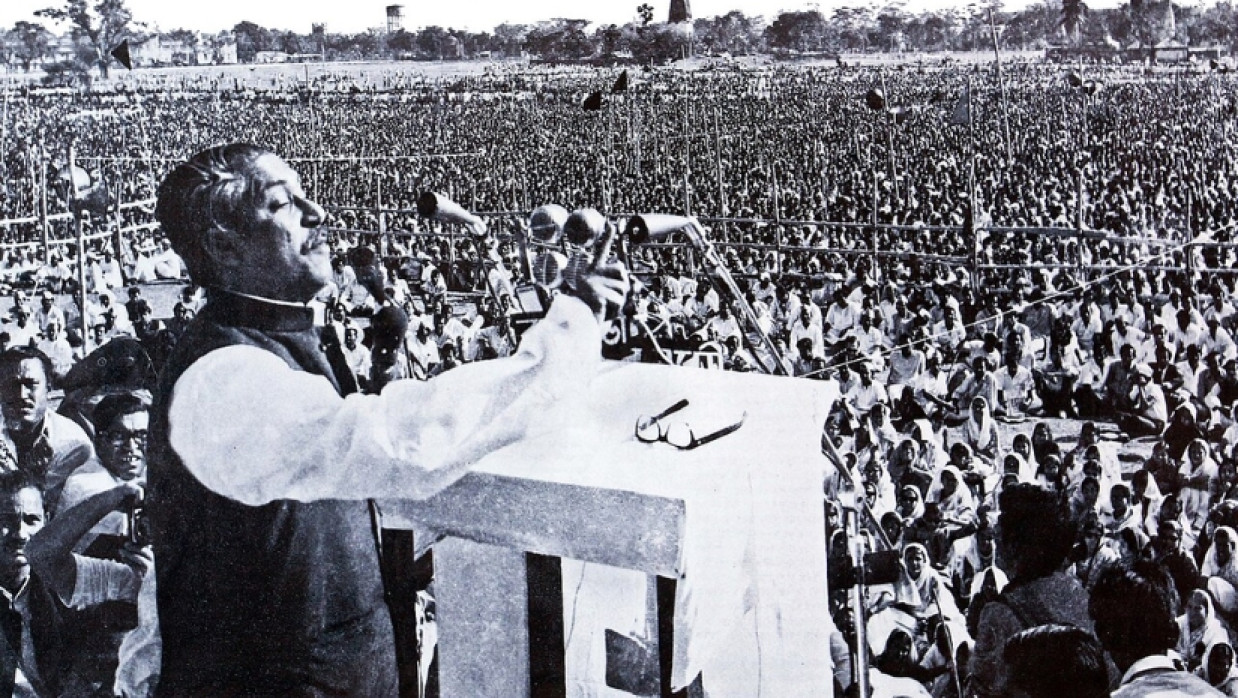
On March 7, 1971, Sheikh Mujibur Rahman delivered one of the most consequential speeches in modern South Asian history at the then Ramna Race Course (now Suhrawardy Udyan) in Dhaka. Speaking to a massive crowd of freedom-seeking Bengalis, he effectively directed the nation toward a decisive struggle against Pakistani occupation forces.
The 19-minute address, delivered from 4:23 p.m., contained the now-iconic lines that galvanized the independence movement:
“Turn every house into a fortress, resist the enemy with everything you have… Having mastered the lesson of sacrifice, we shall give more blood. God willing [Inshallah], we shall free the people of this land.”
He also declared: “Ebarer sangram amader muktir sangram, ebarer sangram swadhinatar sangram” (“The struggle this time is a struggle for emancipation, the struggle this time is a struggle for independence”).
The speech is widely regarded as the clarion call that awakened Bengali national consciousness and laid the political groundwork for the Liberation War that followed four months later. On October 30, 2017, UNESCO inscribed the recording into the Memory of the World International Register, recognizing it as part of the world’s documentary heritage.
Today marks the 55th anniversary of that historic address. The Awami League, founded by Sheikh Mujib and currently led by his daughter Sheikh Hasina (who has been in exile in India since the fall of her government on August 5, 2024), continues to observe the day through various programs. The party’s verified Facebook page shared several videos yesterday commemorating the occasion.
The day carries added significance—and complexity—in the current political context. On October 16, 2024, the interim government decided to discontinue official observance of eight national days, including March 7 and August 15 (the anniversary of Mujib’s assassination). While state-level events have ceased, the Awami League and many supporters continue to mark the day as a symbol of the struggle for independence and self-determination.
The speech remains one of the most powerful expressions of Bengali resolve and identity, frequently cited in discussions of Bangladesh’s founding narrative and the sacrifices of 1971.
 Follow The Daily Campus on Google News