“Ghum” is a lullaby for a generation that cannot sleep
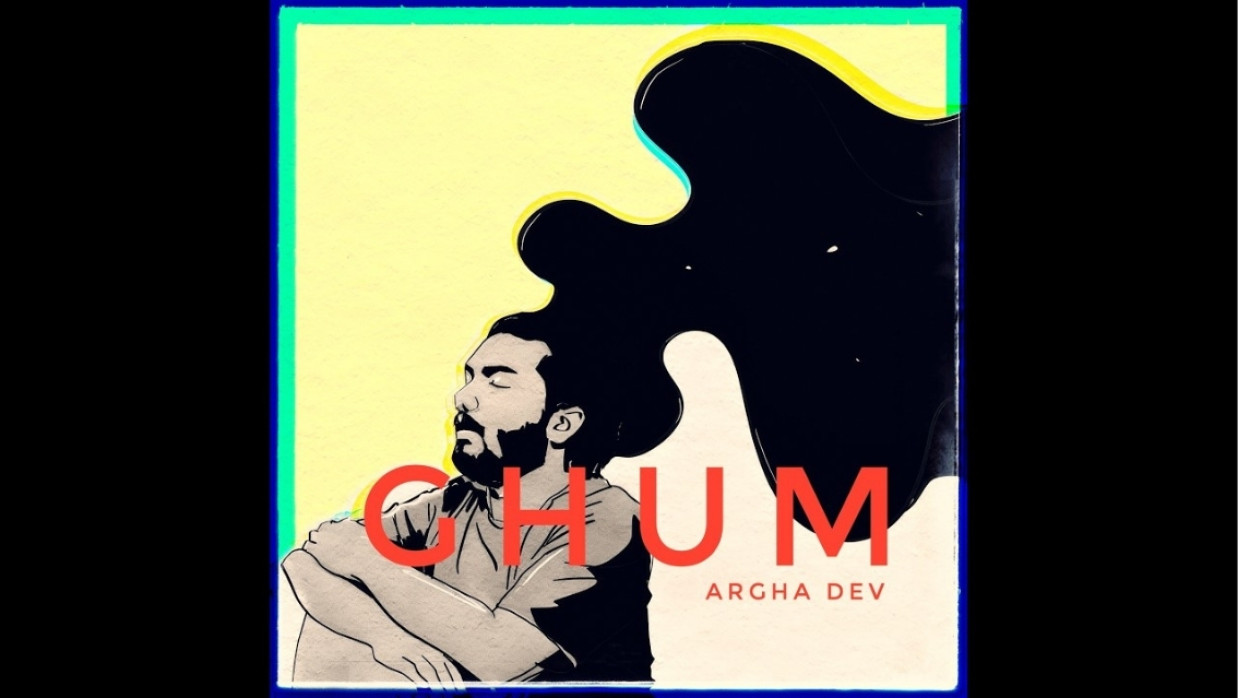
Released on 13 August, Argha Dev's latest song arrives almost quietly. There is no grand musical architecture around it, no attempt to turn its sadness into spectacle. Argha writes, composes and sings the song himself, while Aseer Arman keeps the arrangement deliberately sparse, with guitars played by Autumnal Moon, alongside Irish whistle flute and mondira played by Arman.
On the surface, it is simple. That has always been part of Argha's language as a songwriter. But Ghum is doing considerably more than its modest arrangement initially suggests. It sounds like a lullaby. The lyrics, however, keep reminding us why sleep might be necessary.
The first verse begins with intimacy: “বাগানবিলাসী ফুলে তোমার কথা”
Then the imagery turns almost immediately. Words themselves carry the heat of an oven, there is a “নির্বাক চিৎকার”, and an ocean seems to fall from somewhere in the distance. The song moves from a person to a city, from affection to anguish, without announcing that transition.
Then comes perhaps its most important line: “সমাজ নিতে দেয়না একটা ঘর”
It is easy to hear this as a line about two lovers who cannot build a home together. But “ঘর” here feels larger than a romantic household. It can mean stability, economic security, social acceptance, a future, even the basic right to imagine a life without constantly negotiating with circumstances. That reading becomes increasingly difficult to ignore as the song progresses.
“সময় পুড়ে খাচ্ছে আমাদের বয়েস”
This is one of those lines that sounds simple until you sit with it. Time is not passing. It is eating their age. That distinction matters. The song is not mourning old age. It is mourning youth being consumed before it has had the chance to become what it was supposed to become.
There is another reason the line feels particularly significant in Argha's body of work.
His debut piece, Kaberi, carried the lines: “কাবু হয়ে ঘরে ফেরার দিন শেষ, যুদ্ধের অবশিষ্ট আগুনে পুড়ে গেছে আমাদের বয়েস।”
In that song, youth is burned by the remaining fire of war. In Ghum, time itself is doing the burning.
It would be unfair to declare this a deliberate callback unless Argha has said so himself. But as a listener, the resemblance is too striking to dismiss. The repeated “বয়েস”, the fire, the sense of a generation losing something it cannot recover, all make Ghum feel like it is speaking to an older concern in his writing.
Perhaps the fire did not disappear. Perhaps it simply became harder to see. That is also what makes the song's social commentary more interesting than a straightforward protest lyric.
The song does not name a government, a political party or a particular crisis. Instead, it talks about the things people actually encounter when large political failures enter ordinary life: the market, rice and lentils, livelihood, migration, fear of the future.
“কাঁচাবাজার হাটে লেগেছে আগুন, তাই চাল-ডাল কিনতে ফুরায় রুজিরুটি”
There is nothing abstract about this. The poetry eventually arrives at the kitchen.
That movement is important. The song's “war” is not necessarily a literal battlefield. It is a city where survival itself begins to feel like combat. The economic crisis enters the home through the most basic necessities. The inability to afford a future becomes the inability to afford the present.
And then come the young couples: “ভবিষ্যতের ভয়ে ছাড়ছে দেশ, অল্প বয়সে কিছু কপোত-কপোতী”
The image of the young couple as “কপোত-কপোতী” is almost tenderly old-fashioned. But what follows is anything but romantic. They are leaving because they are afraid of the future, carrying their “পিছুটান” and “সোনালি অতীত” with them.
This is where Ghum quietly becomes a song about migration, too. Not migration as a statistic, but migration as an emotional rupture. A person can leave a country and still carry everything that made leaving painful.
And throughout all of this, Argha keeps returning to sleep.
“নিশ্চিত শান্তির ঘুম
আমার গভীরে
তোমার গভীরে...”
The refrain changes meaning once the rest of the song has unfolded. At first, it sounds romantic. By the end, it sounds almost desperate. If the city cannot provide peace, perhaps two people can provide it for each other. If society refuses to give them a home, they might find a temporary home in one another's depths.
That is the quiet tragedy at the heart of Ghum. The song never quite tells us whether this inward refuge is enough.
Musically, Aseer Arman's restraint serves that uncertainty well. Autumnal Moon's guitars, Arman's Irish whistle flute and mondira leave considerable space around Argha's voice. The arrangement does not compete with the lyric's anxiety. It lets the song breathe, and in doing so makes its gentleness feel almost deceptive.
That may be the most clever thing about Ghum. A song about burning youth, unaffordable necessities, social restrictions, migration and an unstable city could easily have become loud. Argha chooses not to make it loud.
He makes it intimate. And perhaps that is why the song lingers.
Ghum is not a song that solves the problems it names. It does something more modest and, in its own way, more human. It gives those problems a room to exist in. It places economic anxiety beside love, migration beside memory, and a burning city beside the simple desire to sleep peacefully beside someone.
It sounds like a lullaby. But underneath it, there is the ache of a generation that has not stopped dreaming of a home, even after learning how difficult it can be to have one.
 Follow The Daily Campus on Google News