Tehran's Funeral Diplomacy: How Quranic Verses Unveiled Iran’s New Geopolitical Hierarchy
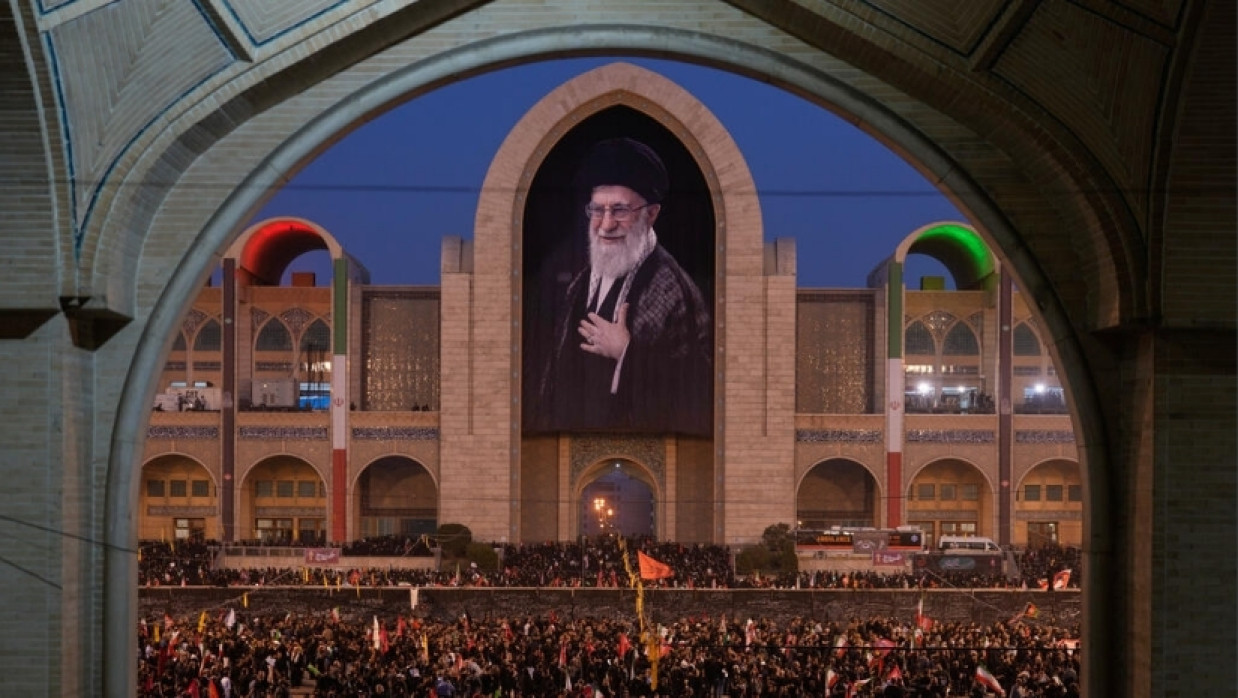
The state funeral of Iran’s late Supreme Leader Ayatollah Ali Khamenei at Tehran's Grand Mosalla has transcended traditional mourning rituals, transforming into an intricate theater of geopolitical signaling. In an unprecedented exercise in public diplomacy, the Iranian state deliberately coordinated specific Quranic recitations tailored to each visiting foreign delegation.
By mapping unique verses to incoming dignitaries, Tehran effectively established a public hierarchy, praising steadfast allies, acknowledging neutral balancing powers, and delivering pointed rhetorical warnings to regional detractors following the recent military conflict.
High Honor for Bangladesh
A highly symbolic moment occurred when the Speaker of the National Parliament of Bangladesh, Major Retired Hafiz Uddin Ahmed, stepped forward to pay his respects at the coffin. To mark the presence of the Bangladeshi delegation, the organizers chose to recite Verse 23 of Surah Al-Ahzab.
The Arabic text of the verse translates to a powerful message, which states that among the believers are men who have proven true to what they pledged to Allah. Some of them have fulfilled their vow through martyrdom, others are waiting for their chance, and they have not altered their commitment in the least. By honoring Speaker Hafiz Uddin Ahmed with this specific passage, Tehran sent a clear message of deep institutional respect toward Bangladesh, framing the nation's leadership and its stance as completely steadfast.
Recognition of India’s Balanced Stance
As the Indian delegation paid its respects, the recitation focused on Surah Aal-e-Imran, Verse 173, which highlights believers whose faith increased when faced with overwhelming threats, declaring that Allah is sufficient for them. This choice acknowledges New Delhi's balanced diplomatic tightrope. Despite heavy pressure from the United States, India maintained active communication with Iranian leadership, a move Tehran interprets as absolute resilience, heavily supported by solidarity from the Indian Shia community.
Praise for Pakistan’s Mediation
For Pakistan, the organizers played Surah Al-Isra, Verse 80, which seeks an honorable entrance, an honorable exit, and a supporting authority from God. This selection served as direct praise for Islamabad's critical diplomatic role as an official mediator in successfully negotiating the fragile ceasefire currently in place between Iran and Western forces.
Validation of China’s Strategic Buffer
China’s delegation was met with Surah Aal-e-Imran, Verse 126, proclaiming that victory comes only from God as reassurance. This recitation validated Beijing’s vital economic partnership and its behind-the-scenes diplomatic interventions that helped ease active maritime tensions around the volatile Strait of Hormuz during the peak of the crisis.
Policy Shift Toward Afghanistan
The delegation from Afghanistan's Taliban administration received Surah Al-Fath, Verses 1 to 2, which speaks of a clear victory and the forgiveness of past faults. This signals a major policy shift by Tehran, using the global stage to formally signal its recognition of the Taliban administration as a legitimate governing authority while explicitly moving past historical friction.
Stern Warnings to Saudi Arabia
Conversely, nations tied to the West received direct scriptural reprimands. Saudi Arabia was met with Surah Aal-e-Imran, Verse 13, evoking the historic Battle of Badr and contrasting those fighting for the cause of God with disbelievers. This operated as a pointed critique of Riyadh’s deep ties with Washington and a sharp warning regarding intelligence reports that suggested passive or structural support for Western military actions.
Conditional Overtures to Qatar
Qatar received a passage from Surah Al-Fath touching on the forgiveness of preceding sins to guide them to a straight path. The selection indicated a desire for stable future bilateral ties while firmly reminding Doha of its mistake in hosting major U.S. military bases that were targeted during the conflict.
Public Reprimand of Turkey
Tehran also utilized the global stage to explicitly reprimand regional actors it considers to have failed the test of regional solidarity. Turkey was met with Surah An-Nisa, Verse 95, which highlights that Allah has preferred the mujahideen over those who remain behind with a great reward, serving as a public reprimand of Ankara for taking a cautious, hands-off approach and failing to provide open backing to Iran.
Taunts Aimed at Iraqi Kurdish Factions
Similarly, for Iraq's Kurdish factions, the organizers selected Surah Al-Baqarah, Verse 154, which commands never to say that those martyred in the cause of God are dead. In this context, the recitation operated as a direct rhetorical taunt against Kurdish groups suspected of actively cooperating with Western intelligence during the opening phases of the military conflict.
Ultimately, rather than treating the funeral as a moment of strategic vulnerability, the Islamic Republic's organizers weaponized religious liturgy to demonstrate that the regime remains intact, actively tracking its geopolitical scorecards and dictating the terms of engagement for post-war West Asian diplomacy.
 Follow The Daily Campus on Google News