Israel Bombards Beirut Suburbs and Southern Lebanon as Conflict with Hezbollah Escalates
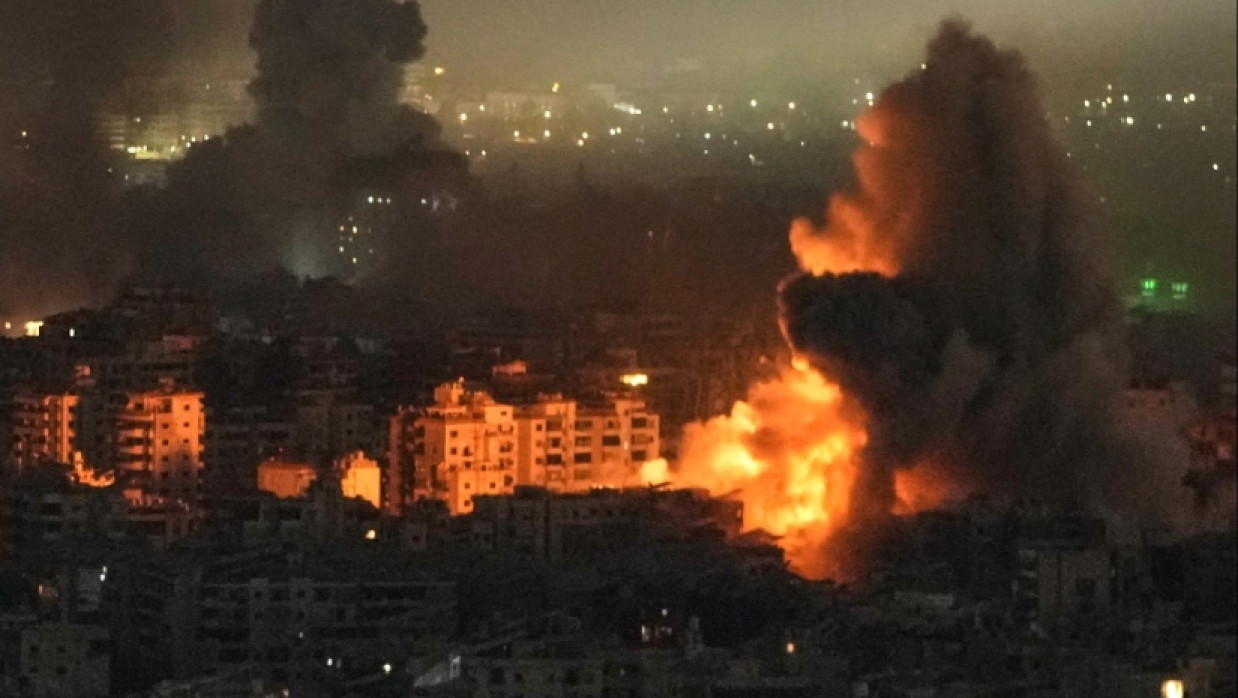
Israeli warplanes launched heavy airstrikes on Beirut’s southern suburbs and southern Lebanon late Wednesday and into early Thursday, following an intense overnight barrage of rockets and drones by Hezbollah targeting northern Israel.
The escalation marks one of the most significant Hezbollah operations in the 10-day conflict, with successive volleys injuring two people in Israel—most projectiles were intercepted or landed in open areas.
Iran’s Revolutionary Guards later claimed joint responsibility, describing the operation as “integrated” and coordinated. The strikes targeted more than 50 sites, including Israeli military bases in Haifa, Tel Aviv, and Beersheba. It was the first time Iran and Hezbollah have publicly acknowledged synchronized missile and drone attacks since the broader Iran war began.
Hezbollah named the operation “Chewed Wheat,” referencing a Quranic verse about reducing enemies to insignificance. Analysts note the group has been rebuilding capabilities after nearly two years of Israeli airstrikes that decimated its leadership and thousands of fighters.
Lebanon has rapidly become the most intense active front in the region as the U.S.-Israeli campaign against Iran (launched two weeks ago) continues to widen.
Israeli strikes on Beirut’s southern suburbs were among the most powerful in the current round, lighting the sky red and shaking windows across the capital. Videos showed collapsed buildings, smoke-filled streets, and flames in southern Lebanon. A strike in Ramlet al-Baida on Beirut’s central corniche killed at least seven people, including displaced families sleeping rough. Lebanon’s health ministry reported at least 17 injured in the southern suburbs, with further casualties expected.
In southern Lebanon, Israel said it was targeting Hezbollah missile launchers and warned residents to evacuate immediately, echoing earlier large-scale displacement orders.
Israeli strikes have killed at least 634 people and injured 1,586 in Lebanon in under 10 days. More than 816,700 families have registered as displaced, with numbers expected to rise.
The escalation followed a Wednesday night security cabinet meeting in Israel focused on stopping Hezbollah’s rocket capabilities. Israeli military chief Lt Gen Eyal Zamir ordered reinforcements to the northern border, including redeployment of the Golani Brigade from Gaza—a unit specialized in offensive ground operations—raising speculation of a potential large-scale invasion of south Lebanon.
Hezbollah’s elite Radwan force has been conducting autonomous ambushes on Israeli troops in southern areas, particularly around strategic hilltops near al-Khiam.
Lebanon’s government has urged Hezbollah to halt attacks and insists the state should hold the monopoly on violence. However, its under-equipped army has been unable to confront the group directly, fearing civil strife in a country with a history of sectarian violence.
With French assistance, Lebanon has appealed internationally for a ceasefire and negotiations with Israel while pledging to curb Hezbollah’s activities. Israel and the U.S. remain sceptical about Beirut’s ability to disarm the group, with Israel appearing determined to confront Hezbollah directly.
Israeli UN Ambassador Danny Danon questioned Lebanon’s efforts: “If Hezbollah is being dismantled, what is the evidence? What operations against launch sites? Where are the seizures of weapons? Where is your military?”
 Follow The Daily Campus on Google News