Oil Prices Surge Past $100 a Barrel, Highest in Years
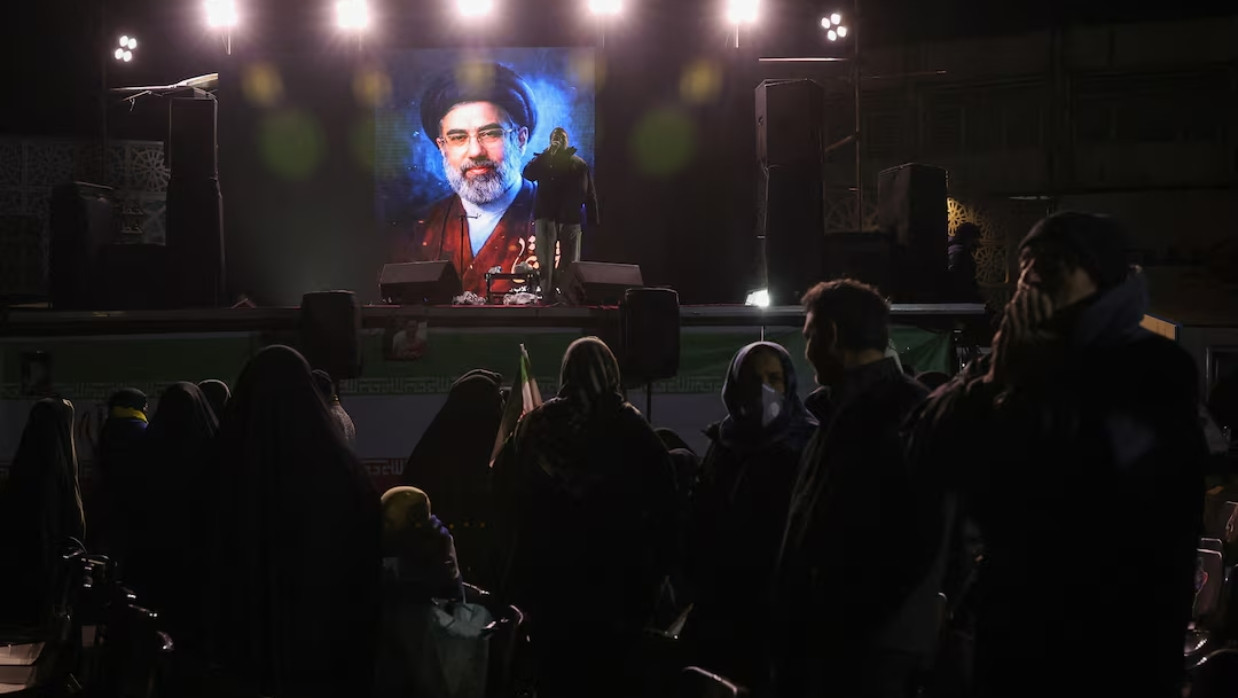
Iran’s Assembly of Experts on Monday named Mojtaba Khamenei, the hardline cleric son of the late Ayatollah Ali Khamenei, as the country’s new supreme leader, a move that signals continuity of the Islamic Republic’s conservative clerical rule amid the ongoing U.S.-Israeli military campaign.
The announcement, issued shortly after midnight Tehran time, came after the 88-member Assembly of Experts convened on Sunday despite threats of further strikes on the body. “By a decisive vote, the Assembly of Experts appointed Ayatollah Seyyed Mojtaba Hosseini Khamenei as the third Leader of the sacred system of the Islamic Republic of Iran,” the statement read.
Iranian President Masoud Pezeshkian described the selection as a “manifestation of Iran’s will to strengthen national unity.”
The position of supreme leader grants Mojtaba ultimate authority over all major state decisions, including foreign policy, the military, and the judiciary.
The White House did not immediately respond to requests for comment on the appointment.
The choice of Mojtaba is likely to heighten tensions with the United States and Israel. U.S. President Donald Trump stated on Sunday that Washington should have a say in the selection process, warning that “if he doesn’t get approval from us, he’s not going to last long.” Israel had previously threatened to target whoever was chosen.
Mojtaba’s father, Supreme Leader Ali Khamenei, was killed in one of the initial strikes of the U.S.-Israeli operation more than a week ago.
Oil Prices Surge Above $100
The expanding conflict has driven oil prices sharply higher. U.S. crude futures rose more than 20% in early Monday trade, reaching their highest level since July 2022, while Brent crude jumped 17% to $108.73 a barrel after already climbing 28% last week. The surge reflects fears of prolonged disruptions to oil shipments through the Strait of Hormuz and tighter global supply.
Asian share futures fell on Monday amid concerns over rising living costs and economic fallout. The dollar strengthened against the euro and yen.
Trump posted on social media that oil prices “will drop rapidly when the destruction of the Iran nuclear threat is over,” describing the current spike as “a very small price to pay for U.S.A., and World, Safety and Peace.”
Defiance from Tehran
Iranian state media reported that the armed forces leadership had pledged allegiance to Mojtaba Khamenei. The Islamic Revolutionary Guard Corps (IRGC) issued a statement saying they are ready to follow the new supreme leader.
Assembly of Experts member and former security chief Ali Larijani, speaking on state television, said Mojtaba could lead under the current sensitive conditions and called for national unity around the new leader.
Parliament Speaker Mohammad Bagher Ghalibaf earlier stated that Tehran was not seeking a ceasefire.
Iran has continued retaliatory strikes across the region in response to U.S. and Israeli attacks. The U.S. State Department ordered the departure of non-emergency government employees and family members from Saudi Arabia on Sunday due to safety risks, following damage to the U.S. embassy in Riyadh from a drone attack blamed on Iran.
Saudi Arabia’s Defence Ministry reported shooting down a drone targeting the Diplomatic Quarter in Riyadh on Sunday.
The U.S. has already raised its travel warning for Saudi Arabia and allowed some personnel to leave, and has ordered staff departures from embassies in Qatar, Kuwait, Jordan, and Bahrain since the conflict began.
Israel continued targeting senior Iranian figures, announcing the killing of Abolqasem Babaian, recently appointed head of the military office of the supreme leader, in a strike on Saturday.

Escalating Conflict
On day nine of the U.S.-Israeli campaign against Iran, thick black smoke hung over Tehran after strikes on oil storage facilities lit up the night sky with plumes of orange flame.
Iran’s Foreign Ministry spokesperson Esmaeil Baghaei described the attack as a “dangerous new phase” and a war crime, accusing the aggressors of releasing hazardous materials into the air.
Israeli military spokesman Lieutenant Colonel Nadav Shoshani said the depots were used to fuel Iran’s war effort, including production and storage of propellant for ballistic missiles, calling them a “legal military target.”

Israeli Prime Minister Benjamin Netanyahu vowed to continue the assault and strike Iran’s rulers “without mercy,” stating in a video message that Israel has an “organized plan with many surprises to destabilize the regime and enable change.”
Trump, speaking on Air Force One, said he was not seeking negotiations to end the conflict, which has driven up global energy prices, disrupted business, and snarled air travel. “At some point, I don’t think there will be anybody left maybe to say, ‘We surrender,’” he said.
 Follow The Daily Campus on Google News