Scaloni Comments on Mandated World Cup Hydration Breaks
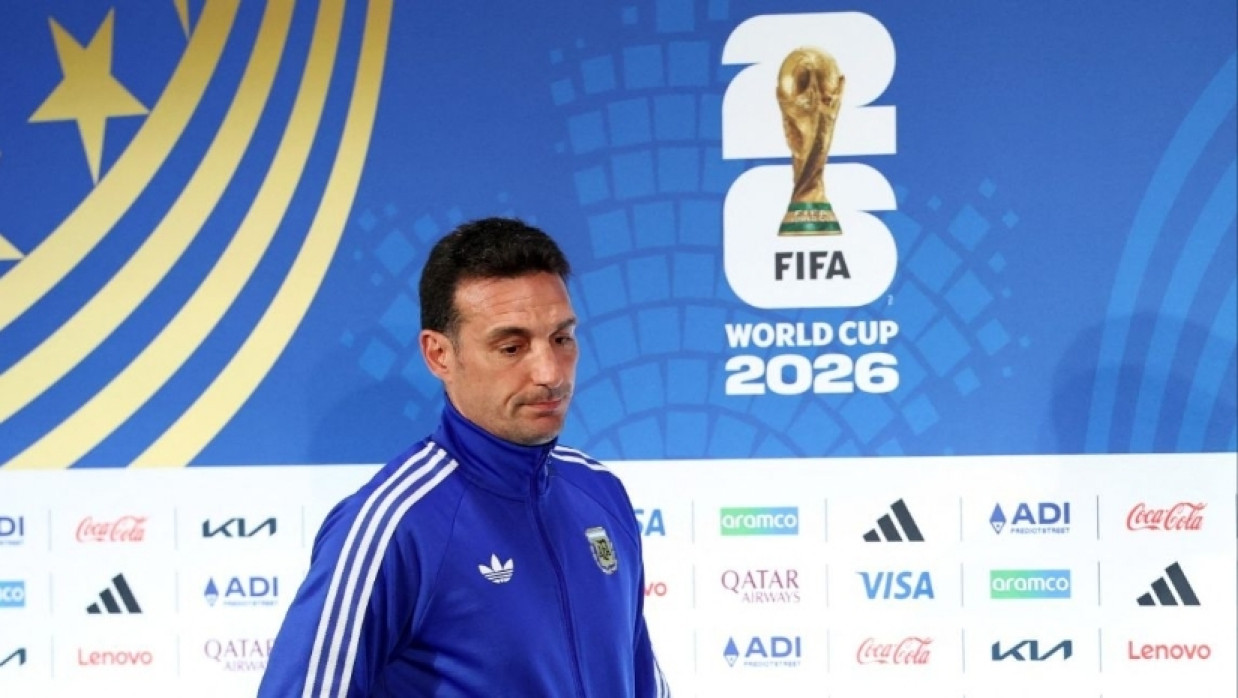
Argentina national team manager Lionel Scaloni raised significant concerns regarding FIFA's newly introduced tournament regulations ahead of La Albiceleste's second Group J match against Austria.
Under FIFA’s updated player welfare protocols for the expanded 48-team tournament, referees are required to halt play for a three-minute hydration break exactly 22 minutes into each half.
Tactical Respite for Underdogs
Scaloni highlighted that the structure of the breaks essentially splits a standard 90-minute football match into four separate blocks, which alters the competitive dynamic by stripping away sustained physical and psychological pressure.
"There are no easy games, especially in the group stage. Now, with the conditions of the heat and the hydration break, the game is stopped constantly.
Perhaps it gives a hand to the weaker team because they have time to fix things. They have time to adjust." — Lionel Scaloni, Argentina Head Coach
The 48-year-old manager elaborated that the breaks disrupt the organic flow of the match, transforming it into a series of short bursts rather than a continuous battle of attrition.
"Everything that I have in my mind can change depending on these 22 or 23 minutes," Scaloni explained, noting that the stops function exactly like an extra half-time window.
The Halftime Time Crunch
A major operational drawback highlighted by Scaloni is how the structural change reduces a manager's actual dressing room access. Because the mid-half breaks act as extended tactical timeouts, the formal halftime window feels increasingly compressed.
According to Scaloni, by the time players commute between the pitch and the locker rooms, managers are left with roughly three to three-and-a-half minutes of direct, uninterrupted communication time to address the squad before they must return for the second period.
Mixed Reactions Across the Paddock
The implementation of the universal cooling breaks has split opinions across different World Cup camps:
-
The Critical View: Netherlands captain Virgil van Dijk echoed Scaloni's reservations from a spectator and flow perspective.
He called the breaks "interesting" but noted that the constant transitions to television commercials disrupt the natural viewing experience for neutral fans. -
The Supportive View: Conversely, other European staffs welcome the rule. Belgium coach Rudi Garcia openly praised the structural shift, stating, "For me, it's a coaching break more than a cooling break, so to me it's very important."
Group J Standing & Match Outlook
Argentina enters Monday's encounter at the top of Group J following a dominant 3-0 shutout against Algeria, where 38-year-old captain Lionel Messi netted a historic hat-trick to tie Miroslav Klose's all-time men's World Cup record of 16 goals.
A victory against a vertical, high-pressing Austrian side—who opened their own campaign with a 2-1 win over Jordan—would instantly secure Argentina's qualification into the Round of 32 knockout stage.
| Team | Played | Won | Goal Diff. | Points |
| Argentina | 1 | 1 | +3 | 3 |
| Austria | 1 | 1 | +1 | 3 |
| Jordan | 1 | 0 | -1 | 0 |
| Algeria | 1 | 0 | -3 | 0 |
The match is scheduled to kick off at Monday, June 22, 2026, at 11:00 PM BST (1:00 PM Local Time in Texas).
 Follow The Daily Campus on Google News