Six Reasons Brazil Can Win Their Hexa World Cup Title
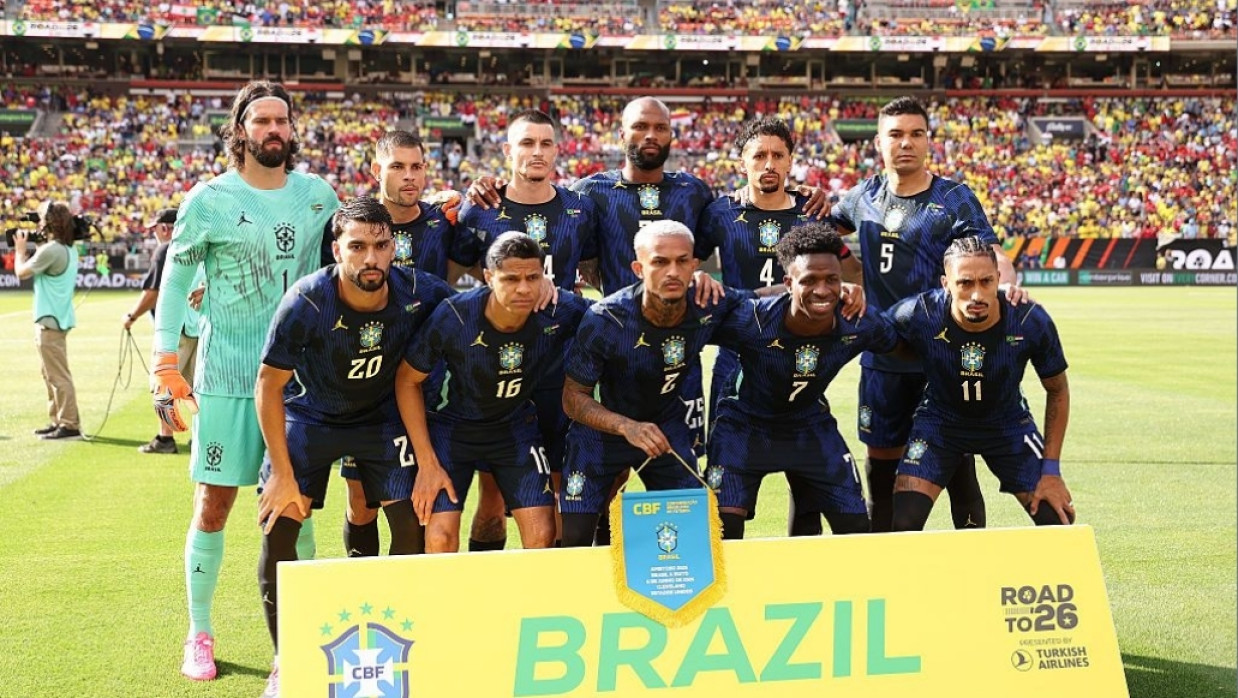
The Brazilian national team enters the 2026 World Cup navigating a highly turbulent period. A weak qualification campaign, an early exit from the Copa América, and multiple coaching changes have raised significant doubts regarding the Seleção's form and reliability.
However, the World Cup is a unique stage where past struggles do not always dictate future outcomes. The footballing world is far from ruling out Brazil's chances of clinching their elusive sixth world title. A combination of history, squad depth, and striking historical coincidences has renewed hopes globally for the long-awaited "Hexa."
1. The 24-Year Title Drought
The primary catalyst driving Brazil's potential success is their prolonged title drought. Historically, Brazil has never gone more than 24 years without winning a World Cup. Their last triumph came in 2002 on Asian soil. Prior to that, they secured titles in 1958, 1962, 1970, and—after a long break—in 1994. Failing in 2026 would extend this drought to a record 28 years, creating an immense psychological pressure that could serve as a powerful motivation to turn things around.
2. Coincidence of the US Venue
The second major factor lies in the choice of the tournament venue. In 1994, the World Cup was hosted by the United States, where Brazil lifted their fourth trophy after defeating Italy in a historic penalty shootout. Now, 32 years later, the 2026 World Cup returns to US soil. Brazil is scheduled to play all their group matches and potentially their knockout games, including the final, in the United States. This familiar and historically favorable ground offers the perfect backdrop for the Seleção to script another historic chapter.
3. A Perfect Blend of Three Generations
Head coach Carlo Ancelotti has assembled a squad boasting a remarkable balance between seasoned veterans and emerging talents. The roster features highly experienced icons like Neymar Junior, Casemiro, Danilo, and Alex Sandro alongside established world-class stars who form the backbone of the team, including Alisson Becker, Marquinhos, Vinicius Junior, and Raphinha. Competing alongside them are sharp, hungry young talents like Endrick, Rayan, and Igor Thiago, making this three-generation combination a formidable threat to any defense.
4. The Knockout Mastery of Carlo Ancelotti
Ancelotti, a five-time UEFA Champions League winner, is widely regarded as a tactical mastermind with unparalleled success in knockout tournaments. Having won domestic titles across Europe's top five leagues, his pedigree is unquestionable. Crucially, his prior experience managing key pillars of the current squad during his tenure at Real Madrid—most notably Vinicius Junior and former Madrid midfielder Casemiro—gives Brazil an immense tactical advantage in high-stakes match management.
5. Playing Without the Burden of the 'Favorite' Tag
The fifth factor is psychological relief from external pressure. In 2006, 2014, 2018, and 2022, Brazil entered the tournament as the absolute or primary "hot favorites," ultimately crumbling under the weight of massive expectations. Conversely, in 1994 and 2002, they began their campaigns with relatively underestimated squads and went on to win the championship. Entering the 2026 tournament with lower expectations from pundits could allow the team to play their natural game freely.
6. Striking Resemblances to the Glorious 2002 Campaign
The final and most compelling reason involves a series of dramatic parallels to Brazil's successful 2002 World Cup run:
-
Star Return from Injury: In 2002, Ronaldo Nazário recovered from a career-threatening injury just in time for the tournament; similarly, Neymar Junior is returning to the squad after a long injury layoff.
-
Qualifying Tremors: Prior to 2002, Brazil endured a chaotic qualification phase and a disastrous Copa América campaign, heavily mirroring their recent pre-2026 form.
-
Coaching Volatility: The road to the 2002 World Cup saw frequent changes in the managerial hot seat; similarly, Brazil has seen four different managers take charge of the dugout over the last few years.
-
Identical Grouping: Just like their historic campaign in 2002, Brazil will begin their quest for the 2026 world title from Group C.
 Follow The Daily Campus on Google News