As New Pay Scale Nears, Here’s What the Commission Recommended for Basic Pay
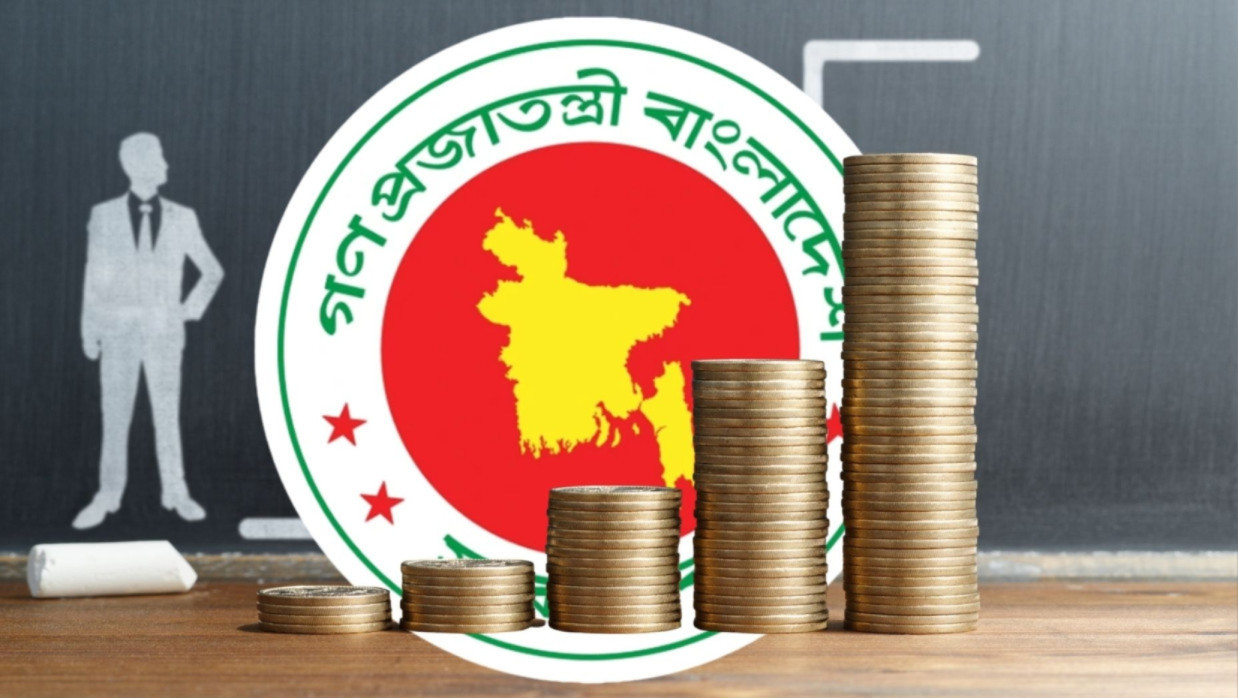
Prime Minister Tarique Rahman has directed government officials to initiate the implementation of the 9th National Pay Scale starting from the 2026-27 fiscal year. According to an official from the Ministry of Finance, necessary budget allocations for the new pay scale will be earmarked in the upcoming national budget. However, rather than implementing all the salary commission's recommendations at once, the government plans to roll out the financial benefits in three distinct phases to manage fiscal pressure.
Three-phase implementation strategy
It has been 11 years since the last major overhaul of the public sector salary structure. To mitigate inflation and streamline cash management, the government is adopting a phased strategy requiring a total estimated expenditure of Taka 1,31,000 crore (including Taka 1,06,000 crore for salaries and Taka 25,000 crore for pensions).
-
Phase 1 (FY 2026-27): The upcoming budget will allocate approximately Taka 35,000 crore. In this initial stage, civil servants, judicial staff, autonomous body workers, and defense personnel will receive a 50% hike on their basic salaries.
-
Phase 2 (FY 2027-28): The remaining 50% of the basic salary adjustment will be enacted.
-
Phase 3 (FY 2028-29): Other allowances and benefits will be fully actualized.
Finance officials believe this staggered rollout will significantly lower the risk of pushing market inflation higher while allowing the state treasury to smoothly absorb the massive expenditure.
The Pay Commission, led by former Secretary Zakir Ahmed Khan, initially recommended a sweeping salary increase ranging between 100% and 147%. However, a subsequently formed Secretaries Committee reviewed the report and recommended trimming specific luxury benefits—such as allowances for cooks, gardeners, and certain high-official perks—effectively reducing the additional expenditure by Taka 16,000 crore to bring the core salary burden down to Taka 90,000 crore.
The existing 20-grade framework will remain unchanged. The baseline shifts recommended by the commission include:
| Grade Tier | Existing Basic Salary | Proposed Basic Salary | Percentage Increase |
| Minimum (20th Grade) | Taka 8,250 | Taka 20,000 | 100% to 140% |
| Maximum (1st Grade) | Taka 78,000 | Taka 1,60,000 | 105% |
The final report, which was historically compiled by a 23-member commission and initially submitted to former Chief Adviser Dr. Muhammad Yunus, is being meticulously analyzed by a high-level committee headed by the Cabinet Secretary. Alongside basic pay, the following key adjustments have been proposed:
-
Pension Upgrades: Retirees receiving a monthly pension below Taka 20,000 could see a 100% increment. Pensions around Taka 40,000 may see a 75% rise, while pensions above that threshold are slated for a 55% bump.
-
Age-based Medical/Festival Allowance: A proposed fixed monthly allowance of Taka 10,000 for pensioners aged above 75, Taka 8,000 for those between 55 and 74, and Taka 5,000 for individuals under 55.
-
Incentive & Allowance Revisions: The daily tiffin allowance is proposed to increase from Taka 200 to Taka 1,000. The annual Pohela Boishakh festival allowance is recommended to climb from 20% to 50% of the basic pay. A special monthly allowance of Taka 2,000 is proposed for employees with children with disabilities.
-
Transport & Housing Allowances: Formal travel allowances are recommended for employees spanning the 10th to the 20th grades. Conversely, the commission suggested a lower house rent allowance rate for the 1st to 10th grades, while favoring a higher proportionate rate for employees in the 11th to 20th grades.
Separate pay commissions for the military forces and the judicial services are also currently in their final stages of evaluation to match the newly proposed administrative framework.
 Follow The Daily Campus on Google News