The Invisible Bulldozer of Surat
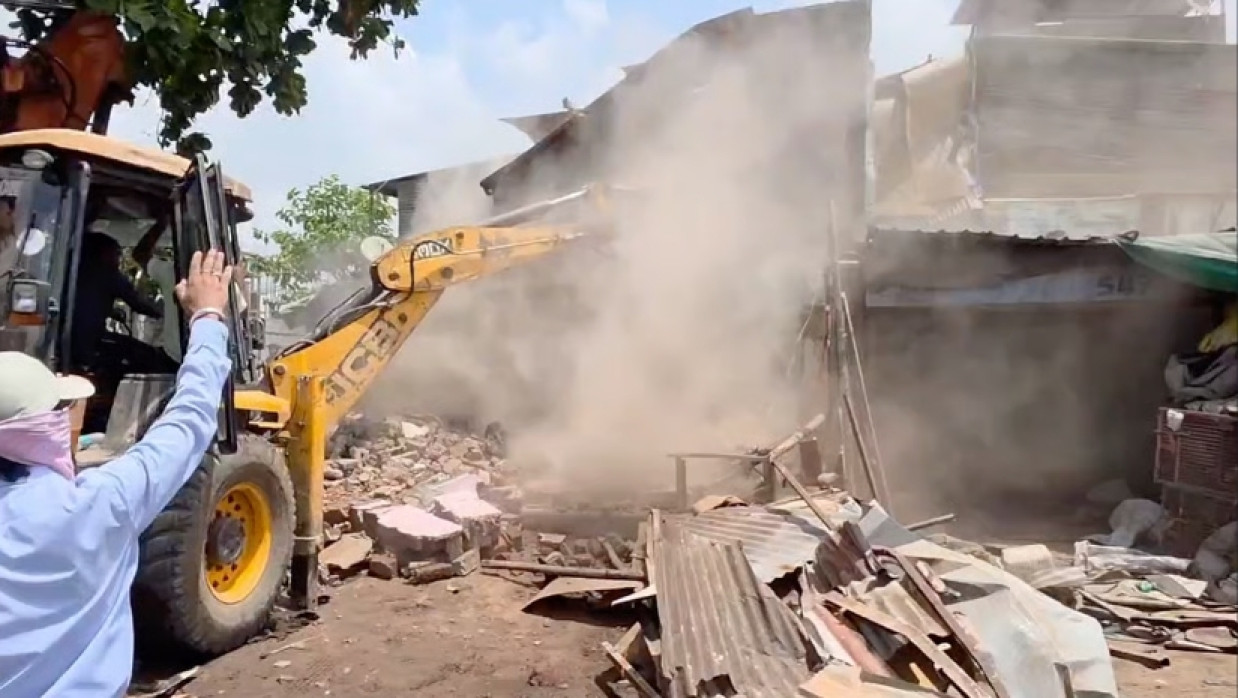
On the morning of May 30, 2026, residents of Nasir Nagar, a dense working-class settlement tucked inside Surat's textile belt, woke to the sound of machinery. By the time most families had gathered their senses, bulldozers were already moving through the lanes. Cameras mounted on walls were smashed before a single notice was read out. There were no notices to read. Within hours, more than 100 homes were rubble.
Six days later, the families are still sleeping on the street. And no agency of the Gujarat state or Surat city government has admitted to ordering the demolition.
“We went to the Municipal Commissioner. He said, ‘We have no involvement in this. We didn’t pass any such order.’ We went to the Mayor. He said the exact same thing.”
The Surat Municipal Corporation says it issued no demolition order. The police say they were only providing security at the Corporation’s request. The Corporation says it made no such request. The result is an accountability vacuum at the centre of a human catastrophe: a sixty-year-old settlement erased in two days, with no official willing to sign their name to the act.
A Settlement With Six Decades of Roots
Nasir Nagar is not a new encroachment. Residents and community representatives describe a settlement that predates the careers of most of the officials now denying involvement. Mohammad Ali, who goes by Lala, said his father had lived there for seventy years. Property tax receipts, he said, bore names and issued by the Katargam Zone of the Surat Municipal Corporation, confirm occupancy of forty-five to sixty years. Electricity connections and drainage were laid by the Corporation itself.
The families belong, almost entirely, to the textile labour force that keeps Surat’s looms running. Daily-wage weavers, finishers, and transport workers. Aslam Cyclewala, a former city councillor who has represented the area, said the third and fourth generation of these families had grown up in the lanes of Nasir Nagar.
As recently as October 2025, residents had grown uneasy. A neighbouring builder, they said, was pressing for the land. On October 15, community leaders delivered a written submission to both the Surat Municipal Corporation and the Surat City Police. The submission was direct: if the land was required for genuine public development, they would move—provided they received alternative housing. They asked the authorities not to become instruments of private commercial interests.
A Corporation officer named Naresh, whom residents said they visited three times in a month and a half, reportedly told them there was no demolition planned and that nearby construction activity was a private builder’s own boundary work. When bulldozers arrived on May 30, Naresh, residents say, was standing among the demolition crew.
Two Days, No Notice
Accounts of what happened on May 30 and June 1 are consistent across multiple witnesses. Officers from the Surat City Police, including personnel from the Special Operations Group (SOG), arrived early in the morning alongside staff from the Corporation’s Central Zone and machinery belonging to the contractor that carries out the Central Zone’s regular demolition work.
“They didn’t even give us a chance to do anything. First, as soon as they arrived, they broke the cameras. After breaking the cameras, they started forcing everyone out.”— Resident, Nasir Nagar
The SOG is Gujarat’s specialist unit for apprehending illegal migrants and seizing narcotics. Its presence in a residential demolition, community leaders argue, was irregular at minimum. Cyclewala was pointed in his assessment: the SOG’s presence was tactical intimidation, not law enforcement.
Residents describe officers threatening six-month jail terms for anyone who protested. Female police officers were deployed specifically to manage women in the crowd. One woman who said she had recently undergone back surgery told reporters she asked for time to collect herself. Officers, she said, took her by the hand and told her to leave or face arrest.
Personal belongings remain buried under the rubble. Some residents reported that cargo vehicles accompanying the demolition team loaded their possessions and drove away. Those goods have not been returned.
“The SOG said: ‘We will erase this Nasir Nagar from the map.’”
The Denial Chain
When residents approached the Municipal Corporation the following day, the Commissioner told them the Corporation had not ordered the demolition. The Mayor gave the same response. When the matter was put to police, officers at the station said they had deployed at the Corporation’s request. The Corporation denied making that request.
The circular logic has left the families with no official interlocutor and no path to redress. There is CCTV footage and video circulating on social media that shows Central Zone engineers—identified by residents as the Deputy Engineer, Assistant Engineer, and Junior Engineer—present at the site during the demolition. A Corporation official named Monik Gadhia, who denied involvement, was captured on video and later returned to the site to conduct a survey.
Under Gujarat law and municipal procedure, demolitions of properties within Corporation limits require prior notice. Residents had paid municipal taxes; their names appear on assessment rolls. The land survey number, Cyclewala confirmed, falls under Corporation jurisdiction. Any demolition would, by law, have required a Corporation order.
No such order has been produced.
Political Context
The demolition in Surat takes place within a well-documented national pattern. Since 2022, authorities across several BJP-governed states have used municipal demolition powers to raze homes and properties belonging to Muslim residents, often following communal tensions or political disputes, and frequently without the legal notice required under Indian law. Courts, including the Supreme Court of India, have at various points intervened to stay such demolitions, and in October 2024 the Supreme Court issued guidelines prohibiting demolitions without advance notice.
Surat is in Gujarat, the home state of Prime Minister Narendra Modi and the political base of Home Minister Amit Shah. Gujarat Chief Minister Bhupendrabhai Patel leads the state administration. Critics of these officials have long documented rhetoric and policy that they argue disadvantages Muslim communities. The Nasir Nagar demolition, carried out without notice and now disowned by every involved agency, fits a pattern that civil society groups and opposition politicians have described as the systematic use of municipal machinery against working-class Muslim neighbourhoods.
None of the officials named in this report responded to requests for comment at the time of publication.
What Remains
On the sixth day after the demolition, more than 150 families remained on the pavement outside the rubble of their homes. Children sat on mats. Food was being brought by volunteers from outside the settlement. The monsoon, which arrives in Surat in June, was days away.
“The rainy season is about to start. We can’t find a house anywhere. We used to pay rent of ten thousand rupees. Now should we pay rent, manage household expenses, or pay brokerage to agents? Where are we going to get twenty thousand rupees right now?” — Resident woman, Nasir Nagar
Aslam Cyclewala has called for accountability proceedings against every official from the Surat Police and the Surat Municipal Corporation who was present at the demolition, and for the immediate provision of alternative housing for displaced families. The Indian National Congress, to which he is affiliated, has demanded a formal inquiry.
For now, the families wait. The bulldozers have gone. The files, the children’s school bags, the savings buried in the rubble: those remain unanswered for. So does the question of who sent the machines in the first place.
Reporting based on NDTV field coverage from Nasir Nagar, Surat, Gujarat. Additional context from public records and community testimony. All quoted statements are translated from the original Hindi/Gujarati field interviews. Names used are as given by the subjects to reporters on the ground.
 Follow The Daily Campus on Google News