Five Years and No Further
Why Bangladesh Guarantees the Least Free Education in the World
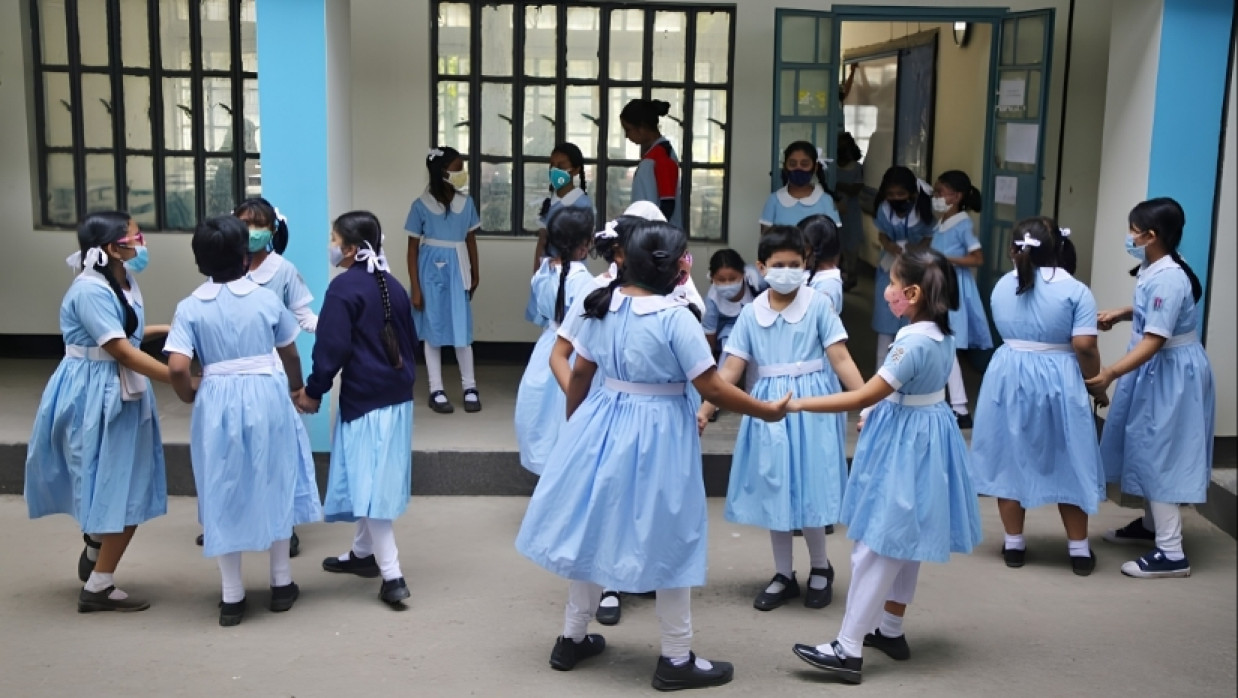
In the global ledger of educational rights, Bangladesh occupies a troubling position. According to the UNESCO World Education Statistics 2025, Bangladesh legally guarantees free education for only five years, placing it among the lowest-ranked countries in the world on this measure.
Neighbours that share the same region, similar income histories, and comparable development challenges have all committed to free education for far longer. Bangladesh has not. Researchers say the reasons are not hard to find, but the will to act on them remains elusive.
The report, prepared by the UNESCO Institute for Statistics and the Education Data and Statistics Commission, measures each country's Years of Guaranteed Education Program (YGEP). This figure reflects how many years of free education a government is legally obligated to provide. Bangladesh's figure is five, covering only up to Grade 5.
That places the country in the lowest tier globally, alongside Togo in West Africa, and Myanmar and Vietnam in Southeast Asia. At the upper end of the scale, countries like Australia, Mauritius, San Marino, and Liechtenstein guarantee 13 years of free schooling.
The gap within South Asia alone is stark.
South Asia: Years of Guaranteed Free Education
|
Country |
Years of Guaranteed Free Education |
|
Sri Lanka |
13 Years |
|
Pakistan |
12 Years |
|
Afghanistan |
12 Years |
|
Maldives |
12 Years |
|
Nepal |
12 Years |
|
Bhutan |
11 Years |
|
India |
8 Years (Up to Grade 8) |
|
Bangladesh |
5 Years (Up to Grade 5) |
Bangladesh is the only country in South Asia, apart from India, where free education is not guaranteed through the secondary level. And India provides three more years than Bangladesh, covering up to Grade 8.
The 2010 Policy That Never Was
This is not a new problem, and it is not one that has gone unacknowledged. Bangladesh's National Education Policy, passed in 2010, proposed extending compulsory primary education from Grade 5 to Grade 8. Fifteen years later, the proposal remains on paper.
Dr. Mohammod Moninoor Roshid of IER, University of Dhaka, is measured in his assessment but does not spare the government from scrutiny.
Education has never truly been a priority for governments. Governments often act only because they feel obliged to, not necessarily because they are committed to doing so properly.
Dr. Mohammod Moninoor Roshid, IER, University of Dhaka
He points out that extending the years of compulsory education is not merely an administrative decision. It requires financial commitment, trained teachers, physical infrastructure, and a social support system that makes attendance possible. None of these conditions are in place in enough of the country to sustain a meaningful extension.
"The government had plans to restructure the system so that primary education would continue to Class Eight and secondary up to Class Twelve, but it lacked the financial readiness, political readiness, cultural readiness, and social readiness to implement that policy," he explains.
Free in Name Only
Part of the complexity here is definitional. When UNESCO counts Bangladesh's free education years, it counts the waiver of tuition fees and the provision of textbooks. In that technical sense, Bangladesh offers free schooling through Grade 5. But researchers argue that this classification disguises the real cost borne by families.
Professor Mohammad Mojibur Rahman of IER, University of Dhaka, is direct about this gap.
On paper or officially we may call it free, but in practice it isn't. Even education up to Class Five is not truly free. Because if I make education compulsory, then I must ensure every necessary facility for the student. I must even ensure they get lunch.
Prof. Mohammad Mojibur Rahman, IER, University of Dhaka
Families bear costs for notebooks, pens, transportation, coaching, and food. For a household without a reliable income, these costs are prohibitive. But the issue goes further than fees.
Professor Rahman introduces a concept that rarely appears in Bangladeshi education policy debates: opportunity cost.
If a child didn't go to school, perhaps they would work at a tea stall or in agriculture and earn money. That lost income also matters because I am forcing the child to attend school instead of working. The family needs that income. That's why the child was working in the first place.
Prof. Mohammad Mojibur Rahman, IER, University of Dhaka
Stipends and conditional cash transfers exist in Bangladesh's education system, but they are widely regarded as inadequate substitutes for what families actually lose when a child stays in school rather than working. Until that gap is addressed, compulsion without support produces dropout, not learning.
The Teacher Problem
Both experts converge on a point that the debate over years and grades tends to obscure: duration is meaningless without quality. And quality, in Bangladesh's education system, begins and ends with the teacher.
Dr. Roshid frames the problem in terms of learning outcomes. If a student in Class Five is performing at the level of Class Two or Three, extending their schooling to Class Eight does not close that gap. It pushes the gap upward through the system.
If the foundation is weak from the beginning, students carry that weakness throughout higher levels of education. You can see this in Dhaka University admission tests, where around 90% of applicants fail to obtain qualifying marks.
Dr. Mohammod Moninoor Roshid, IER, University of Dhaka
The implications are straightforward: fixing the years of guaranteed education without fixing what happens inside those years solves the international ranking problem, not the learning problem.
Professor Rahman points to a structural failure in how Bangladesh recruits and retains teachers. Among BCS candidates, teaching is rarely a first preference. The best candidates go elsewhere. Those who enter teaching often do so without genuine motivation.
Why wouldn't the nation's best people come into teaching? Because we don't provide the necessary facilities or incentives. Many people become teachers by chance, not by choice. If someone enters teaching unwillingly, they will naturally lack motivation.
Prof. Mohammad Mojibur Rahman, IER, University of Dhaka
Creating a separate salary structure, improving benefits, and building genuine career pathways in teaching are steps Professor Rahman considers essential, not peripheral, to any reform agenda.
The Budget Question
The government has repeatedly committed to increasing education spending, including pledges to allocate 5 percent of GDP to education. Professor Rahman is skeptical about whether spending volume alone solves the problem.
Even if we increase the budget, what's the point of buying smart devices if there's no electricity or Wi-Fi? The real question is whether we are spending money in the right places.
Prof. Mohammad Mojibur Rahman, IER, University of Dhaka
His concern reflects a broader pattern: investment in visible, technology-forward interventions over the slower, harder work of training teachers, building accountability, and ensuring that children have the material conditions to attend and learn.
Dr. Roshid draws a comparison with Australia, where compulsory education extends to Year 12, but crucially, where that compulsion is backed by systemic support: free books and stationery, welfare payments, and income assistance for families.
"In Bangladesh, students may receive books up to Class Ten, but that is not enough," he says. "Why would a child attend school if the family has no food, no employment, and no income source?"
What Genuine Reform Would Require
The UNESCO ranking will not change on its own. Extending the legal guarantee of free education from Grade 5 to Grade 8 or beyond requires a policy decision. But both researchers caution against treating that policy decision as sufficient.
Dr. Roshid argues for sequencing: first consolidate quality at the current level, then extend. "We must ensure the quality of education at the current level first," he says. "Our priority should be ensuring learning outcomes at every level."
Professor Rahman calls for the country to answer a foundational question that no government has yet put clearly on the table: what is education for?
Do we want to produce only laborers? Only servants? Or leaders? What kind of people do we want education to create? These are the questions we must answer first. But no government so far has sincerely addressed these issues in a comprehensive way.
Prof. Mohammad Mojibur Rahman, IER, University of Dhaka
Until that question is answered, any change in the years of guaranteed education will be administrative. Whether it becomes meaningful depends on decisions that are harder to make and slower to show results: teacher policy, welfare support, curriculum coherence, and a government that views education not as an obligation to discharge but as a project to complete.
Bangladesh sits at the bottom of a regional table. It has known this for years. The UNESCO data makes it visible once more. What happens next is a political choice.
 Follow The Daily Campus on Google News