Major Changes in Secondary ICT Textbook: AI, Robotics, and Media Literacy Added
The National Curriculum and Textbook Board (NCTB) has taken a major initiative to update and revise the Information and Communication Technology (ICT) textbook for secondary students to keep them aligned with the modern world. As a result, students will now learn hands-on topics such as Artificial Intelligence (AI), Robotics, ICT laws, and Media Literacy directly in the classroom. They will also learn about the harmful aspects of the internet world.
According to sources from the Ministry of Education, the Information and Communication Technology Division, and NCTB, these timely topics will be included in the ICT book for the 2027 academic year. Recently, the board organized a special workshop for this purpose. University ICT experts, experienced teachers, and concerned persons finalized a content mapping and gap analysis sheet.
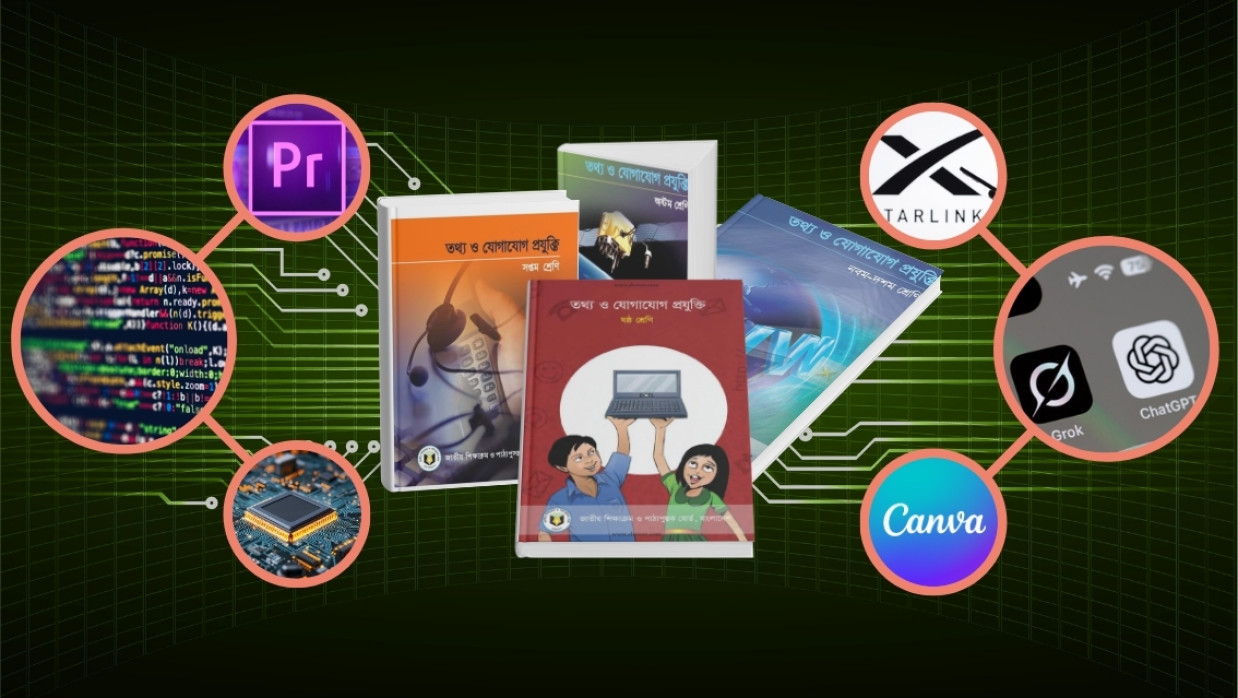
From Class 6 to Class 9, the textbooks will include Artificial Intelligence, Robotics, Fourth Industrial Revolution, Virtual Reality, Nano Technology, Smart Home, and concepts of Satellite Internet. Specific topics include how Starlink works, Cloud Computing, creating presentations with Canva, image processing using AI, video editing, cyberbullying, online rumors, cyber security and cyber laws, spamming, and Media Literacy.
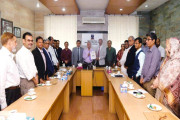
NCTB sources said that to make the ICT textbook relevant for the 2027 academic year, a special workshop titled ‘Content Development and Modernization of Information and Communication Technology Textbook’ was organized from March 2 to 5. New content for secondary students was finalized during this workshop.
Changes by Class:
Class 6:
- Chapter 2 renamed from ‘ICT Related Equipment’ to ‘Components of Information and Communication Technology’.
- Chapter 4 renamed from ‘Word Processing’ to ‘My Drawing and Writing’.
- A new Chapter 6 titled ‘Problem Solving through Programming’ has been added.
- Previously there were 5 chapters.
Class 7:
- Chapter 2 renamed from ‘Computer Related Equipment’ to ‘Components of Information and Communication Technology’.
- Chapter 3 renamed from ‘Safe and Ethical Use’ to ‘My Writing’.
- A new Chapter 6 titled ‘Problem Solving through Programming’ added.
Class 8:
- A new Chapter 6 titled ‘Problem Solving through Programming’ added.
(No chapter name changes or additions in Classes 9-10.)
Key Content Additions:
- Class 6: Introduction to video conferencing, AI, and Robotics in Chapter 1. New programming chapter with Scratch using story-based problem solving.
- Class 7: Introduction to Robotics, IoT, 3D Printer, and VR Glasses. New content on cyberbullying and online rumors. Algorithm and pseudocode added.
- Class 8: New lessons on Robotics, IoT, Smart Home, and AI. Satellite Internet (including how Starlink works), Cloud Computing, Excel graphs, and Google Sheets.
- Classes 9-10: Fourth Industrial Revolution, Virtual Reality, Nano Technology, Cloud Computing, Digital Twin, Canva presentations, AI image processing, Camtasia video editing, Media Literacy, Cyber Security, Hacking, Phishing, Spamming, and Database Management.
Experts noted that English-medium ‘O’ and ‘A’ level students are performing better in the job market due to their tech skills, while Bangla-medium students are lagging behind. This is why the ICT books for Classes 6 to 9 are being significantly updated.
NCTB Research Officer Md. Abdullah Al Zobaer told The Daily Campus: “We have taken this initiative to make students skilled in technology so they can keep pace with the modern world. That is why we are making major changes in the 2027 ICT textbook.”
NCTB Chief Editor Muhammad Fatihul Qadir told The Daily Campus: “We have initiated the revision and modernization of the 2027 ICT textbook.”
 Follow The Daily Campus on Google News