Government Spends Tk 13.5 Lakh per University Student Annually, Yet 32% Remain Unemployed
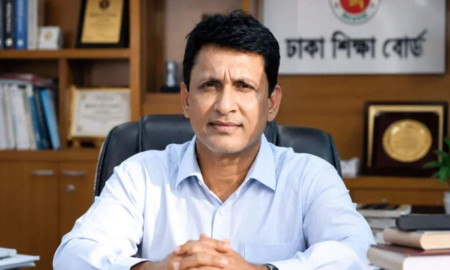
Education and Primary and Mass Education Minister Dr ANM Ehsanul Haque Milon has questioned the effectiveness of increased education spending, asking what purpose higher budget allocations serve if a significant proportion of university graduates remain unemployed despite substantial government investment in their education.
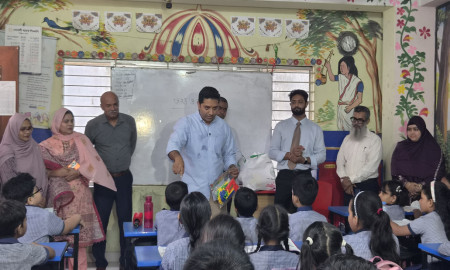
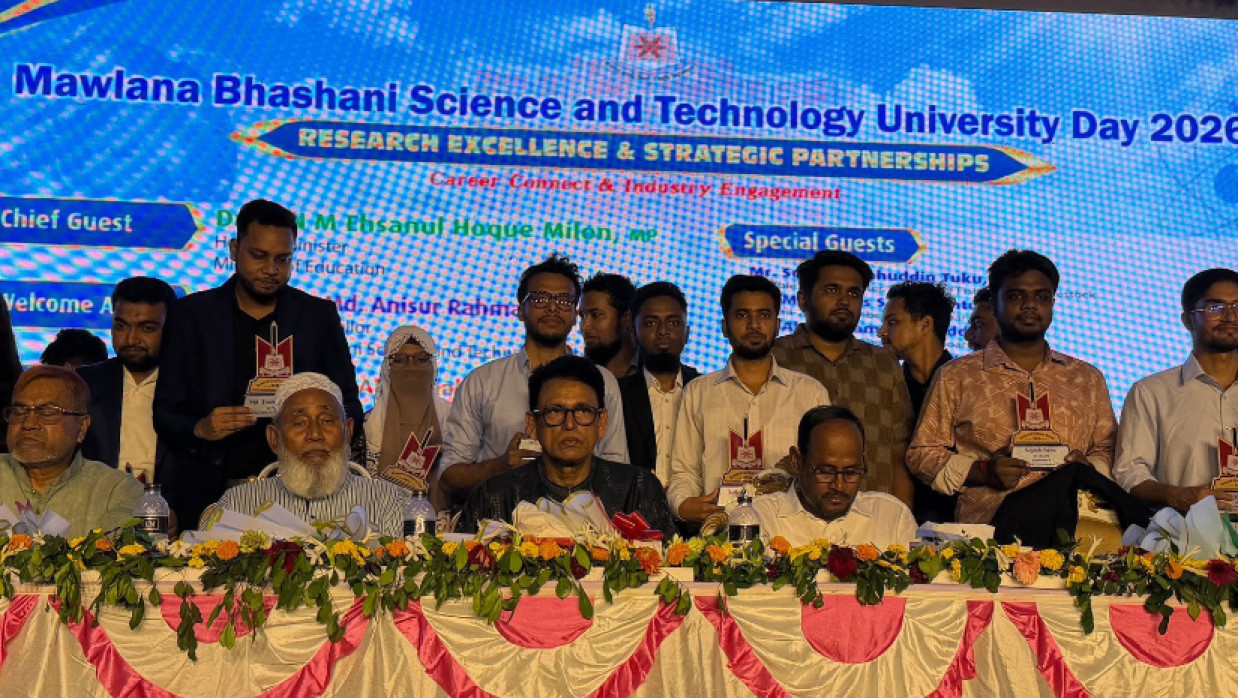
He made the remarks while speaking at an event at Mawlana Bhashani Science and Technology University on Tuesday, October 27.
The minister said the university produces only around 900 graduates a year against an annual budget allocation of Tk 125 crore. Calculating the per-student expenditure, he said the government spends approximately Tk 13.5 lakh on each student annually.
“The government is spending Tk 13.5 lakh on a student. Alongside that, parents are also spending money, aren't they? Per student per year, for five years at least, I do not know, but at least Tk 1 lakh is being spent on a child. So, over five years, that amounts to Tk 5 lakh, while the government spends Tk 13.5 lakh,” he said.
“Students can think about how much our country spends on each student. Then, if I ask the vice-chancellor and he tells me that the unemployment rate is 32%, what is the point of increasing our budget allocation?” he added.
Addressing the university's vice-chancellor, Milon stressed the need to regularly monitor the employment outcomes of graduates. He said universities must identify how many graduates remain unemployed, examine the reasons behind the situation and take necessary measures to reduce the rate.
The minister said education spending had increased under the leadership of Prime Minister Tarique Rahman. However, he emphasised that higher allocations alone would not be enough unless the funds were used effectively. Those responsible for the education sector must ensure that public expenditure delivers the expected outcomes and that waste is prevented.
To illustrate concerns over the effectiveness of public spending on education, Milon cited the example of a madrasa where only two out of 20 candidates passed an examination, despite the institution receiving Tk 4 lakh in monthly Monthly Pay Order (MPO) funding. This amounts to Tk 48 lakh annually, he noted, against which only two students passed.
He said the example highlighted the need to assess how public funds are spent by educational institutions and what results they produce. The education sector should not become one in which the government continues to spend money without achieving the expected outcomes, he added.
Milon also underscored the importance of building effective links between universities and industries to improve educational standards and expand employment opportunities. Research, he said, should not remain confined to academic settings but should also be used to address real-world problems.
Referring to memorandums of understanding (MoUs) signed between universities and various organisations, the minister said such agreements must go beyond formalities. Universities should have concrete action plans to assess the opportunities created for students through these partnerships, including progress in internships and employment.
Urging students to apply their knowledge to practical problems, Milon said obtaining academic certificates alone was not enough; graduates must develop the ability to put what they have learned into practice.
On the use of artificial intelligence (AI), he said students needed sufficient subject knowledge to verify information generated by AI tools. Without a sound understanding of a subject, he warned, users could be misled by inaccurate information.
The minister further stressed that developing a skilled workforce was particularly important for a populous country such as Bangladesh. Universities should prioritise research, innovation and employment-oriented education while strengthening coordination among universities, industries and the government to expand opportunities for graduates entering the workforce.
 Follow The Daily Campus on Google News