‘Isn't viva an exam?’ Zahid Ur Rahman defends higher oral marks in government job exams
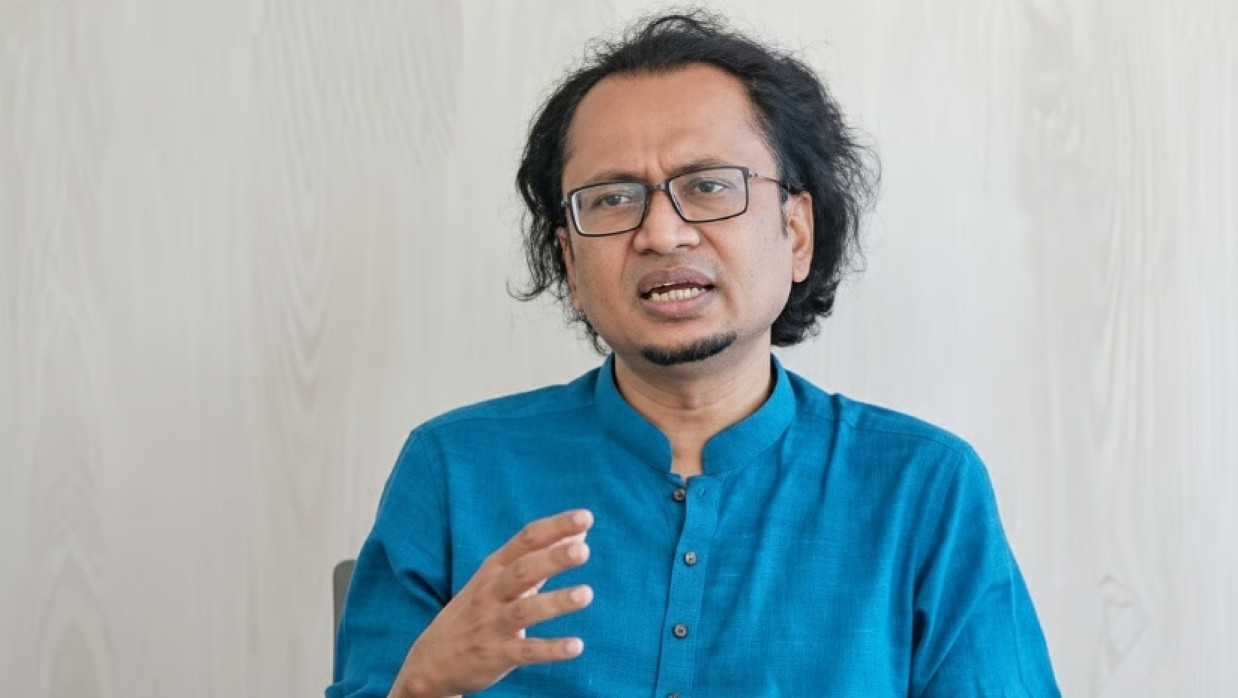
The government believes increasing the marks allocated to viva voce examinations in recruitment for government jobs can lead to better selections, Information and Broadcasting Adviser Dr Zahid Ur Rahman said on Tuesday.
He made the remarks while responding to questions from journalists at a press conference on the progress of various government activities.
The proposed changes to the government recruitment rules would increase the marks allocated to viva examinations for posts in grades 11 to 20, while reducing the pass mark in the written examination.
The move has prompted questions over whether giving greater weight to the viva could create more scope for favouritism and run counter to the spirit of the anti-discrimination student movement.
Zahid Ur Rahman acknowledged that viva examinations are subjective and can provide greater scope for personal preference.
“When there are more marks in the viva, since it is subjective, there is comparatively more opportunity for someone to favour a candidate. I am not disagreeing with that,” he said.
“At the same time, if we see a problem in the process, we should criticise it. The government believes that this kind of marking can produce something better, and the government has the legal authority to make the change. It has not done anything unlawful.”
‘Isn’t a viva an examination?’
Asked whether increasing viva marks conflicts with the spirit of the anti-discrimination student movement, the adviser challenged the premise of the question.
“You have raised the question, so you have to clarify it. Clearly say what you mean,” he told the journalist.
He then referred to his own experience as a medical student, where oral examinations carried significant weight.
“I studied medicine. I had to sit for a viva worth twice the marks of my written examination. We did not ask then whether there was corruption or whether someone was being wrongly passed,” he said.
“Anyone who has studied medicine knows that viva is the main examination there. So what is the problem with having a viva?”
He also questioned whether written examinations should carry greater weight in all types of professional recruitment.
“Take BCS or other examinations. We keep technical subjects at a lower weight. Do you think this system is right?” he asked.
‘A job is not just book knowledge’
The adviser argued that academic knowledge alone does not determine whether someone will perform well in a government job.
“Let me speak from my own experience. Is a job only about book knowledge? I don't think so at all,” he said.
He said the recruitment system had been changed because the government considered the previous system inadequate.
“You can say the government is doing this to facilitate corruption. You can say that you are selecting your preferred people. You can say that. When you are raising a question, you don't need to be so diplomatic,” he said.
“The job of a journalist is to ask questions. You can ask them. I am prepared to answer.”
Says recent viva experience changed his view
Zahid Ur Rahman also referred to his own experience of taking viva examinations, saying he had recently interviewed several candidates without knowing their written examination scores.
“I am not saying this on behalf of the government. I have taken several vivas, including some recently. I did not know how well they had performed in the written examination,” he said.
“But I found some candidates in the viva whom I felt should be selected even if they had not performed particularly well in the written examination. That was my perception.”
He said written examination scores may not fully capture the qualities required for a government position.
Referring to first-class government jobs, he noted that the BCS Administration cadre is the first choice for many candidates, followed by cadres such as the police.
“At the end of the day, we are administrators. Many of us perform well in the written examination. But to do well in a job, there are other aptitudes too, and in my view, a viva can assess some of those qualities better,” he said.
Calls on media to scrutinise recruitment
Zahid Ur Rahman also urged journalists and news organisations to scrutinise recruitment after appointments are made, particularly if specific allegations of irregularities emerge.
“I appeal to journalists and the media: if any specific allegation emerges after a recruitment, please talk about that as well,” he said.
“If there is any irregularity, you will certainly bring it to light.”
The proposed changes to government job recruitment have drawn particular attention to the increased weight of viva examinations. While the adviser defended the change as a way to assess qualities beyond written knowledge, he also acknowledged the subjective nature of oral examinations and the potential for personal preference.
 Follow The Daily Campus on Google News