Countries Most at Risk of Earthquakes: Experts Highlight Global Hotspots
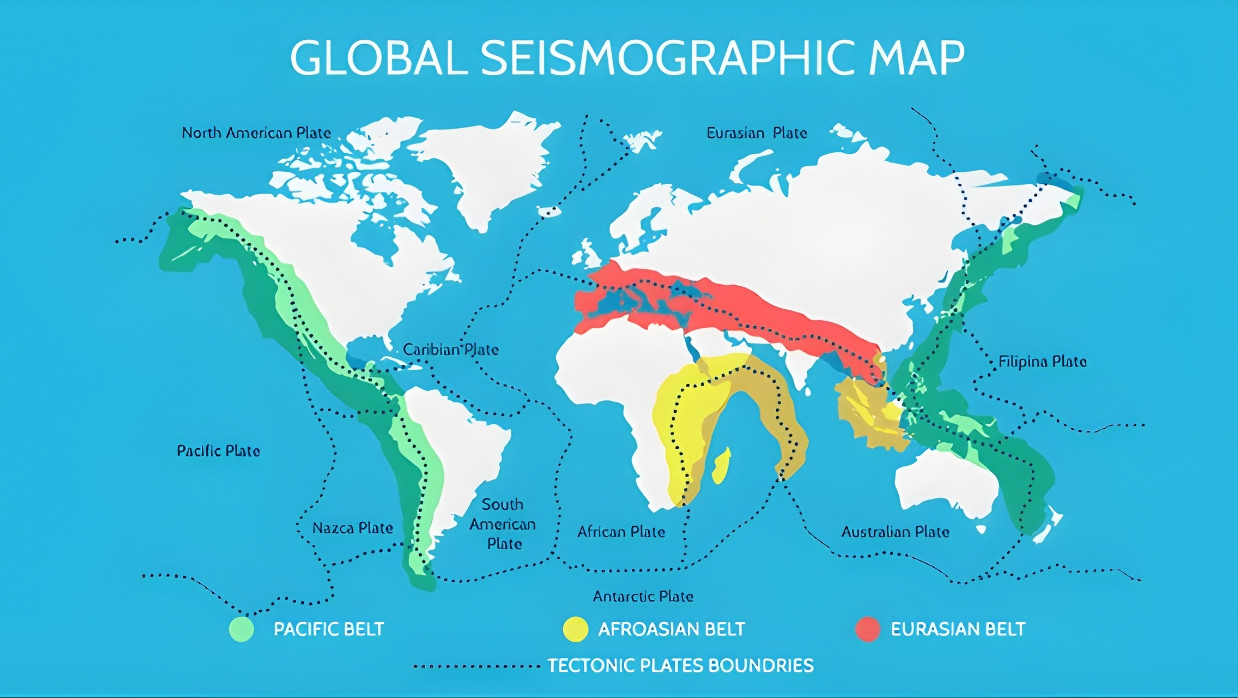
Geologists and disaster-risk agencies warn that several countries remain dangerously exposed to major earthquakes due to their position along some of the world’s most volatile tectonic boundaries. The renewed assessment follows a series of fresh tremors across Asia and the Pacific, putting global preparedness back into focus.
At the top of the global risk list are Japan, Indonesia, Chile, Mexico, and the United States (especially Alaska and California). All lie along the Pacific Ring of Fire, the 40,000-kilometre arc that generates more than 80% of the world’s seismic activity.
Japan sits at the intersection of four major tectonic plates, triggering thousands of quakes annually and enabling catastrophic events such as the 2011 Tōhoku earthquake and tsunami. Indonesia’s position near the Sunda Trench exposes it to repeated megathrust quakes, many of which have produced deadly tsunamis. Chile—home to the largest recorded earthquake in history—sits directly atop the collision between the Nazca and South American plates.
Across North America, California’s San Andreas Fault and the Cascadia Subduction Zone place the western United States under constant seismic watch, while Mexico’s subduction zones near Guerrero remain under pressure from accumulated tectonic stress.
Beyond the Pacific, Turkey, Iran, Nepal, and Pakistan also rank among the world’s most earthquake-prone countries. These nations lie along the active collision zones where the Indian, Arabian, and Eurasian plates push against each other, creating conditions for powerful and often devastating earthquakes. Dense populations and older building stock add to the region’s vulnerability.
Bangladesh: High-Risk, Low-Preparedness Zone
While not as frequently hit as countries on the Pacific Rim, Bangladesh is considered a high-risk seismic zone due to its proximity to major fault lines running along the Himalayan belt, the Dauki Fault, and the Burmese Arc. Experts note that Bangladesh sits at the meeting point of the Indian Plate and the Burmese micro-plate—an area where tectonic strain has been building for decades.
Dhaka, one of the world’s most densely populated megacities, is repeatedly rated as extremely vulnerable due to unplanned urbanisation, weak enforcement of building codes, and ageing infrastructure. Researchers warn that even a moderately strong earthquake near the capital could result in severe casualties and long-term disruption. The country has experienced significant tremors in the past, and seismologists caution that accumulated tectonic pressure in the region is “concerning and overdue.”
A global call for preparedness
While tectonic forces cannot be controlled, scientists stress that risk can be reduced through resilient construction, investment in early-warning systems, and strict urban planning. Without sustained policy attention, they warn, even moderate quakes could trigger disproportionate damage—particularly in rapidly growing urban centres across Asia.
 Follow The Daily Campus on Google News