From Eusébio to Figo to Ronaldo: The Lone Sherpas of Portuguese Football
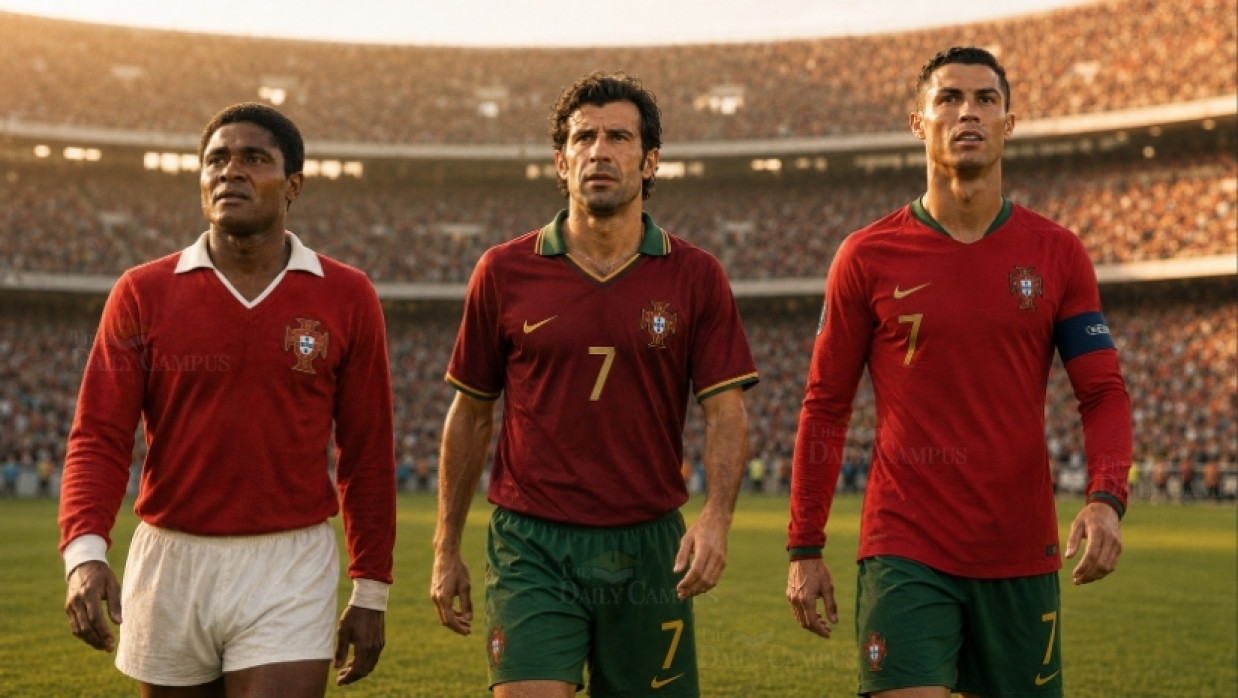
There is a particular kind of loneliness that attaches itself to Portugal at major tournaments. Not the loneliness of mediocrity, because Portugal has never been mediocre. It is the loneliness of men who arrive at the world stage carrying everything their country has, look out at the summit, and find themselves one ridge short. Always one ridge short.
The story begins, as all Portuguese football stories must, in the July heat of 1966 England.
The Black Panther Sets the Blaze
Portugal had never played in a World Cup before that summer. Sixty-four years into the history of the competition, they arrived as first-timers in a group containing Brazil, the back-to-back world champions. Nobody outside Lisbon gave them much of a chance. Then a boy from Mozambique, a colony of fascist Portugal, began to run.
Eusébio da Silva Ferreira was born in 1942 in Mozambique when it was ruled by a fascist state. He went on to play 64 times for Portugal, scoring 41 goals. But statistics do not capture what Eusébio meant in that English summer. He was one of very few Black players prominent at the time, and his very presence on the pitch was symbolic to many. Lord Herman Ouseley, Chairman of Kick It Out, later said that in the 1960s, Eusébio was a legend for Black people across Europe, a symbol alongside Pelé for becoming more prominent not just in football, but in life.
Portugal swept through the group stage without breaking sweat. They beat Hungary 3-1, Bulgaria 3-0, then did something no one expected: they beat Brazil 3-1. Eusébio scored twice that day. Portugal topped the group with a perfect record.
The quarter-final against North Korea should have been a formality. North Korea had caused one of the biggest upsets in World Cup history by eliminating Italy. An estimated 3,000 supporters from Middlesbrough travelled to Liverpool to cheer them on against Portugal. Within 25 minutes, North Korea led 3-0. Portugal were being embarrassed. Then Eusébio took over.
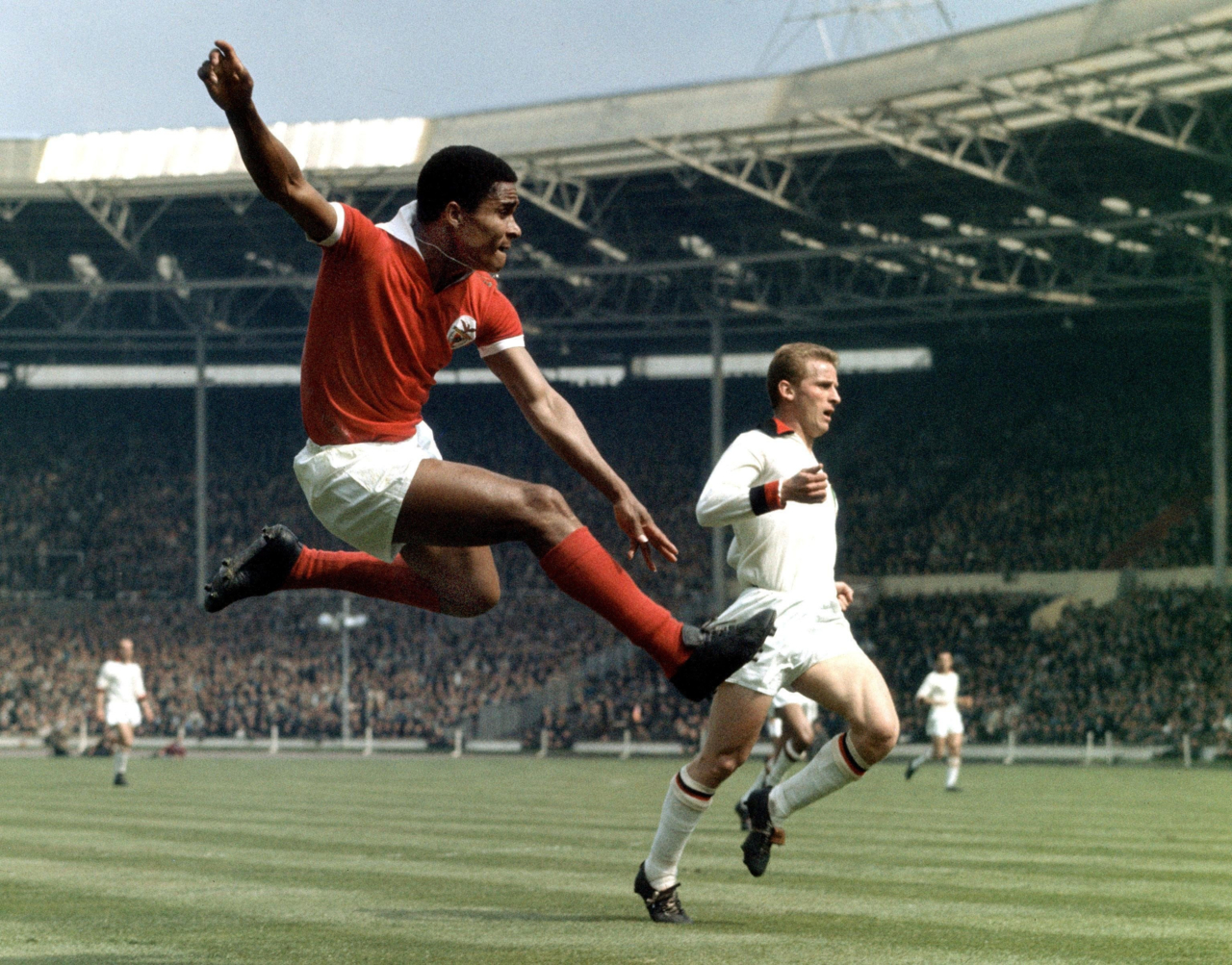
Portugal goals: Eusébio 27th minute, 43rd minute (penalty), 56th minute, 59th minute (penalty), José Augusto 80th minute. North Korea goals: Pak Seung-zin, Li Dong-woon, Yang Seung-kook. Four goals from one man, in a match his country were losing 3-0 before he got started. Portugal had survived an almighty scare, and the great Eusébio had cemented his legendary status. "I think all players have a special moment in their careers. For me, scoring four in that match was my special moment," Eusébio said. Bobby Charlton, the England captain who would lift the trophy weeks later, called it one of the best individual performances you'll ever see.
The semi-final brought England, the hosts. Portugal lost 2-1, with Eusébio converting a penalty in the 82nd minute. He wept on the pitch. Photographs of those tears circled the world. Portugal beat the Soviet Union to finish third. Eusébio won the Golden Boot with nine goals, including four against North Korea. That tally has only been surpassed by three players in a single edition of the World Cup: Just Fontaine with 13 in 1958, Sandor Kocsis with 11 in 1954, and Gerd Müller with 10 in 1970.
Nine goals in one tournament. Third place. A nation in tears of joy and sorrow at the same time. Portugal would not return to a World Cup for 20 years. In football, a generation is roughly a decade. Eusébio's generation watched two of them pass before the next chapter opened.
The Winger from Almada and the Weight of a Golden Generation
Luís Figo grew up in the working-class district of Cova da Piedade in Almada, across the river from Lisbon. He joined the Sporting CP academy at twelve. By the time he was in his mid-twenties, he was the best winger in the world. He is widely regarded as one of the best players of his generation and one of the greatest wingers in the history of the sport.
But Figo did not carry Portugal alone. He carried a Golden Generation, a term that, in football, usually means a group of exceptional talents who won nothing. Portugal's Golden Generation fits that definition exactly: Rui Costa, João Pinto, Nuno Gomes, Sérgio Conceição. Despite having no trophies to show for the Golden Generation, Figo managed to captain the team to their best World Cup performance since the Eusébio era in 1966, as well as helping Portugal to their best-ever result in the UEFA European Championship until they won it in 2016.
The road to that achievement ran through several near-misses and at least one humiliation. Euro 1996 in England was Portugal's first major tournament since 1984. They reached the quarter-finals and lost to the Czech Republic on penalties. Capable, promising but still not enough.
Then came Euro 2000, and for one tournament, it looked like Portugal would finally break through. The Euro 2000 campaign became a decisive moment in the history of Portuguese football. It was the time when the Golden Generation, who had somehow missed the 1998 World Cup, came of age. Portugal topped a group that included England, Germany, and Romania with three wins. Figo's goal against England, a powerful long-range strike, became a trademark image of his career and of that generation. They were eliminated in the semi-finals, losing to France on a golden goal from Trezeguet. So close.
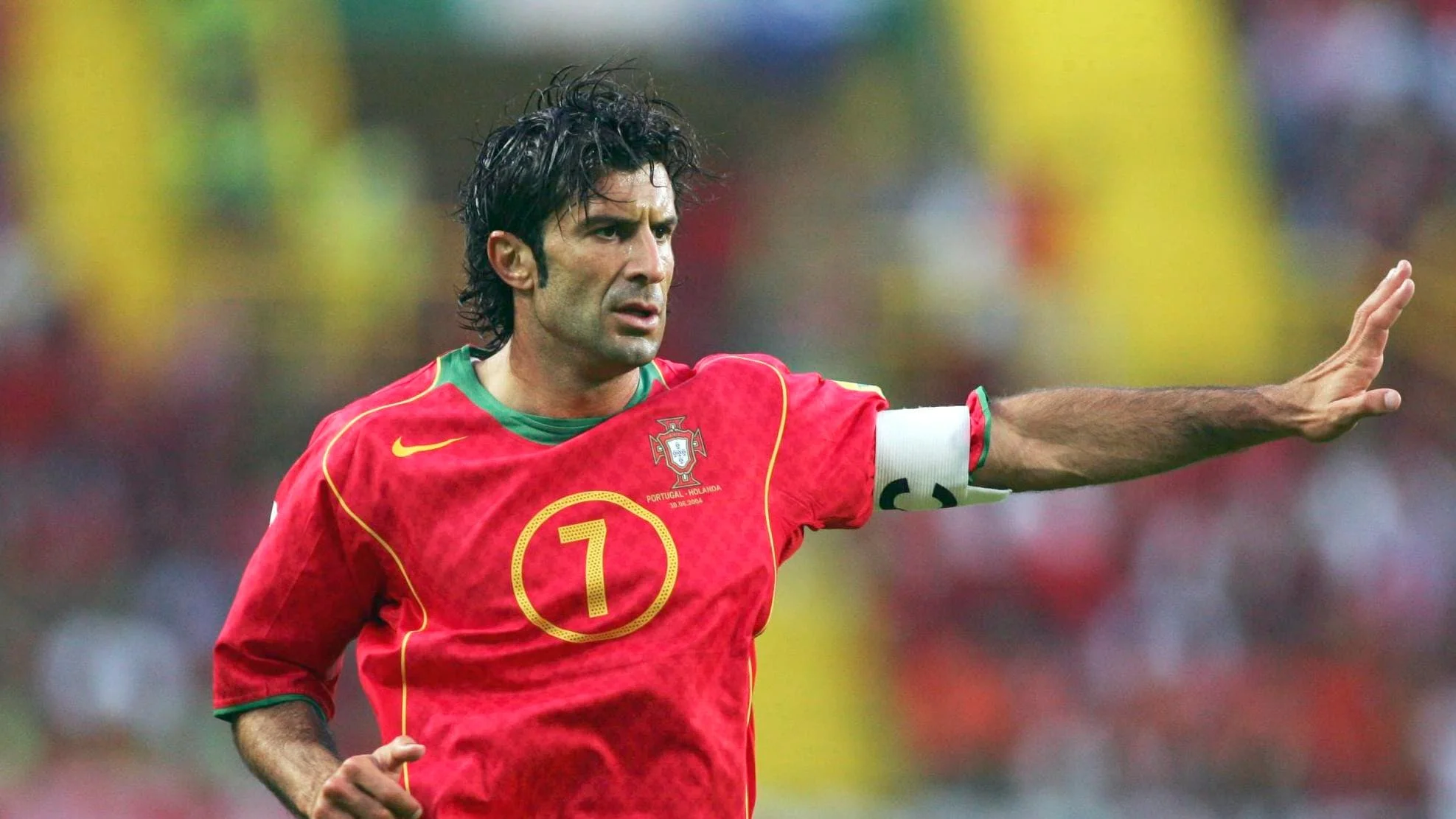
Two years later, the 2002 World Cup in South Korea and Japan. Portugal lost their opening game 3-2 to the United States, before Figo helped inspire a 4-0 win over Poland with an assist. Yet they could not avoid a 1-0 loss to Group D winners South Korea, and went home after the group stage. In their first World Cup since 1986, Portugal suffered group stage elimination while Figo failed to score a goal. For a group of players this talented, it was a genuine crisis of confidence.
Euro 2004 was supposed to be redemption. Portugal hosted it. Figo led the team. A nation expected. Greece led Portugal 2-0 in the opening game in Porto. Cristiano Ronaldo's last-gasp goal, stemming from Figo's corner, served only as consolation in a 2-1 defeat.
The hosts rallied, beat Russia, Spain, the Netherlands, and England. Figo was magnificent throughout, taking the man of the match award in the semi-final against the Dutch. Then came the final, and Greece again. Portugal became the first host nation to lose a European Championship final. Greece won 1-0.
Figo announced his retirement from international football that night. A decision he would later reverse.
In 2006, he came back. The winger laid on seven assists over six qualifying appearances, and the World Cup started much better for Portugal than 2002 as Figo assisted Pauleta for the only goal to beat Angola 1-0. Standing alongside him in that squad, wearing the number seven shirt and playing wide left, was a 21-year-old who had grown up idolising him. Cristiano Ronaldo had idolised Figo as he was growing up in the same Sporting academy. The baton was already being handed across, in the same dressing room, across the same training pitches.
Portugal beat the Netherlands in a ferocious round of 16 tie. They beat England on penalties in the quarter-final. Then France and Zinedine Zidane ended the dream in the semi-finals. Portugal met host nation Germany in the third-place play-off and while Figo laid on another assist, Germany took a 3-1 win. Fourth place. One better than 2002's group stage. Nowhere near the final.
In the third-place playoff, Figo received the captain's armband as a substitute and received cheers from both Portuguese and German fans. Both sets of supporters applauding a man who had given everything and come away with nothing but admiration. That is Portuguese football's particular heartbreak: admiration as the consolation prize.
Figo finished his international career with 127 caps and 32 goals. He remains fourth on Portugal's all-time scoring list. The Golden Generation dissolved. And that young man in the number seven shirt was left to carry what came next.
The Inheritance of CR7
Cristiano Ronaldo did not inherit a throne. He inherited a burden. By the time Portugal were building their squad for the 2010 World Cup, Ronaldo was 25 and already the best player on earth. He had just won the Champions League with Manchester United, then moved to Real Madrid for a then-world record fee. But at the World Cup in South Africa, he only scored one goal in a 7-0 win over North Korea. Portugal were knocked out in the round of 16 by eventual champions Spain. The whole country had expected so much more.
2014 was worse. A knee injury before the tournament left Ronaldo visibly compromised. Portugal lost 4-0 to Germany on the opening day, one of the most dispiriting defeats in their recent history. They salvaged draws and a single win to finish their group but could not escape it. Ronaldo scored a late winner in a 2-1 win over Ghana in their final group game but it was not enough for the team to go past the group stages. Three tournaments. Three near-misses or outright failures. The comparisons to Messi, another continental genius unable to win the World Cup, grew louder and more barbed.
At Euro 2016, Cristiano Ronaldo finally won a major international trophy with Portugal. But the tournament was anything but straightforward. Portugal failed to win a single group-stage match and advanced to the knockout rounds as one of the best third-placed teams. Ronaldo rescued his side with two goals in a thrilling 3-3 draw against Hungary. He then played a crucial role in victories over Croatia, Poland, and Wales, helping Portugal reach the final.
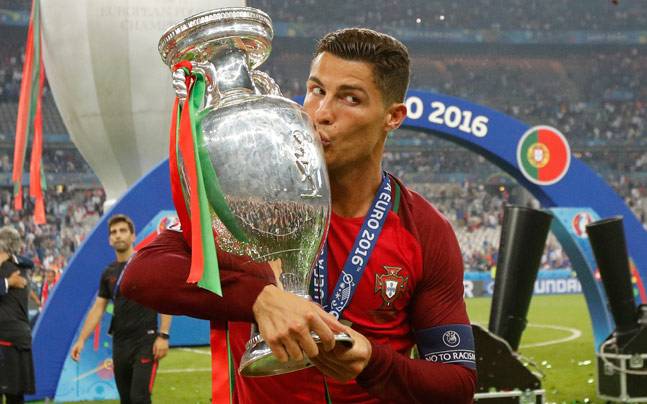
The final in Paris brought another moment of heartbreak. Against hosts France, Ronaldo was forced off in tears after suffering a knee injury just 25 minutes into the match. Yet from the touchline, he seemed to transform into an extra coach, constantly urging his teammates on and demanding they keep fighting. Portugal held firm. In extra time, Eder's goal secured a 1-0 victory and delivered the nation's first major international trophy. For years, Ronaldo had been criticized for Portugal's failures at World Cups. That night, however, he was no longer just a superstar. He was a European champion.
Then came 2018, and one of the great individual World Cup performances in the modern era. Portugal vs Spain. June 15, 2018, in Sochi. It was the match of the tournament's group stage. Ronaldo scored in the fourth minute. Diego Costa equalised. Ronaldo added a second. Costa equalised again. Then came the 88th minute, a free-kick from 25 yards, and Ronaldo curled it into the top corner. Three goals. A hat-trick. At 33 years and 130 days, he became the oldest player to score a World Cup hat-trick. Portugal drew 3-3 with Spain in what was, for those 90 minutes, the most exciting World Cup match in years.
He finished the 2018 World Cup with four goals overall. Portugal went out to Uruguay in the round of 16. Four goals. Still no knockout goal. Still no World Cup.
2022 in Qatar. Ronaldo arrived amid controversy, his relationship with Manchester United publicly collapsing before the tournament began. Portugal manager Fernando Santos dropped him from the starting XI, a decision that divided the country. He became the first male football player to score in five different World Cups when he netted a penalty in Portugal's 3-2 win against Ghana in their opening match. He was seen crying on the bench during matches when he was not playing. He came on as a substitute against Switzerland and Portugal won 6-1 without him scoring. Portugal reached the quarter-finals and lost to Morocco, the eventual semi-finalists. Ronaldo only came on as a substitute later in that defeat.
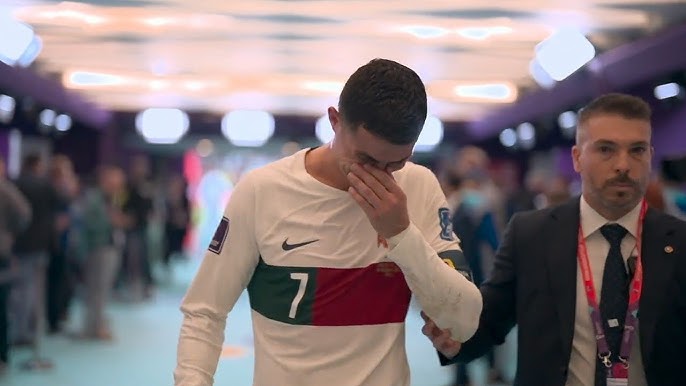
He sat in the dressing room after the Morocco match and cried. Photographs circled the world, as they had with Eusébio in 1966. Different tournament, different generation, the same Portuguese sorrow.
Houston, June 23, 2026. The Record Falls
Ronaldo arrived at the 2026 World Cup at 41 years old. The oldest man to have ever played for Portugal at a major tournament. Critics had written him off before the squad was even named. His club football in Saudi Arabia barely qualified as meaningful preparation for the world's biggest stage. Portugal's first group game against DR Congo ended 1-1. Ronaldo did not score. One goal would make him the first man to score at six different World Cups, but he could not find the net.
Then came Uzbekistan, in Houston. The fifth minute. Cristiano Ronaldo's right-footed strike in the sixth minute made him the first player to score a goal in six different World Cup tournaments. He ran to the corner flag, leapt, and performed his trademark SIUUUU celebration. At 41. At his sixth World Cup. In what may be the last competitive match he ever plays on football's largest stage.
And then, in the 39th minute, he scored again. The goal was Ronaldo's 10th at a World Cup, breaking a tie with Eusébio.
Ten goals. Six World Cups. Twenty years from that shy 21-year-old's first penalty against Iran in Germany in 2006 to a 41-year-old veteran in Houston, surpassing the man whose nine-goal record had stood since the summer England last hosted a World Cup.
Portugal won the match 5–0. Ronaldo nearly scored a hat-trick late on; his shot was cleared off the line in the first half, and he was just inches away from tapping in a third during stoppage time. Even at 41, he wants everything.
What These Men Carried
What links these three men across six decades is not just talent. Every nation at a World Cup has talent. What Portugal produced was something rarer: figures so singular, so completely above everyone else in the squad, that they became the whole story of their team. Eusébio was not Portugal's best player in 1966. He was Portugal.
Figo was not Portugal's best option in 2006. He was Portugal's past, present, and farewell. Ronaldo is not just Portugal's captain. For twenty years, he has been Portugal's answer to every question anyone ever asks about Portuguese football.
That kind of singularity is both a gift and a trap. Portugal have never lacked quality around these men. Fernando Couto, Rui Costa, Deco, Pepe, Bruno Fernandes, Bernardo Silva. The supporting casts have been strong. But no World Cup, across 60 years, has rewarded the individual genius route to the title. You cannot carry a World Cup on one man's back. Brazil needed Ronaldo and Rivaldo and Ronaldinho. France needed Zidane and Thuram and Desailly. Argentina in 2022 needed Messi and Di María and Álvarez.
Portugal have always come close enough to believe. The 1966 third place. The 2006 fourth place. The 2016 European Championship, which Ronaldo won, injured, from a touchline, becoming the first Portuguese player ever to lift a major international trophy. That night in Paris said something important: Portugal can win things. They are not cursed. They are not hexed. They are a football nation with the talent to reach every summit and the collective depth still to be fully tested.
Ronaldo has now scored 10 goals across six World Cups. He is still eight goals short of the all-time World Cup scoring record, which now belongs to Lionel Messi alone at 18, after the Argentine's brace against Austria on June 22 broke Miroslav Klose's previous mark of 16. Ronaldo probably will not reach 18. Atleast no one reasonably expects him to. But 10 goals across six tournaments, at 41, with a country on his back and a record belonging to Eusébio now surpassed, is its own kind of glory.
Eusébio scored nine in six appearances at one World Cup. Ronaldo took 24 appearances across six to reach ten. The numbers are almost beside the point. Both men played in a shirt that asked too much of one person. Both men gave everything they had. Neither man brought a World Cup home.
Portugal play on. The tournament continues. At 41, Ronaldo still chases the one thing that has eluded him longer than any other. What he will leave behind, regardless of what happens next, is the most complete portrait of Portuguese longing that football has ever produced: a man who wanted everything, gave everything, won almost everything, and stood at the foot of one final mountain, still climbing.
The lone sherpas of Portuguese football do not reach every summit. But no one has ever doubted they were trying.
 Follow The Daily Campus on Google News