The Theft and the Triumph
Inside Maradona’s Infamous ‘Hand of God’ and the 1986 World Cup Mastery
As the football world immerses itself in the high-stakes matches of the 2026 FIFA World Cup across North America, the historic stadiums of Mexico stand as timeless monuments to the sport’s most polarizing individual campaign. Exactly forty years before the current tournament, the 1986 World Cup in Mexico was entirely hijacked, defined, and ultimately won by a singular, transcendent, and deeply controversial figure: Diego Armando Maradona.
The 1986 tournament cemented Maradona’s legacy as an unrepeatable paradox—combining unparalleled footballing genius with flagrant, unrepentant gamesmanship. Nowhere was this dual identity more visible than during the legendary quarter-final clash between Argentina and England at the Estadio Azteca.
The Historical and Geopolitical Powder Keg
The June 22, 1986, encounter between Argentina and England was far more than a tactical battle on grass. It was a high-stakes geopolitical powder keg. Just four years prior, the two nations had fought a bitter, undeclared conflict over the Falkland Islands (Islas Malvinas), which resulted in the deaths of hundreds of young Argentine and British servicemen.
While players from both squads publicly downplayed the political overtones, the tension inside the stadium was palpable. For the Argentine populace and the players themselves, the match was viewed as a symbolic opportunity for sporting retribution.
Four Minutes of Madness: Chaos and Class
After a tense, goalless first half, the match exploded into history during a frantic four-minute window in the second half that would permanently alter the lexicon of global sport.
The 'Hand of God' (51st Minute)
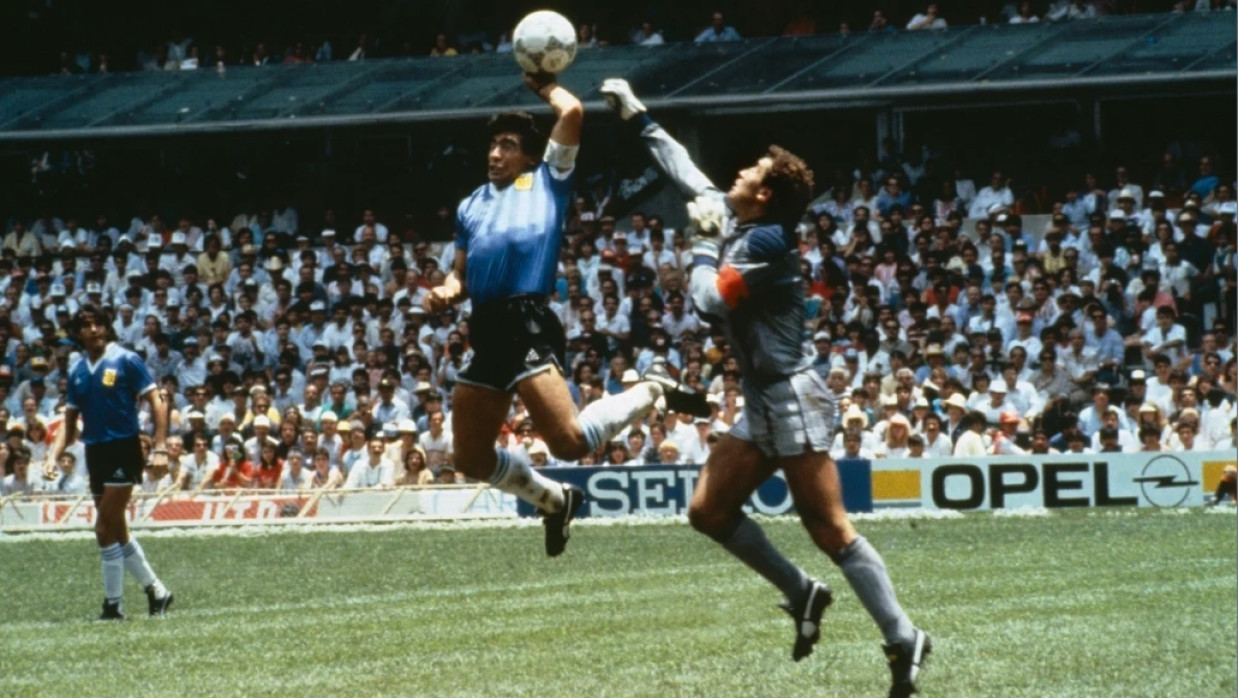
Maradona cut through the midfield and attempted a quick one-two pass with Jorge Valdano. The ball deflected off England defender Steve Hodge and looped high into the penalty area. England goalkeeper Peter Shilton, standing at 6-feet-1-inch, rushed off his line to punch the ball away. The 5-foot-5-inch Maradona leaped simultaneously, subtly raising his left fist next to his head and punching the ball past the stranded keeper into the net.
Despite furious protests from the English players who swarmed Tunisian referee Ali Bennaceur, the goal was allowed to stand. Shilton and his defenders were left apoplectic, but Maradona sprinted to the corner flag, urging his stunned teammates to celebrate so the officials wouldn't suspect foul play.
"A little with the head of Maradona and a little with the hand of God."
— Diego Maradona, addressing reporters at the post-match press conference.
The Goal of the Century (55th Minute)
Just four minutes after orchestrating the most infamous deception in sports history, Maradona produced an act of sheer, undeniable wizardry. Receiving the ball well within his own half, he turned away from two English midfielders with a sublime pirouette.
He then embarked on a breathtaking 60-yard dash, leaving Peter Beardsley, Peter Reid, Terry Butcher, and Terry Fenwick trailing in his wake. Feinting to shoot, he left goalkeeper Peter Shilton flat-on-his-back before sliding the ball into an empty net to make it 2-0. It was a goal of such staggering technical mastery that it was later officially voted by FIFA as the "Goal of the Century."
The Road to Glory and Ongoing Controversy
Argentina secured a 2-1 victory over England, and Maradona’s momentum proved completely unstoppable. He struck twice more in the semi-finals against Belgium, before providing the championship-winning, slide-rule assist to Jorge Burruchaga in the 85th minute of the final against West Germany, securing a 3-2 victory and hoisting Argentina’s second World Cup trophy.
While Argentina celebrated their triumph, the tournament left a legacy of deep-seated resentment in England and divided football purists worldwide. English veterans, most notably Peter Shilton, refused to forgive Maradona for decades, arguing that a cheat should never be celebrated as a champion.
Maradona, conversely, leaned heavily into the notoriety. In his later years, he admitted that the goal was a deliberate act of trickery, describing it as a symbolic pocketing of the British establishment following the Falklands War.
An Unrepeatable Legacy
Maradona’s 1986 campaign remains the ultimate benchmark for individual dominance in a team sport. He finished the tournament with five goals and five assists, directly involving himself in 10 of Argentina's 14 total tournament goals.
The 1986 World Cup proved that Diego Maradona did not play by the conventional rules of the world—either by elevating the sport to an art form or by breaking the rules of fair play to achieve his ends. It is precisely this volatile mix of devilry and divinity that ensures his 1986 triumph remains the most compelling chapter in football history.
 Follow The Daily Campus on Google News