Bangladesh, China Agree on Nine Areas of Education Cooperation, Including Teacher Exchanges
Bangladesh has backed the Beijing Agreement, a global framework for vocational and technical education standards, and signed a memorandum of understanding (MoU) with China to strengthen bilateral cooperation in technical education and skills development.
The two countries have also agreed on nine key areas of educational cooperation following a high-level bilateral meeting. The initiatives include modernising eight technical educational institutions in Bangladesh, introducing joint academic programmes, expanding scholarship opportunities and taking steps to establish a new technical and technology university. Officials also said plans were underway to create employment opportunities for Bangladeshi technical students at leading Chinese institutions.
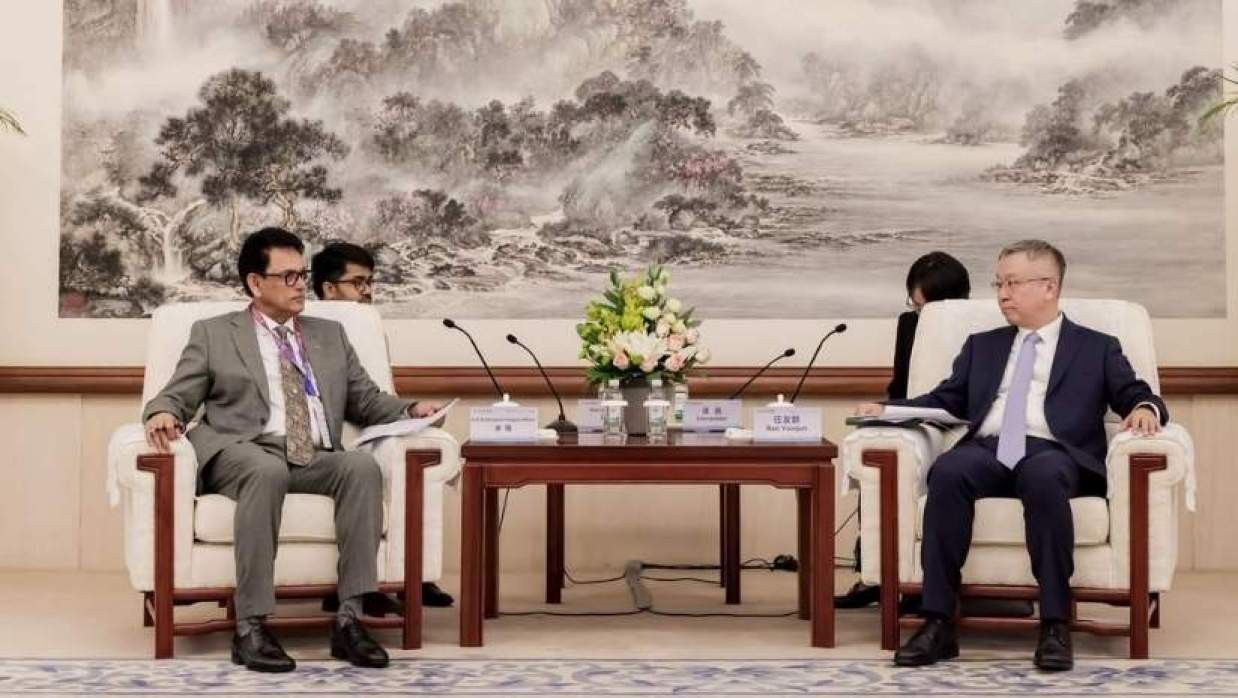
The global framework was announced at the closing ceremony of the 2026 World Vocational and Technical Education Development Conference in Tianjin, China, on Saturday (October 17). Before that, a high-level bilateral meeting was held on Friday night between Bangladesh’s Ministry of Education and Ministry of Primary and Mass Education and China’s Ministry of Education on the sidelines of the conference.
Under the proposed initiatives, eight Bangladeshi technical educational institutions will be modernised by adopting Chinese technical curricula, teaching methods and practical training models. The plans also include introducing joint technical academic programmes under the 2+2 and 3+1 models, establishing smart classrooms and modern training facilities, and creating employment opportunities for Bangladeshi technical students at leading Chinese institutions.
Education and Primary and Mass Education Minister Dr ANM Ehsanul Haque Milon represented Bangladesh at the meeting. At the conference’s joint signing ceremony, Milon and Chinese Vice-Minister of Education Wang Guangyan signed the bilateral MoU.
The two countries also agreed on nine major areas of educational cooperation, including establishing diploma vocational institutes based on Chinese standards, setting up smart classrooms and expanding opportunities to learn Chinese across Bangladesh.
The nine areas of cooperation are as follows:
-
Joint Bangladesh-China TVET team: A joint team on technical and vocational education and training (TVET) will be formed to coordinate technical education, curriculum development, teacher training and national skills certification.
-
Model demonstration TVET college: A model demonstration TVET college will be established in Bangladesh with Chinese technical assistance, modern laboratory facilities and industry partnerships.
-
Assessment and modernisation of technical colleges: Existing technical colleges in Bangladesh will undergo comprehensive quality and systems assessments under the supervision of Chinese experts, followed by improvements based on the findings.
-
Industry-education partnerships: Direct links between industry and education will be strengthened through partnerships between Chinese industrial enterprises and Bangladeshi technical institutions.
-
Chinese language and technical skills training: Nationwide integrated training programmes combining Chinese-language instruction with technical skills will be introduced in sectors including engineering, manufacturing, construction, healthcare and services.
-
Graduate development and employment: A comprehensive roadmap will be developed to support students through vocational training, formal certification, industrial internships and sustainable employment.
-
Teacher exchanges and institutional capacity building: Annual teacher-exchange and institutional capacity-building programmes will be introduced for Bangladeshi technical teachers and education administrators.
-
University collaboration: Joint research, academic exchanges and higher education cooperation between universities in the two countries will be substantially expanded.
-
Monitoring and evaluation: A formal monitoring and evaluation mechanism will be established to assess graduate employment, progress in project implementation and the overall impact of bilateral cooperation.
 Follow The Daily Campus on Google News