Inside the Bangladesh-Japan Economic Partnership Agreement
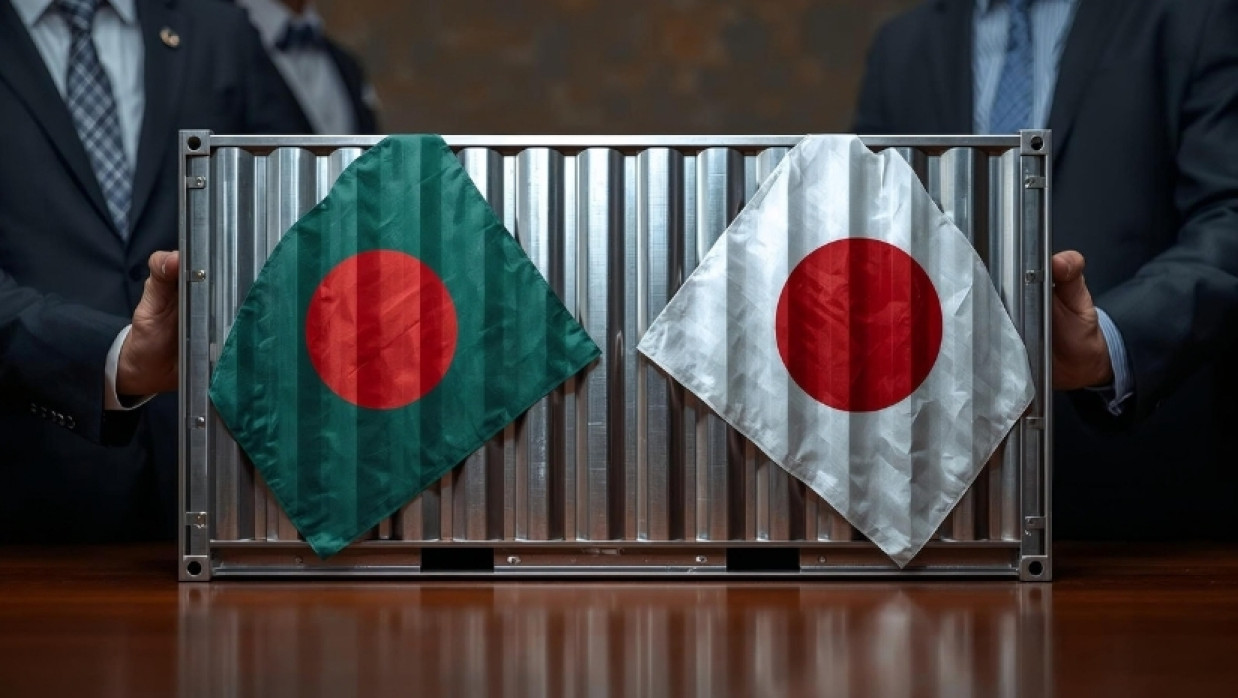
The signing of the Economic Partnership Agreement (EPA) between the People’s Republic of Bangladesh and Japan on February 6, 2026, represents a definitive pivot in the economic history of South Asia. Conducted in Tokyo at 3:00 pm Japan Standard Time, the signing ceremony featured Bangladesh’s Commerce Adviser, Sk. Bashir Uddin, and Japan’s State Minister for Foreign Affairs, HORII Iwao.
This agreement is not merely a bilateral trade pact; it is the first comprehensive EPA Bangladesh has ever signed and the first EPA Japan has concluded with a country still classified as a Least Developed Country (LDC). By formalizing this partnership just months before Bangladesh’s scheduled graduation from the LDC category in November 2026, both nations have signaled a shared commitment to ensuring that the transition into a developing economy is marked by growth rather than the shock of lost preferential access.
The Geopolitical and Economic Landscape: An "Inside the Deal" Analysis
The strategic timing of the EPA is inseparable from the broader global shifts in trade policy and the specific developmental timeline of Bangladesh. As the world navigates a landscape increasingly defined by protectionism and the restructuring of global value chains, the Bangladesh-Japan EPA serves as a legal and structural "lifeline".
For Bangladesh, the primary driver is the "Sword of Damocles" represented by the upcoming LDC graduation. Currently, as an LDC, Bangladesh enjoys duty-free, quota-free access to the Japanese market for approximately 97.9 percent of its tariff lines.
Without a binding agreement, this access would be replaced by Japan’s Generalised System of Preferences (GSP) or Most Favoured Nation (MFN) tariffs, which could impose duties ranging from 8 to 18 percent on critical exports like ready-made garments (RMG).
Japan’s interest in the agreement is equally strategic. Under the "China Plus One" strategy, Japanese firms are actively seeking to diversify their manufacturing bases away from over-reliance on a single geography. Bangladesh, with its burgeoning middle class, strategic location at the intersection of South and Southeast Asia, and a workforce of over 170 million, presents a compelling frontier for Japanese industrial expansion.
The EPA thus functions as a mechanism to institutionalize Japanese capital and technology within the Bangladeshi economy, transforming a relationship once defined by development assistance into one of deep economic integration.
The negotiation process itself was an exercise in accelerated diplomacy. While similar agreements in the region have historically taken 15 to 20 years to conclude, the Bangladesh-Japan EPA was finalized in roughly four years from concept to signature.
This rapid progression was catalyzed by a Joint Study Group (JSG) formed in 2022 to commemorate the 50th anniversary of diplomatic relations. Following the JSG's report on December 27, 2023, which recommended a framework covering 17 sectors, formal negotiations commenced in March 2024.
Despite a brief stall during the political changes of August 2024, the interim government, led by Chief Adviser Professor Muhammad Yunus, prioritized the deal as a national imperative for post-LDC survival.
| Key Milestone | Date | Significance |
| Joint Study Group Formation | 2022 |
Marks 50 years of ties; outlines 17 priority sectors. |
| JSG Report Publication | Dec 27, 2023 |
Recommends comprehensive negotiation framework. |
| Formal Negotiation Launch | Mar 12, 2024 |
Official start of trade talks in Dhaka. |
| First Round of Negotiations | May 19–23, 2024 |
Initial sessions held in Dhaka. |
| Political Transition / Interim Govt | Aug 5, 2024 |
Negotiations temporarily stalled; later accelerated. |
| Seventh and Final Round | Sept 3–12, 2025 |
Technical conclusion of talks in Tokyo. |
| Council of Advisers Approval | Jan 22, 2026 |
Cabinet-level approval to sign the deal. |
| Official Signing Ceremony | Feb 6, 2026 |
Signed in Tokyo by Sk. Bashir Uddin and Horii Iwao. |
| EPA Effective Notification | Feb 7, 2026 |
Formal publication to trigger implementation. |
Anatomy of the Trade in Goods: Tariffs and Market Access
The core of the EPA lies in the immediate and phased removal of trade barriers. Under the deal, Japan has granted immediate 100 percent duty-free access to 7,379 Bangladeshi products. This covers approximately 97 to 99 percent of Bangladesh’s current export basket to Japan, ensuring that the flagship RMG sector maintains its competitive edge. In a reciprocal but asymmetric gesture, Bangladesh has offered duty-free access to 1,039 Japanese products from the first day of the agreement’s enforcement.
The asymmetry of the agreement is a crucial feature designed to protect Bangladesh’s developing industrial base. While Japan’s liberalization is largely immediate, Bangladesh will phase out tariffs on several thousand additional Japanese products over transition periods lasting 4, 6, 8, 11, 12, or 16 years. For sensitive sectors or those with high revenue implications, the transition can extend up to 18 years. This gradual opening allows local industries to upgrade their technology and capacity before facing full competition from high-quality Japanese imports.
Strategic Sectors and Product Coverage
The agreement's impact is most visible in the ready-made garments sector, which currently accounts for the vast majority of Bangladesh’s $1.33 billion to $1.52 billion in annual exports to Japan. Industry stakeholders, including the Bangladesh Garment Manufacturers and Exporters Association (BGMEA), project that the EPA could help increase Japan’s share of total Bangladeshi garment exports from the current 3 percent to at least 10 percent by 2030, supporting the long-term goal of reaching $100 billion in apparel exports by 2035.
| Export Category | Pre-EPA Tariff (MFN/Post-LDC) | EPA Treatment |
| Knitwear (Garments) | 8.5% – 15% |
0% (Immediate) |
| Woven Garments | 10% – 15.5%+ |
0% (Immediate) |
| Leather and Footwear | Sensitive (High MFN) |
Phased access; limited immediate relief |
| Plastics and Light Engineering | Varying MFN rates |
0% (Immediate or phased) |
| Rice and Sugar | Restricted / Excluded |
Remains on Japan's negative list |
One of the most significant exclusions from Bangladesh’s immediate duty-free list is the automotive sector. Bangladesh deliberately chose not to grant duty-free entry to fully built Japanese automobiles. This policy choice is intended to incentivize global giants like Toyota, Honda, and Subaru to establish local assembly or manufacturing plants in Bangladesh, rather than simply exporting finished units from Japan or Thailand.
The commerce ministry believe this "automotive lever" could reshape the country’s industrial landscape, creating a local ecosystem for parts and accessories while fostering significant technology transfer.
Decoding the Rules of Origin: The RMG Transformation
Perhaps the most technical yet consequential victory for Bangladesh in the EPA negotiations is the preservation and formalization of the "Single Stage Transformation" rule for garments. Traditionally, many preferential trade agreements, such as those with the European Union under certain conditions, require a "Double Stage Transformation," meaning that both the fabric and the final garment must be produced within the exporting country to qualify for duty-free status.
For a country like Bangladesh, which still imports a significant portion of its woven fabrics and high-end synthetic materials, a double-stage requirement would act as a major non-tariff barrier.
The EPA’s inclusion of the single-stage transformation allows Bangladeshi exporters to qualify for zero-tariff entry into Japan by performing only the final assembly or sewing process domestically. This means manufacturers can source high-end fabrics, synthetic yarns, or specialized materials from third countries, including Japan or other global textile hubs, without incurring the 10-18 percent tariffs that would otherwise apply post-graduation.
This flexibility is expected to encourage a shift from basic cotton garments to high-value-added products made from man-made fibers (MMF) and technical textiles, where Japan holds a significant global market share in raw materials and chemicals.
| Rule of Origin Feature | Pre-EPA Context (LDC GSP) | EPA Provisions (Post-Graduation) |
| Transformation Requirement | Single Stage (Sewing only) |
Single Stage (Permanent & Binding) |
| Sourcing Flexibility | High (Fabric can be imported) |
Maintained; allows high-end MMF sourcing |
| Value Addition | ~35-40% required |
Maintained; protects export resilience |
| Status | Temporary / Revocable |
Legally Binding / Permanent |
The Services Sector and Labor Mobility: Tapping the "Silver Economy"
Moving beyond the traditional focus on goods, the EPA opens a massive new frontier in services and labor migration. Japan, facing an acute labor shortage due to an aging population, has agreed to open its labor market to Bangladeshi professionals across 120 sub-sectors in 16 categories. In return, Bangladesh has opened 92 to 98 sub-sectors in 12 categories for Japanese service providers, focusing on areas where Japanese expertise can catalyze local development.
This provision is a cornerstone of the "new era" of bilateral cooperation described by Chief Adviser Professor Muhammad Yunus. The targeted sectors include:
-
Information Technology (IT) and Engineering: Creating pathways for Bangladeshi software engineers, data analysts, and civil engineers to integrate into Japanese tech ecosystems.
-
Healthcare (Nursing and Caregiving): Directly addressing Japan’s demographic "silver economy" needs by recruiting skilled Bangladeshi nurses and caregivers.
-
Education and Training: Facilitating the exchange of academic professionals and specialized trainers.
-
Skilled Labor Mobility: Japanese authorities have announced intentions to recruit at least 100,000 workers from Bangladesh over the next five years to mitigate labor shortages in production industries.
To capitalize on this, the Bangladeshi government has already begun establishing Japanese language institutes and technical certification programs to ensure that workers meet the high standards and cultural requirements of the Japanese market.
This strategic alignment of Bangladesh’s "youth bulge" with Japan’s demographic deficit is expected to significantly boost remittance inflows and improve the quality of the Bangladeshi workforce through exposure to Japanese management and technical standards.
Investment Protection and the Japanese Economic Zone (Araihazar)
Attracting Japanese Foreign Direct Investment (FDI) is a central objective of the EPA. While Japan has long been Bangladesh's largest development partner through Official Development Assistance (ODA), direct private sector investment has remained relatively modest at approximately $500 million to $507 million.
The EPA provides a robust legal framework for investor protection, dispute resolution, and intellectual property rights, which are critical for building Japanese corporate confidence.
A physical manifestation of this partnership is the Japanese Economic Zone (JEZ) in Araihazar, Narayanganj. Developed as a joint venture between the Bangladesh Economic Zones Authority (BEZA) and Sumitomo Corporation, the zone covers 1,000 acres and has been equipped with world-class infrastructure financed by JICA.
The EPA is expected to accelerate the occupation of this zone, with business leaders projecting that it could draw an additional $1 billion in Japanese investment in the near future.
| Status of Japanese Economic Zone (Araihazar) | Data Point |
| Total Land Area |
1,000 Acres (Phased development) |
| Phase 1 Progress |
500 Acres developed; handover of 190 acres completed |
| Operational Firms |
Singer Bangladesh (Daily: 1,000 refrigerators/TVs) |
| Upcoming Firms |
Lion Kallol (March/April 2026), NICCA Chemical, Artnature |
| Total Investment Potential |
Estimated $5.5 billion across all upcoming zones |
| Infrastructure Support |
JICA funding at 0.01% interest; gas expected mid-2025 |
The presence of firms like NICCA Chemical and Sumitomo suggests that the EPA is already fostering "backward linkage" investments, where Japanese companies produce the chemicals and machinery needed by Bangladesh’s garment and pharmaceutical sectors locally. This reduces lead times and increases the domestic value addition of Bangladeshi exports, making the country a potential base for Japanese industry in South Asia.
Bilateral Trade Dynamics and Revenue Impact: A Numerical Review
The trade relationship between Bangladesh and Japan has historically been characterized by a trade deficit for Bangladesh, though both sides have seen consistent growth. In the fiscal year 2024-25, Bangladesh’s imports from Japan stood at approximately $1.87 billion, while exports reached $1.33 billion to $1.41 billion.
Bangladesh-Japan Trade Statistics (FY2024-25)
| Metric | Value (USD) | Key Commodities |
| Bangladesh Exports to Japan | $1.33B - $1.52B |
RMG (Non-knit suits, sweaters), Jute, Fish/Shrimp |
| Bangladesh Imports from Japan | $1.81B - $1.87B |
Iron/Steel, Scrap Iron, Vehicles, Machinery |
| Trade Balance | ~$450M - $540M (Deficit) |
Favors Japan but narrowing |
| Export Growth (YoY) | 8.2% |
Driven by RMG expansion |
The fiscal impact of the EPA on Bangladesh’s national revenue is expected to be minimal. Commerce Adviser Sk. Bashir Uddin noted that many of the 1,039 Japanese products granted initial zero-duty access—such as industrial raw materials, yarn, and food processing machinery—already enter at low tariff rates. The estimated annual revenue erosion is approximately Taka 200 million ($1.7 million) to Taka 20 crore, which the government deems "insignificant" compared to the broader economic gains of industrialization and export security.
Strategic Implications: The EPA as a Diplomatic Template
The successful conclusion of the Japan-Bangladesh EPA is more than a single-country achievement; it is a "blueprint" for Bangladesh’s future trade diplomacy. The Council of Advisers has noted that the agreement will simplify the process of signing similar deals with the European Union (EU), South Korea, Malaysia, Singapore, and the United Arab Emirates (UAE).
The Post-LDC Graduation Strategy
Bangladesh is scheduled to graduate from the LDC category on November 24, 2026. This transition will end the "Everything but Arms" (EBA) and other LDC-specific trade preferences. While Japan has extended GSP support for graduating countries until 2029, the EPA provides a permanent and binding framework that bypasses the volatility of unilateral preference schemes.
| Partner / Bloc | Negotiation Status (Feb 2026) | Strategic Objective |
| European Union |
Letter of interest sent Sept 2025; seeking FTA |
Secure zero-duty for $25B export market |
| South Korea |
2nd Round of CEPA talks in Dhaka (Jan 26, 2026) |
Expand footprint in high-tech and South Asia |
| UAE |
CEPA talks scheduled for Feb/Mar 2026 |
Attract FDI in energy and logistics |
| United States |
Reciprocal tariff reduction negotiations ongoing |
Address the 15%+ tariff on RMG exports |
| RCEP |
Technical team formed; gap analysis underway |
Join world’s largest trade bloc to compete with Vietnam |
The "Inside the Deal" narrative reveals that the EPA with Japan was prioritized not only for its economic value but as a signal to the global community of Bangladesh's readiness for high-standard, 21st-century trade rules. The agreement covers not just tariffs, but digital trade, e-commerce, environmental standards, and intellectual property rights; areas where Bangladesh must improve to join the Regional Comprehensive Economic Partnership (RCEP) or negotiate with the EU.
Risks, Challenges, and Domestic Sensitivities
Despite the overwhelming optimism from government and industry leaders, the EPA carries inherent risks. The gradual liberalization of the Bangladeshi market will expose domestic producers to highly efficient Japanese competition.
Former WTO Cell Director General Md Hafizur Rahman warned that duty-free entry for Japanese plastics, glass, and light engineering products could undermine local firms that have only recently achieved self-sufficiency. Specifically:
-
Plastics and Glass: Local capacity currently meets domestic demand; Japanese imports could disrupt these developing sectors.
-
Pharmaceuticals: While Bangladeshi medicines enjoy LDC waivers (TRIPS), duty-free entry for Japanese high-tech medical devices and protective equipment under the EPA may create one-sided competition.
-
Revenue Management: While the initial impact is low, the cumulative effect of phasing out duties on over 9,000 Japanese products over 12-16 years will require a significant shift toward domestic tax collection (VAT/Income Tax) to maintain fiscal stability.
Furthermore, the "paper opportunity" of the EPA can only be translated into "tangible benefit" if Bangladesh addresses its structural bottlenecks. These include improving port efficiency (Matarbari Deep Sea Port), upgrading customs to computerised systems, and ensuring compliance with updated environmental rules like JIS L 0001: 2024.
A Historic Paradigm Shift
The Bangladesh-Japan Economic Partnership Agreement signed on February 6, 2026, marks the end of an era of unilateral dependency and the beginning of a mature, rules-based economic partnership. By securing a binding legal framework for duty-free access, Bangladesh has effectively mitigated the most severe trade risks associated with its graduation from LDC status.
Chief Adviser Professor Yunus’s description of the deal as "historic and epoch-making" reflects the reality that this agreement is the first brick in the wall of a new, post-LDC trade architecture.
The deal’s success will ultimately be measured not by the signing ceremony in Tokyo, but by the number of Japanese factories that rise in the Araihazar Economic Zone and the number of Bangladeshi professionals who find high-skill employment in Tokyo. By preserving the Single Stage Transformation for garments and strategically leveraging the automotive sector for FDI, Bangladesh has demonstrated a nuanced understanding of trade diplomacy.
As the first of many anticipated trade agreements, the Japan-Bangladesh EPA has set the stage for the country’s emergence as a competitive, middle-income economy, anchored by a deep-rooted friendship with the world’s fourth-largest economy. The "strategic lifeline" has been cast; the responsibility now lies with the institutions of Bangladesh to pull the nation toward its $100 billion export target and a future of shared, sustainable prosperity.
The notification of the agreement on February 7, 2026, begins the countdown to a more integrated, technology-driven, and resilient Bangladeshi economy. For the professional observer, the message is clear: Bangladesh is no longer just a recipient of aid; it is a serious partner in the global trade arena.
 Follow The Daily Campus on Google News