The price of a trade lifeline
Is Dhaka’s election-eve deal with Washington a sovereign gamble?
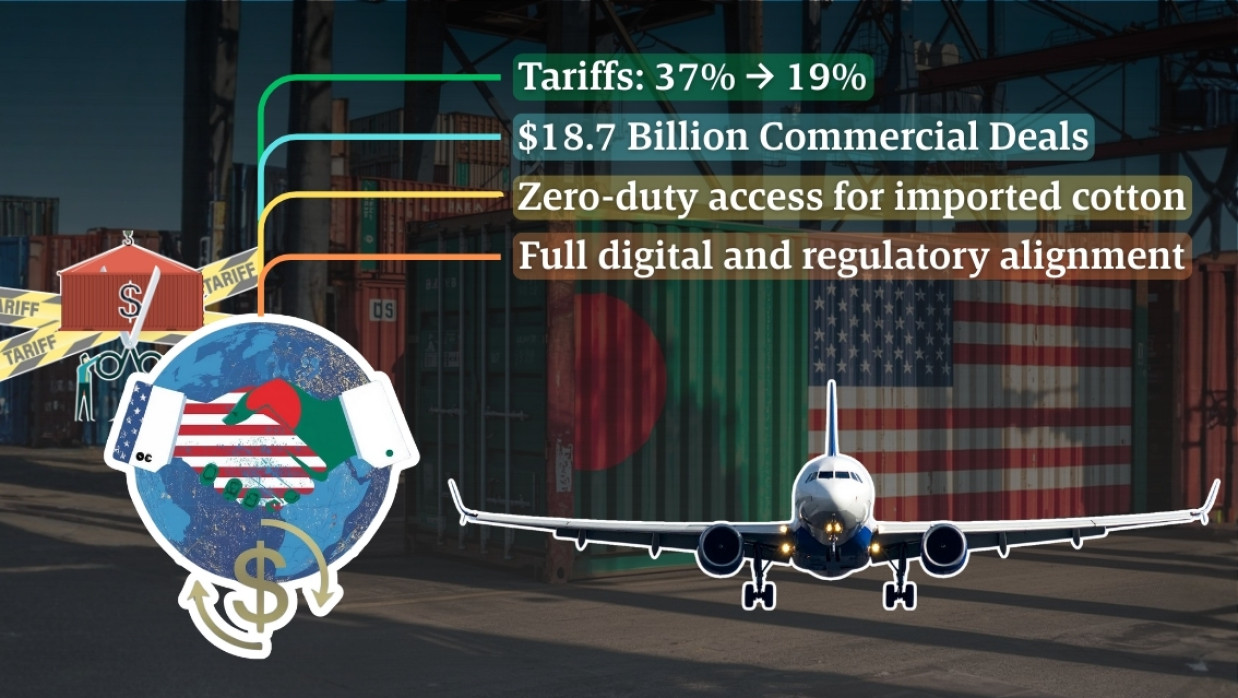
In the high-stakes theater of global trade, few moves are as audacious as the deal struck between Washington and Dhaka this Monday. Signed on February 9, 2026, just three days before Bangladesh’s 13th National Parliamentary Election, the Agreement on Reciprocal Trade (ART) is being framed by the interim government as a masterstroke of economic diplomacy.
But as the ink dries on a pact that slashes U.S. tariffs to 19 percent and promises zero-duty access for garments, a more sobering reality emerges. Bangladesh may have just traded its long-term policy sovereignty for a short-term electoral lifeline.
For decades, the ready-made garment (RMG) sector in Bangladesh has been the engine of its economy. Under the new agreement, the 37 percent reciprocal tariff imposed by the U.S. in April 2025 has been cut nearly in half, surpassing the August 2025 reduction to 20 percent. This 19 percent rate puts Bangladesh on a competitive footing with neighboring India, which currently sits at 18 percent.
However, the crown jewel of the deal, a zero-tariff mechanism for apparel, is no gift. It is a strictly proportional exchange. Duty-free access is granted only in relation to the volume of U.S. produced cotton and man-made fibers that Bangladesh imports. By tying the fate of its factories to American raw materials, Dhaka has effectively outsourced its supply chain strategy.
This circular trade ensures that for every dollar earned in exports, a significant portion is funneled back to U.S. growers. This shift could potentially devastate local spinning mills that rely on diverse and cost-competitive global sourcing from regional partners.
The price of market access extends far beyond textiles. The joint statement reveals a laundry list of concessions that reshape the nation's regulatory landscape:
-
Digital Surrender: Bangladesh has committed to the free transfer of data across trusted borders and a permanent moratorium on customs duties for electronic transmissions at the WTO. Dhaka has effectively abandoned data localization protections, a move neighbors like India successfully resisted to protect their domestic tech industries.
-
Regulatory Alignment: From accepting vehicles built to U.S. Federal safety and emissions standards to recognizing U.S. FDA certifications and prior marketing authorizations for pharmaceuticals, Dhaka is harmonizing its regulatory landscape with American interests.
-
The Boeing Diplomacy: The agreement is bolstered by massive commercial deals, including the procurement of 14 Boeing aircraft at an estimated $3.7 billion and a staggering $15 billion energy commitment for LNG and energy products over the next 15 years.
-
Agricultural Mandates: Bangladesh has pledged $3.5 billion for U.S. agricultural imports, including wheat, soy, and corn, further deepening the trade link.
The most controversial aspect of the deal is its timing. With the nation heading to the polls on Thursday, February 12, the interim government led by Muhammad Yunus is making commitments that bind the next elected administration for over a decade. The deal was finalized just as the official campaign period ended on February 10, leaving no time for public or parliamentary debate.
"As a matter of principle, an interim administration should refrain from entering into long-term sovereign agreements," says Nurul Huda Sakib, Professor and Chairman of the Department of Government and Politics at Jahangirnagar University. "Their primary mandate is to facilitate a smooth transition and ensure a credible election. Any major policy move made in such haste on the eve of a national vote inevitably raises serious questions regarding transparency."
Critics argue that a caretaker administration lacks the mandate to sign away digital sovereignty or commit billions in future spending. By finalizing this deal few hours before the literal eve of the election, the administration has presented a fait accompli to whoever takes power next.
Professor Sakib warns that this creates an accountability vacuum: "An interim government lacks the direct democratic mandate that a popularly elected government possesses. Committing the nation to 15-year contracts directly conflicts with the elected government’s own manifesto and policy priorities, which are the true reflections of the people’s will."
Whether this was a move to stabilize a fragile economy or a bid for international legitimacy before the concurrent July Charter referendum, the result is the same. The 13th Parliament will walk into a room where the major economic furniture has already been bolted to the floor.
Regarding the digital and regulatory shifts, Prof. Sakib notes that imposing these frameworks right before a transition risks undermining the economic agency of future leadership. "Only an elected government, accountable to its constituents, has the legitimacy to decide the extent of such concessions," he adds.
There is no denying that the 19 percent tariff provides an immediate shot in the arm for a struggling export sector. However, the Reciprocal Trade doctrine is a two-way street that feels heavily tilted. Bangladesh has secured a seat at the table, but it has paid for it by surrendering its right to choose its own suppliers, its own data rules, and its own regulatory future.
As the 12.7 crore voters of Bangladesh cast their ballots this Thursday, they must realize that while they are choosing their next leaders, their nation's economic path for the next fifteen years has already been somewhat crafted for them.
 Follow The Daily Campus on Google News