Memories of the 1990 DUCSU Election and the Administration’s Hidden Struggles
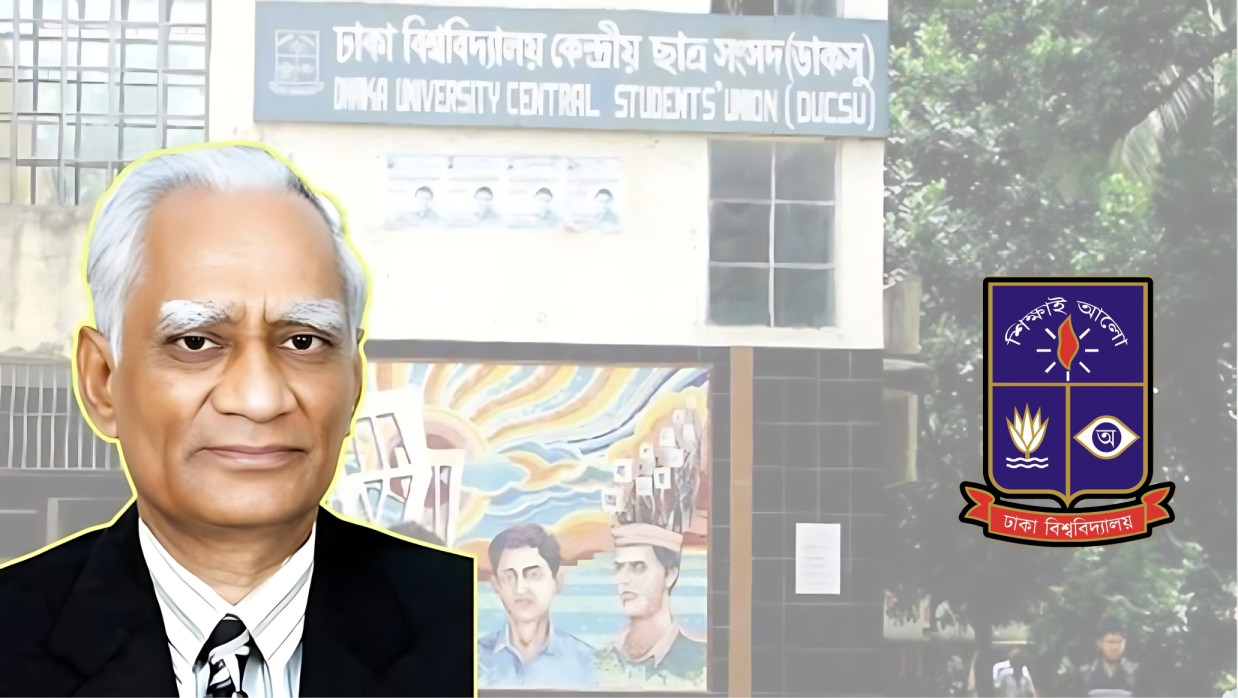
Professor Dr. Mohammad Moniruzzaman Miah, former Vice-Chancellor of Dhaka University, served from 24 March 1990 to 31 October 1992, a brief yet eventful tenure filled with unique experiences. In his memoir, compiled in 2009 for the book Saurabhe Gaurabe Dhaka Biswabidyalay, he reflects on the challenges of conducting the Dhaka University Central Students’ Union (DUCSU) election on 6 June 1990 and the subsequent suspension of elections the following year. Writing years later, without a diary and facing memory lapses, he relied on recollection, prompted by the University Alumni Association’s General Secretary, Rokibuddin Ahmed, to document these events despite the challenges of time.
During his tenure, Dhaka University had 28,000 students, a vibrant yet emotionally charged group, many influenced by external political ideologies. While individual demands were often unattainable, collective needs could be addressed through representative unions like DUCSU and hall unions. The previous election, held roughly one and a half years earlier, had faced allegations of irregularities, rendering it ineffective. Determined to facilitate a fair process, Professor Miah initiated efforts to hold elections, emphasizing administrative neutrality and a weapons-free campus. His resolve to maintain impartiality was firm, but ensuring a safe campus required government support, which he found favorable due to personal connections. The then-Prime Minister and Education Minister, Kazi Zafar, a former junior at Rajshahi College, and the Inspector General of Police, a university contemporary, shared good relations with him, ensuring police assistance to keep the campus free of arms.
To ensure transparency, Professor Miah met with the Prime Minister and senior police officials, including the Inspector General, and publicized the discussions through electronic media to demonstrate his commitment to a fair election. Accompanied by the Proctor and Provosts, he emphasized preventing any law-and-order disruptions. He also invited newspaper editors to observe the election arrangements, though none attended, likely relying on their reporters’ coverage. The 1990 DUCSU and hall union elections were widely praised as peaceful, fair, and impartial. The US Ambassador in Dhaka, speaking at a Rotary or Lions Club event, commended the election as proof that a determined administration could ensure neutrality, a statement reportedly published in The Daily Star.
However, the process was not without challenges. A significant issue arose over the eligibility of former students, no longer enrolled, to contest the election. Most faculty, especially those in administrative roles, opposed their participation, as did Professor Miah. Yet, these former students, united in their demand, protested vigorously. One, calling from the DUCSU office, accused him of acting as a government agent to favor compliant candidates, threatening to disrupt the election if barred. After discussions with the Deans, Provosts, Proctor, and election committee, some suggested admitting a few representatives from each student group into short-term certificate or diploma courses to resolve the issue. Despite objections from the Nutrition and Food Science faculty, Professor Miah persuaded them to agree, enabling the election to proceed.
Another challenge involved an investigation into an attack on a female students’ procession, likely at Shamsunnahar Hall. During a visit there, female students blocked the main gate, trapping him and hall administrators for hours. Negotiations failed, but he waited patiently until the students relented, allowing him to exit swiftly. A more alarming incident occurred at Madhur Canteen, where he received reports that Chhatra Dal candidates Aman and Khokon were being coerced at gunpoint to withdraw their nominations. Arriving alone, as no Proctor or faculty were available, he found no firearms but saw water being poured on the candidates, confirming the intimidation. Addressing the crowd firmly, he declared he would not tolerate weapons or physical assaults on campus, averting a crisis that could have derailed the election.
Despite the successful 1990 election, the following year’s DUCSU election faced escalating violence, reflecting national political tensions. As the election approached, campus unrest grew, with groups unlikely to win allegedly fueling disorder. Incidents included the assault of the Proctor’s son, vandalism of the Vice-Chancellor’s, Pro-Vice-Chancellor’s, and Election Commissioner’s offices, gunfire and bombings near Shamsunnahar Hall, further vandalism of the Vice-Chancellor’s secretary’s office, armed intrusions into Provosts’ residences and female halls, an attack on a BDR vehicle, and a three-hour shootout between two student groups on 17 March at Nilkhet Road. This violence forced the suspension of the DUCSU election and the closure of the university, a deeply painful decision for Professor Miah. As of September 2009, no further DUCSU elections had been held.
Reflecting on these events, Professor Miah recalled the absence of armed clashes among student groups in his first year, except during the three-month caretaker government led by Justice Shahabuddin Ahmed. However, persistent hostility among groups foreshadowed conflicts. The loss of young lives to violence, witnessed over years at Dhaka University, deeply pained him. He recalled a schoolteacher’s lesson on student strikes, who remarked that while some consume cannabis, only students face bullets. This distinction, understood as a faculty member, made each student’s death profoundly tragic, a sentiment he described as “one death too many.”
Professor Dr. Mohammad Moniruzzaman Miah: Educator, Former Vice-Chancellor, Dhaka University
 Follow The Daily Campus on Google News