Who Is Waiting on the Road? The Hotels, Phones and Adults Children Meet After They Leave
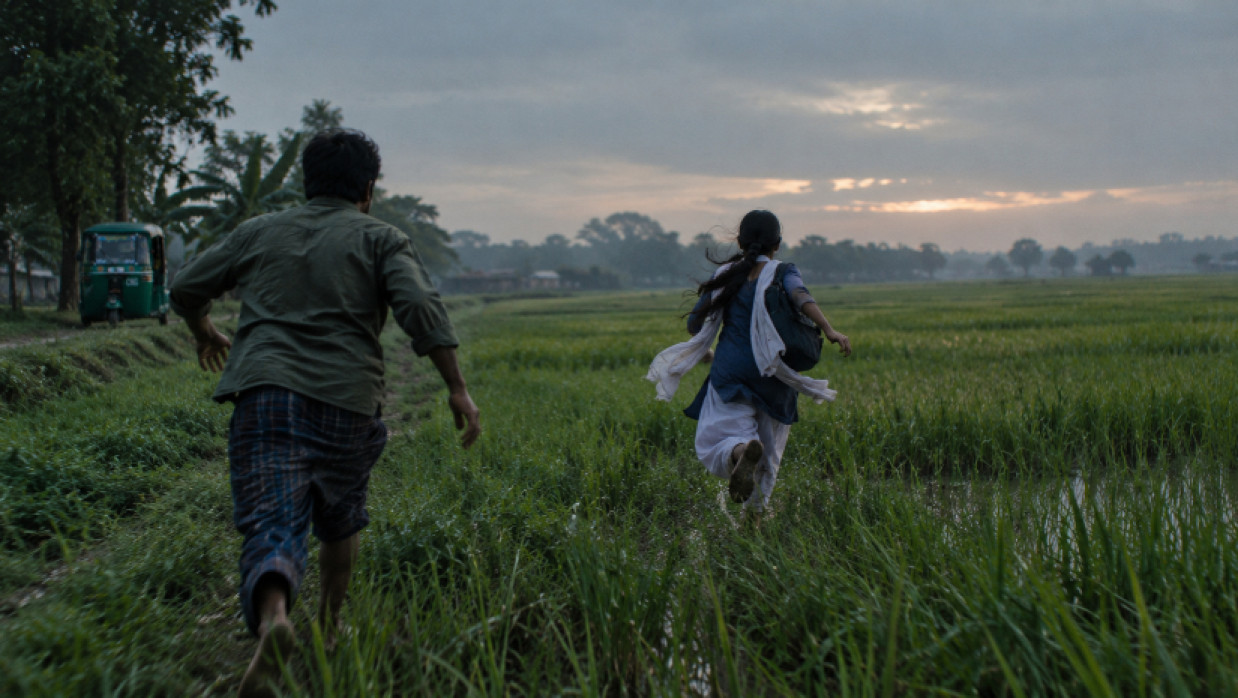
By his own account, the 12-year-old left Lohagara, Chattogram, in February with Tk 100 in his pocket. He had quarrelled with his family. A campaign truck carried him to Cox's Bazar, and he says he spent about two months begging from tourists before a man took him to Dhaka.
He came home in September missing his right leg. The account is his, and police say it must be investigated. His family filed no general diary (GD) while he was gone.
Online, a trip to Cox's Bazar costs Tk 1,500, or Tk 2,300. One claim that keeps circulating says Tk 1,200. A boy with Tk 100 sits far outside every one of those budgets.
Episode One asked why children leave. This episode examines what waits for them. The picture is less alarming than the headlines and more fixable. The risks cluster around specific gaps, and each gap has an owner.
The Tk 1,200 trip nobody can document
We found no published source, news report or travel listing that supports a Tk 1,200 trip to Cox's Bazar. A commercial guide updated in 2026 puts non-AC bus fares from Dhaka at Tk 1,000 to 1,200 alone. The cheapest train seat costs Tk 695.
The cheapest itinerary we found, on the travel site Vromon Guide, costs Tk 2,290 per person for one night, in the off-season, sharing a room. The Tk 1,500 package leaves out local transport, entry fees and the dinner on the return day.
Those budgets assume an adult who can bargain, book and fix problems. The children in our cases travelled on far less. An adult they met online paid for the Lalmai girl's trip. When a child's money runs out, whoever offers help fills the gap, and that is where the danger starts.
Do travel videos send children out the door?
In every case we verified, no police officer and no family member said a child left after watching a travel video. The nearest example is different. In October, police in Cumilla said four primary pupils aged 8 to 12 who left home to "live independently" had been influenced by social media and had befriended young men through TikTok. They went to Dhaka and Habiganj, not to the beach. That claim rests on two reports and has not been independently verified.
Two experts told The Daily Campus, in Bangla, that marketing can play a part without being the cause. Dr. Md. Shaheen Mollah, an assistant professor of psychology at the University of Dhaka, called cheap-trip promotions "one of the reasons" for some children, "not the single reason." He wants platforms to run responsible ads with a clear subtitle saying who a "Tk 1,000 trip" is for.
Monjur Sharif, a cyber security and safeguarding expert, also named appetising advertising as one possible reason. He does not believe law alone can fix the problem. Better parenting, he said, matters more.
The evidence supports a modest conclusion. Travel content may make Cox's Bazar feel familiar and within reach. It does not show that any video sent any child out the door, and Bangladeshi children knew about Cox's Bazar long before YouTube existed.
What 15,717 really means
On 3 September, Police Headquarters released a figure that alarmed parents. Between January and July 2026, police received 15,717 GDs for missing children. Of these, 474 involved children up to nine years old and 15,243 involved children aged 10 to 17.
Headquarters said earlier reports had not stated what became of the children, which risked public confusion. After checking with police stations, it reported that 406 of the younger children had been rescued and 68 remained untraced. Among those aged 10 to 17, 13,273 had been rescued and 1,970 remained untraced. In all, 13,679 children, about 87 percent, had been rescued or returned to their families.
A GD records a family's report, not what happened to the child. A girl who walks in the next morning and a boy taken by traffickers each count as one entry. The published figures do not separate children who left voluntarily, travelled to another district, or became victims of a crime. Police say online GD filing has raised the number of reports.
Annual GDs rose 37 percent in 2025, to 22,550, as online reporting spread. Nobody outside the police can say how much of that comes from children, adults or easier filing.
The worst outcomes are rare but real. Ain o Salish Kendra, which compiles data from media reports, counted 36 children whose bodies were recovered after they went missing in the first eight months of 2026. Twenty-six of them had been raped before they were killed. Not all of these children had travelled anywhere.
The phone that finds them, and the phone that finds them first
Mobile phones run through every verified case, in both directions. Phones bring children home. Police located the Chauddagram girls, the Rajshahi boys and the Kushtia girls by tracing their devices. The Lalmai girl shared her live location with the man in Cox's Bazar until about 1:30am, when it went offline.
Phones also open doors parents cannot see. The Lalmai girl met the man who paid for her trip on Facebook and Instagram. The four Kushtia girls built their friendship in a TikTok group. Some coverage of that case dwelt on their private lives, and that kind of coverage can hurt the children it claims to protect.
Bangladesh has little data on children's digital lives. No study we found measures how adult strangers make contact with children, and that gap matters more than the screen-time debate.
Sharif says the protective tools already exist. Platforms such as YouTube, Facebook and Instagram offer parental controls, and features that once sat only with Google now reach Facebook and Instagram too. The problem, he said, is that many Bangladeshi parents do not know the tools exist or how to use them. His first answer is awareness, aimed at parents.
An age limit is harder. Several countries, including some in Asia, bar children under 15 or 16 from social media. Sharif said Bangladesh could try, but children get around the rules: a platform asks for 18 or older, and a child enters 18. A law could require an ID card or linked national records to open an account, he said, though he sees few other ways to stop it. The work belongs mainly to the Bangladesh Telecommunication Regulatory Commission and the ICT ministry, he said, not to law enforcement.
The check-in desk
The clearest gap in the Lalmai case came at a hotel counter. The resort's front-desk manager says staff recorded the man's national ID and two phone numbers. They took no identification from a 15-year-old girl registered as his 18-year-old wife.
The Bangladesh Hotel and Guest House Owners Association describes a rule that should have covered this. Its general secretary, James Babu Hajra, told The Daily Campus in Bangla that the association's business rules require voter ID cards from both guests, with photocopies kept alongside the reservation. A guest who holds a card is an adult, and a hotel must accept an adult.
Hajra was asked about hotels in general, not about the Lalmai resort, and we have not established whether that resort belongs to his association. He said staff who admit a guest without ID are punished.
The law goes further, according to Advocate Md. Riaj Uddin of the Dhaka Judge Court. The Children Act 2013 does not address hotels directly, he told The Daily Campus in Bangla, but a 2014 law governing hotels does. When a child stays with anyone other than a legal guardian, he said, the hotel needs the parents' written consent and the national ID of the adult the child is with.
A hotel that keeps the child without those papers is liable and can be named as an accused, he said. If staff suspect something is wrong, they must call the police at once. If they suspect trafficking, a case follows.
Both rules depend on staff looking at the person at the desk. According to the manager, the Lalmai girl was registered under a false name as an adult. A paper check cannot catch that, and a glance might have.
Inside the home
Every police account of a voluntary departure in our records starts with a family quarrel. That raises a fair question about what kind of conversation a child expected at home. It does not make parents negligent. Many parents set limits because they fear exactly what some of these cases show.
The 2025 Multiple Indicator Cluster Survey, run by the Bangladesh Bureau of Statistics and UNICEF, found that 85.7 percent of children aged 1 to 14 had experienced violent discipline in the previous month. Mollah says the problem goes beyond beatings. A child who does not feel safe at home cannot treat the family as a place to trust, he says.
Children tell him in counselling that their parents treat them like robots, he said. Some parents press only study and rules. Others give a child whatever they ask for. Neither approach works, he says.
He puts the fix first in the family. Bangladeshi parents receive no formal parenting training, so many do not know how to adjust as a child grows. Many children also have nowhere outside the family to take a problem, which is why he wants a psychologist in every school.
The Lalmai girl told her mother by phone only that she was at a friend's. Her mother says she wanted to bring her home but had no idea where she was.
After the rescue
Getting a child back is the start of the next problem, Mollah says. A returned child faces stigma and closer watching at home. At school, classmates tease, asking where the child went and why. Teachers often do not know whether to speak to the child at all, and bullying can push a child to leave again.
He wants the child and the family in counselling with a follow-up. A child who has a psychologist knows there is someone to talk to besides mum and dad, he says, and until then may have believed there was no one else.
Parents in shock can make things worse. A parent who used to beat and scold may swing to giving the child whatever they want, and the child can learn that running away earns affection. Mollah will not give blanket advice, because each child needs a case-by-case study.
The state's own safety net is thin. The Children Act 2013 requires a child affairs desk at every police station, run by an officer of sub-inspector rank or above. Two years after the Act passed, many officers did not know what the desk was, and we could not find a current national audit. When the Lohagara boy's father went to the police after his son came home, officers told him to take the case to Dhaka.
Mollah suggests one practical step: when police hand a child back, they could refer the family to a psychologist. The police accounts in our records do not mention such a referral.
What would help, and who has to do it
Mollah sees three owners: the family, the school and the state. The evidence we gathered supports steps at three levels, each with a name attached.
For families and schools, starting now. Agree a no-punishment rule for any child who calls home from somewhere they should not be. A working phone was the most protective fact in many recovered cases, and a child who expects a beating switches it off. Parents can learn the controls already built into the apps their children use, as Sharif urges. Teach children in Classes 5 to 8 that an adult who sends money for a trip, or asks them to keep a friendship secret, is a warning sign. When a child goes missing, file a GD at once and give police the phone details. The Rajshahi boys were found within 72 hours.
For hotels, platforms and police, within months. According to Riaj Uddin, the 2014 law already requires parental consent and the guardian's ID, and the owners' association says its members take ID. The gap is enforcement and awareness. The Cox's Bazar district administration and tourist police can inspect registers, the association can brief its members, and desk staff can be trained to look at the guest, not just the card. Tour promoters and platforms can state plainly who a budget offer is for, as Mollah proposes.
Police Headquarters can publish which stations have a working child affairs desk. When a child goes missing in one district and a crime is alleged in another, the station that receives the family should register the case. Police can also refer families to a psychologist when they return a child.
For policymakers, over years. Police should sort missing-child GDs by outcome (returned voluntarily, found after travel, victim of a crime, still missing) and publish the results every quarter. Without that, each viral case will pass for a trend. Mollah argues for parenting training, a psychologist in every school, and public playgrounds that keep children away from devices. The telecom regulator and the ICT ministry can study age checks for social media accounts, with the limits Sharif describes in mind.
What the evidence leaves us with
Most children in this series wanted to see the sea or get away from a quarrel. They were 12, 13, 14 and 15, angry or curious, and often with a friend. Most came home within days, found with the help of the same phones that helped them leave.
When harm came, adults caused it: a man who paid a child's fare, a driver at midnight, an alleged begging ring. Bangladesh cannot stop children from wanting to see the sea. It can decide who they meet on the way, and who is waiting for them at home.
 Follow The Daily Campus on Google News