DIIT Student Offers Free Railway Ticketing App to Bring System Under Govt Control
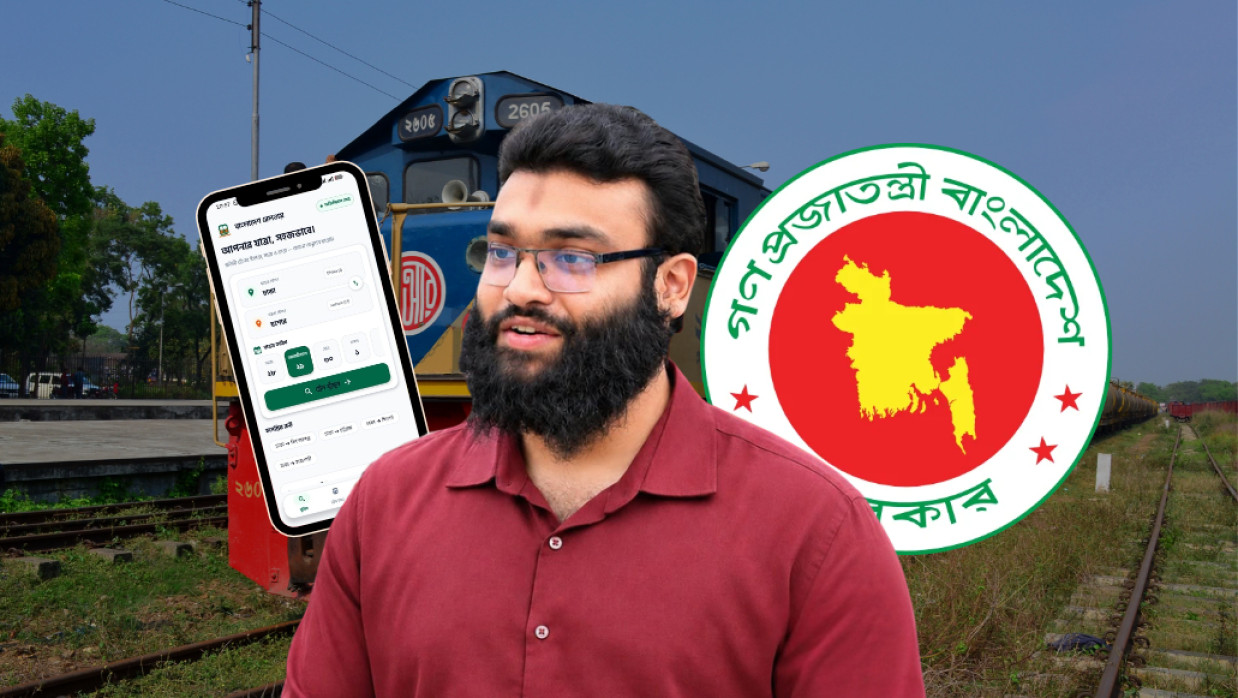
Mohammad Ibrahim Molla wanted to buy a train ticket to visit a friend in Rajshahi. Tickets sold out shortly after online sales began, and he could not get one at the counter either. However, he said, a man outside the station offered to arrange a ticket for Tk 500 above the official price.
That experience prompted Ibrahim, a student of Daffodil Institute of IT (DIIT), to start working on an alternative to Bangladesh Railway's existing ticketing system. After nearly six months of effort, he says he has developed an online ticketing app independently and is ready to hand it over to the government free of charge if Bangladesh Railway is interested.
His proposal goes beyond introducing a new app. He wants the railway to bring the technological infrastructure for ticket sales, passengers' personal information and management of the system under its own supervision and control.
His initiative comes as railway authorities are addressing reported irregularities and security concerns in the existing ticketing system. At the same time, Bangladesh Railway has invited a new tender ahead of the expiry of its contract with the current service provider.
Where does the ticketing service charge go?
In 2022, a joint venture of Shohoz, Synesis and Vincen was awarded a five-year contract to operate Bangladesh Railway's ticketing system. Passengers currently pay an additional Tk 20 service charge on top of the fare for each ticket purchased online.
According to figures published by a national daily, the operating company receives Tk 6.50 from the service charge. Banks and payment service providers receive Tk 6.50, Tk 3 goes to the government treasury as VAT, and Tk 4 is deposited into the Railway Welfare Fund. The company also receives commissions on tickets sold at counters.
According to Ibrahim's estimates, Bangladesh Railway sells around 200,000 tickets a day on average, approximately half of which are sold online. Based on this estimate, the private operator receives Tk 6.50 lakh in daily commissions from 100,000 online tickets. If ticket sales remain at the same rate throughout the year, the annual commission would amount to around Tk 23.73 crore.
However, the actual daily ticket sales and annual commission figures could not be independently verified against Bangladesh Railway's latest financial records.
Ibrahim proposes that if railway ticket sales are managed internally, the amount currently paid as commission to the private operator could remain within the government system. However, a comprehensive assessment of potential savings, accounting for staffing, servers, payment processing, maintenance and other operational costs, is not yet available.
What the IT audit found about ticketing irregularities
Several national newspapers published reports in October 2026 highlighting findings from an IT audit of Bangladesh Railway's ticketing system.
The audit, covering activities from the 2021-22 to the 2025-26 fiscal years, reportedly identified around 169 administrator accounts operated by employees of the private service provider. According to the reports, these accounts had access privileges that allowed tickets to be held before sales opened to general passengers.
Media reports citing the audit also highlighted allegations involving the use of automated software, commonly known as bots, to hold tickets. The audit reportedly flagged Tk 1.39 crore in uncollected penalties related to shortcomings in service delivery.
According to a report published by an English-language national daily on 24 October, Bangladesh Railway has blocked around 10,000 suspicious mobile phone numbers and national identity card numbers to prevent ticket black marketing. The railway has also requested the Bangladesh Telecommunication Regulatory Commission (BTRC) to shut down unauthorised ticket-selling websites.
Shohoz Limited, meanwhile, told the newspaper that it had submitted responses and relevant documents to the authorities following observations made by the Transport Audit Directorate.
According to earlier media reports, the Rapid Action Battalion (RAB) arrested two people, including a system engineer from the joint venture, in April 2022 over allegations of involvement in train ticket black marketing.
In the same year, the Directorate of National Consumer Rights Protection fined Shohoz Tk 2 lakh following a consumer complaint concerning its ticketing services. The High Court subsequently stayed the fine.
Proposal to attach passengers' photographs to tickets
Ibrahim identifies two possible forms of railway ticket black marketing. One involves the alleged misuse of internal access to the ticketing system, while the other involves purchasing tickets through multiple accounts and subsequently reselling them at higher prices.
To address the latter, he has proposed attaching passengers' photographs to tickets. Under his plan, ticket examiners would be able to compare the photograph attached to a ticket with the person travelling.
Bangladesh Railway's current ticketing system already incorporates passenger identity verification measures. Ibrahim believes adding photographs could make it more difficult to travel using tickets purchased in someone else's name.
The photograph-based verification system is an additional feature proposed by Ibrahim, which he says could be incorporated into the app if requested by the government.
Its implementation would also require procedures for collecting, storing and using passengers' photographs, alongside appropriate data protection and identity verification measures.
Passenger data security
Passengers provide various personal details, including national identity card numbers and mobile phone numbers, when purchasing railway tickets. Ibrahim has proposed bringing the management of this information under the government's direct supervision.
Media reports citing the railway's IT audit said the main database of the existing ticketing system is hosted on Amazon Web Services' cloud infrastructure in Singapore.
The audit reportedly identified potential risks to passengers' personal information, travel histories and financial transaction records in the event of unauthorised access or a cyberattack.
The reported audit observations concern potential security risks and do not establish that passengers' information has already been compromised.
Under Ibrahim's proposed system, Bangladesh Railway would retain control over the software and its associated database. The application's data protection measures and cybersecurity capabilities have yet to be independently assessed.
Proposal to reduce costs at loss-making railway
Bangladesh Railway's operating expenditure has long exceeded its revenue. According to figures presented by the then railway minister in Parliament in 2024, the railway's expenditure stood at Tk 3,307 crore in the 2022-23 fiscal year, exceeding its revenue by around Tk 1,524 crore.
Against this financial backdrop, Ibrahim has proposed reducing expenditure on commissions paid to private companies for ticketing services.
He believes managing ticket sales through the railway's own infrastructure could reduce dependence on external service providers and potentially create opportunities to lower service charges for passengers in the future.
However, ticketing commissions constitute only a portion of the railway's overall operating expenditure. The financial implications of an in-house ticketing system would depend on its operational costs and revenue structure.
How railway ticketing is managed in other countries
Several countries operate railway ticketing platforms through state-owned railway companies or government-controlled entities.
In neighbouring India, the principal online train ticketing platform is operated by the Indian Railway Catering and Tourism Corporation (IRCTC), a government-controlled company under the Ministry of Railways.
In China, the official railway ticketing platform operates through the 12306 website and mobile app. Passengers in both countries can purchase tickets directly through the respective railway systems' digital platforms.
However, ownership structures, operational arrangements, private-sector participation and service charges vary across countries.
Drawing on these examples, Ibrahim has proposed a model for Bangladesh in which ticketing services would be managed either by a state-owned entity or through Bangladesh Railway's own IT department.
Ibrahim's proposal comes amid a new tender
At a meeting of the Parliamentary Standing Committee on the Ministry of Railways on 26 October, preparations for inviting a new tender before the current ticketing service provider's contract expires were discussed. The meeting also addressed measures to ensure transparency in online ticket management.
Bangladesh Railway has since invited a new tender for the design, development, supply, installation, operation and maintenance of its integrated ticketing system.
According to media reports, the railway's director general has also said that some ticketing-related administrative functions have been brought under the railway's own control.
Ibrahim's proposal focuses on developing the railway's long-term in-house capacity rather than appointing another private service provider.
He proposes initially operating the app through the railway's IT cell and, if necessary, establishing a separate state-owned company to manage the system at a later stage.
Plans for services beyond ticketing
Ibrahim said the platform could eventually incorporate passenger complaint management, maintenance activities based on complaints, railway asset management and information on train movements, alongside ticket purchases and sales.
However, the proposed software would not form part of the railway's signalling or train movement control systems. Information on train movements would be made available for passengers to view, he said.
The gradual introduction of these services would depend on government requirements, existing technological infrastructure and integration with the relevant railway departments.
Offers app for free, awaits government's decision
Ibrahim said he had submitted his proposal to the railway minister, state minister and secretary of the Ministry of Railways. According to him, the ministry has yet to respond.
He said the initial development of the application had been completed and that he was prepared to make necessary changes and introduce additional features in accordance with the requirements of Bangladesh Railway or the ministry.
He has also expressed willingness to provide technical support and maintenance following the handover.
Although Ibrahim has offered to transfer the software to the government free of charge, no formal decision has been announced regarding the acceptance of his proposal under the existing legal, regulatory and administrative framework.
The application's capacity to handle nationwide ticket sales, simultaneous access by large numbers of passengers, financial transactions, data security and other operational requirements has yet to be independently established.
Ibrahim said he was willing to have the application assessed through an independent technical evaluation before any decision regarding its adoption.
As Bangladesh Railway proceeds with its new ticketing system tender, the DIIT student awaits the government's response to his offer.
 Follow The Daily Campus on Google News