Bangladesh makes huge progress in expanding education: UNESCO
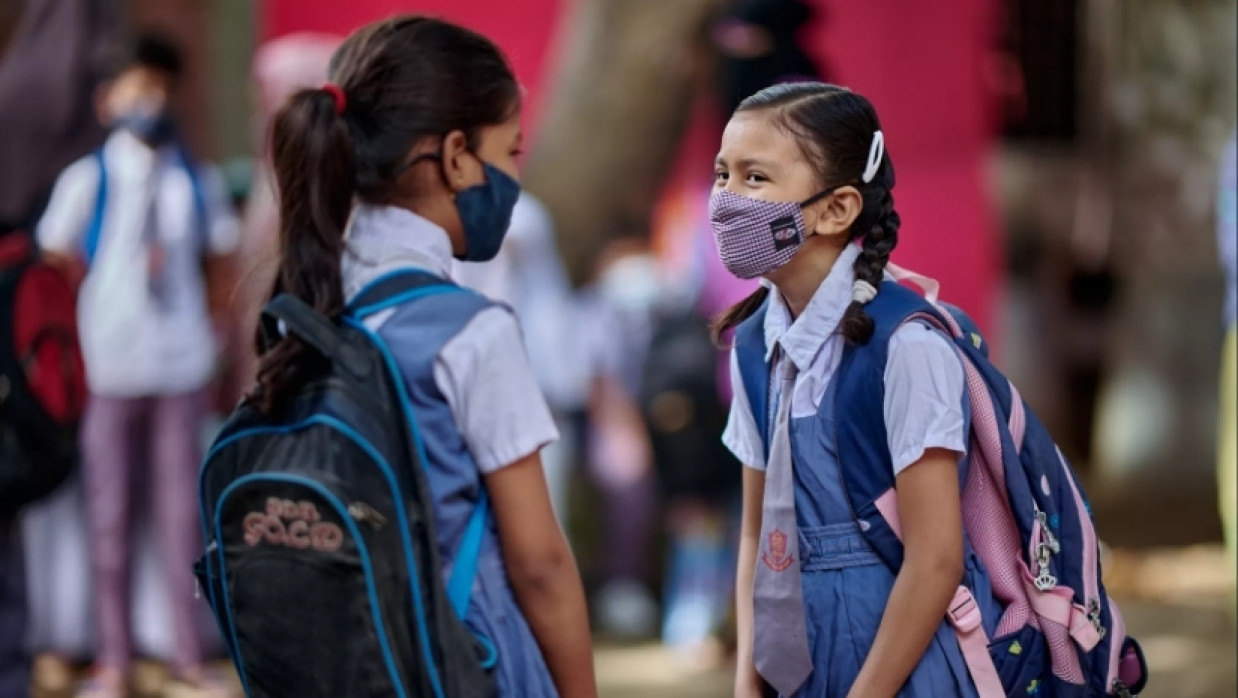
Bangladesh has made huge progress in expanding its education system over the past three decades, according to UNESCO.
This information emerged in the 'Global Education Monitoring (GEM) Report 2026' published by the United Nations Educational, Scientific and Cultural Organization (UNESCO), which noted that Bangladesh has achieved major success in reducing dropout rates, attaining gender parity, and expanding technical and vocational education.
However, while celebrating major strides in primary and lower secondary education, the report underscored the need for greater focus on increasing upper secondary completion rates and improving overall learning quality.
Titled 'Access and equity: Countdown to 2030', the report featured the transformation of Bangladesh's education system as a special country case study. It noted that while the world as a whole is lagging behind in achieving Sustainable Development Goal 4 (SDG 4) by 2030, Bangladesh has demonstrated commendable success in widening access to basic education.
According to the UNESCO report, the primary school completion rate in Bangladesh jumped from 34 per cent in 1990 to 90 per cent in 2024, surpassing the global average of 88 per cent. During the same period, the lower secondary completion rate increased from 23 per cent to 74 per cent.

The report noted that the annual pace of primary completion growth has moderated over time-rising by 2.2 percentage points per year in the 1990s, 1.5 percentage points between 2000 and 2015, and 1.3 percentage points since 2015. Conversely, lower secondary completion accelerated steadily, growing by 1.3 percentage points annually in the 1990s, 1.6 percentage points during 2000-2015, and 1.7 percentage points per year after 2015.
The report stated that Bangladesh's progress at the upper secondary level has become particularly visible in recent years. While the pace of upper secondary completion in the 1990s was 40 per cent of the South Asian average and 60 per cent between 2000 and 2015, Bangladesh's growth rate has outpaced the South Asian average since 2015. Nevertheless, the upper secondary completion rate stood at around 38 per cent in 2024, still trailing the South Asian average of 57 per cent.
Meanwhile, significant success has been achieved in reducing the out-of-school youth population. While 72 per cent of upper secondary-aged youth were out of school in 2005 (compared to the South Asian average of 53 per cent), the rate dropped by two-thirds in 2023, falling below the South Asian average. Citing data from the Bangladesh Bureau of Educational Information and Statistics (BANBEIS), the report highlighted that the dropout rate among students enrolled in grades 11 and 12 halved from 42 per cent in 2009 to 21 per cent in 2023.

Referring to BANBEIS figures, the report noted a sharp surge in public examination pass rates. The Secondary School Certificate (SSC) pass rate rose from 48 per cent in 2004 to 93 per cent, while the Higher Secondary Certificate (HSC) pass rate reached 95 per cent in 2021. However, UNESCO observed that while simplified examination formats contributed to higher pass rates, underlying concerns regarding actual learning quality persist.
UNESCO highlighted that girls have outpaced boys in achieving gender parity across school levels. According to 2024 figures, the out-of-school rate at the lower secondary level stood at 15 per cent for boys, whereas for girls it dropped to just 4 per cent. Similarly, at the upper secondary level, the out-of-school rate for girls is 8 to 10 percentage points lower than that of boys.
The report credited government initiatives such as the Female Secondary School Assistance Project (FSSAP) launched in 1994, stipend programmes, and free textbook distribution for driving this transformation.

Additionally, through community-based learning centres under the World Bank-backed 'Reaching Out-of-School Children (ROSC)' project launched in 2005 and 2013, around 500,000 out-of-school children were brought back into formal education. The report noted that ROSC centres had a stronger presence in the country's poorest upazilas compared to madrasas and non-governmental organisation (NGO) schools, particularly those run by BRAC.
The GEM Report 2026 also highlighted the rapid expansion of vocational and technical learning in the country.
The number of technical and vocational education institutions increased nearly fivefold, rising from 1,600 in 2002 to nearly 8,000 by 2022.
The expansion of education has brought profound positive shifts to Bangladesh's socio-economic indicators, UNESCO observed. According to the report, rising education levels helped reduce child marriage (before age 18) among women aged 18 to 24 to 39 per cent, while the fertility rate declined from 6.7 births per woman in 1975 to 2.2 in 2015.
Furthermore, driven by a steady annual increase of 0.6 percentage points since 1990, women's participation in the labour force reached 44 per cent in 2023-significantly higher than that of India (around 30 per cent) and Pakistan.
While the growth of the export-oriented ready-made garment sector encouraged families to delay child marriage and keep girls in school to qualify for jobs, the report also noted that readily available factory employment had a slight dampening effect on school enrolment among 17- and 18-year-old girls.
 Follow The Daily Campus on Google News