DU students launch first open teacher-rating platform, sparking debate
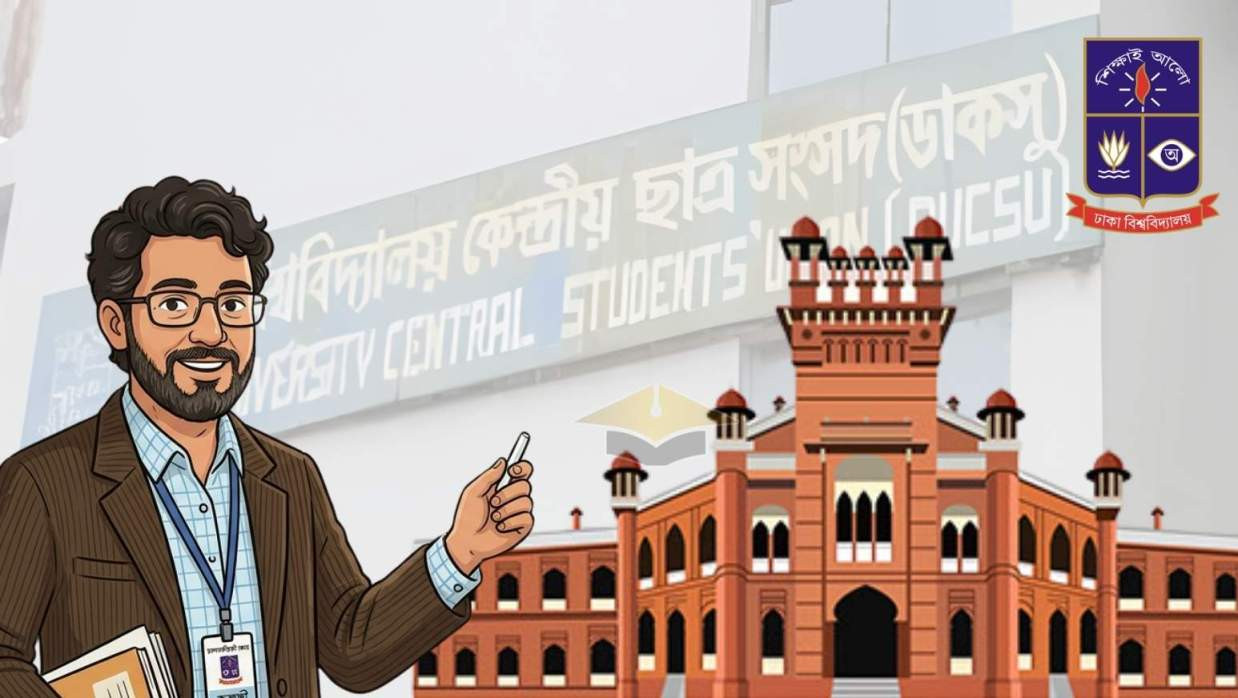
For the first time in its 106-year history, Dhaka University students can publicly rate their teachers through a website launched by the university’s central students’ union, prompting both praise and criticism from faculty members.
The platform, launched at the initiative of the Dhaka University Central Students’ Union (DUCSU), allows students to review teachers on areas including teaching methods, course structure, communication, assessment, professionalism and overall satisfaction.
The ratings have already produced widely varying scores. Some teachers have received a full 5 out of 5, while others have ratings of 1 or 2. The ratings are not fixed, however, as reviews and scores are regularly updated.
The initiative resembles “Rate My Professor”-type platforms used in several countries, where students share their experiences of university teachers. According to DUCSU, the platform is intended to collect student feedback rather than serve as an official university evaluation system.
Students from the 2018-19 academic session and subsequent batches can participate. They must register using their university academic email and enter a code sent to that address to access the system.
Once logged in, students can rate only teachers from their own department. The process is designed to be anonymous, and individual students’ reviews will not be publicly linked to their identities. Aggregate ratings, however, can be viewed on the website.
What students are rating
The platform assesses teachers on several areas, including course structure and syllabus, teaching methods, communication and cooperation with students, examinations and assessment, professionalism and overall satisfaction.
Students can comment on whether teachers explain subjects clearly and effectively, encourage critical and independent thinking, use examples to make lessons easier to understand, and encourage questions and open discussion.
Accessibility and responsiveness are also considered, including whether teachers are approachable and respectful and fair toward students.
For examinations and assessments, students can assess whether marking standards are clear, fair and transparent and whether teachers provide timely and constructive feedback on assignments and examinations.
Punctuality, regular class attendance, professional conduct and academic integrity are also included. Students can additionally indicate whether they would recommend a teacher to other students and whether they were satisfied with the teacher’s course.
So far, the website contains around 6,500 reviews covering 2,045 teachers from 96 departments.
Teachers divided over initiative
The initiative has drawn mixed reactions among Dhaka University teachers.
Associate Professor Dr Md Khorshed Alam of the Department of Mass Communication and Journalism said teacher evaluation and accountability are necessary at public universities. He argued that evaluation reports should potentially be considered in areas such as recruitment at other institutions, promotion and annual salary increments.
However, he questioned whether DUCSU should be conducting the evaluation itself.
According to Alam, teacher evaluation should be the responsibility of the university authorities, while DUCSU could put pressure on the administration to introduce such a system. He described the current initiative as an exercise beyond DUCSU’s jurisdiction and warned that publicly rating teachers could create disorder within the university.
Professor Dr Wasimul Bari of the Department of Statistics, who is among the teachers receiving a rating of 5, took a more positive view of the concept.
“Students evaluating teachers is a good initiative,” he said, noting that similar systems exist internationally.
However, Bari said the results should preferably not be made public. Instead, the university administration could share the evaluation with the relevant teacher and advise teachers with poor ratings to improve their performance.
He said students could reasonably evaluate academic issues such as teaching methods, the time teachers spend with students, their responsiveness and how effectively they explain course material.
At the same time, he warned that publicly releasing individual ratings could create complications because of the potential misuse of such information.
Questions over who should conduct evaluations
Professor Dr Mamun Al Mostofa of the Department of Political Science said he was not aware of the website but questioned who was participating in the evaluation.
He said he primarily teaches MPhil and PhD students rather than undergraduate or master’s classes. Therefore, he argued, the relevant students should be the ones evaluating his teaching.
He also questioned whether publicly rating university teachers was appropriate in the Bangladeshi context.
According to Mostofa, universities require a more structured academic and institutional environment than schools, and student evaluations should follow an established institutional process.
He said universities elsewhere generally determine teacher-evaluation criteria through institutional procedures and consultation with relevant stakeholders. Allowing students to independently determine how a teacher’s academic ability or teaching quality should be judged, he argued, would be unusual.
DU administration’s position
DU Pro-Vice-Chancellor (Education) Professor Dr Abdus Salam said the DUCSU initiative is not an official university evaluation.
He acknowledged that teacher-rating platforms exist internationally and said such an initiative could exist as a way for students to express their views. However, he questioned whether conducting teacher evaluation falls within DUCSU’s responsibilities.
Salam said the university should have a formal system through which teachers can understand their performance and areas where improvement is needed. The criteria for who can evaluate teachers should also be established through a defined policy.
He said Dhaka University already has its own policy for teaching evaluation, which has been approved at the highest level of the university, and that implementation of the policy is now pending.
DUCSU says the platform is still being developed
DUCSU Executive Member Umme Uswatun Rafia said the ratings are based entirely on student feedback and are not determined by a teacher’s reputation or familiarity.
She said students evaluate teachers on punctuality, student-friendly behaviour, willingness to encourage questions, subject knowledge, teaching style, tendency to discuss irrelevant topics and regularity in conducting classes, among other factors.
Rafia acknowledged that the platform is still at an early stage and that some technical and procedural issues are being addressed. For example, students currently cannot edit their ratings after submission.
She said DUCSU also plans to ensure that the process remains fully anonymous so that individual students cannot be identified through their reviews.
Rafia said she plans to continue overseeing the initiative personally for another year after the current DUCSU term ends, after which the platform will be left to students to manage.
According to Rafia, introducing a teacher-rating system was one of her election pledges. She said she had pursued the initiative since 2023, approaching various university offices, including the Registrar’s Building, IT office and Vice-Chancellor’s office.
After the institutional approval process did not produce the expected outcome, she said she decided to launch the system through a personal initiative with the help of an IT company. Teacher and department information was collected from the university’s official website, while further work was carried out with relevant university offices and the university’s ICT lab.
The launch has therefore opened a new debate at Dhaka University over how teachers should be evaluated, who should conduct such evaluations, and whether the results should be publicly available or handled through an official university mechanism.
 Follow The Daily Campus on Google News