Over 60% of Bangladesh’s University Graduates Unable to Find Jobs Matching Their Qualifications
More than 60% of people in Bangladesh with a bachelor’s degree or higher are unable to find jobs matching their qualifications and are forced to turn to informal employment, according to a 2026 World Bank report titled Demographic Change in South Asia: From Tailwinds to Headwinds for Development. The report was released at an event at a hotel in Dhaka on Tuesday (November 3).
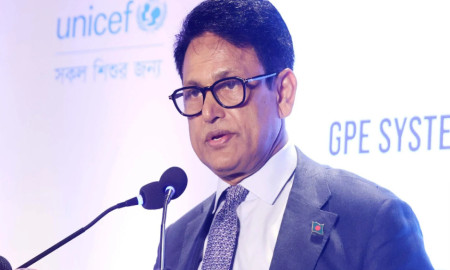
The event was attended by World Bank Regional Practice Director Jem Mete, Chief Economist for Asia Franziska Liselotte Ohnsorge, and Bangladesh and Bhutan Operations Manager Gayle Martin. The programme was moderated by the organisation’s Senior External Affairs Officer, Mehrin Ahmed Mahbub.
According to the report, 84% of Bangladesh’s working population, or approximately 58 million people, are employed in the informal sector. Their earnings are 45% to 84% lower than those of workers in the formal sector.
Informal workers generally lack appointment letters and have little to no legal protection. Employers can dismiss them at any time, while the sector has no established wage structure.
The report warns that Bangladesh’s working-age population will reach its peak in 2045, after which the number of elderly people will continue to increase. The country has limited time to capitalise on its demographic dividend, but preparations for employment generation, education, healthcare and social protection remain inadequate.
As a result, Bangladesh faces the risk of becoming an ageing society before achieving prosperity.
The report also highlights that 35% to 40% of employment in medium-sized and large enterprises in Bangladesh is informal. This leaves a significant proportion of highly educated young people without access to the jobs or employment security they seek.
According to the World Bank, the lack of sufficient formal employment opportunities is forcing many people to establish small businesses or engage in informal economic activities. Between 45% and 70% of informal-sector entrepreneurs in Bangladesh, India and Nepal said they had started their ventures because they could not find alternative or regular employment.
The World Bank reached this finding by analysing the Bangladesh Bureau of Statistics’ (BBS) 2022 Informal Sector Survey.
Employment growth in formal businesses is also sluggish. Formal enterprises in Bangladesh record annual employment growth of just 2.7%, compared with an average of 5.4% across 82 emerging economies. Bangladesh’s rate is therefore half the average for those economies.
Bangladesh also lags in labour productivity. The report states that labour productivity growth among businesses in Bangladesh and India is lower than in most countries worldwide. Established businesses in both countries are also less successful than newer firms in increasing output per worker.
Employment growth in tourism and food-related sectors remains particularly slow. Meanwhile, small and medium-sized enterprises are reducing their workforce rather than hiring additional employees.
The report also highlights major weaknesses in pension and healthcare systems across South Asia.
Only 17% of the region’s working-age population contributes to pension schemes, while just 10% of older people receive pension benefits, the lowest rate in the world. Healthcare and long-term care services for people living longer are also inadequate, according to the report.
 Follow The Daily Campus on Google News