Inside the Tk 600cr Sufia Kamal National Public Library Complex: What It Will Offer
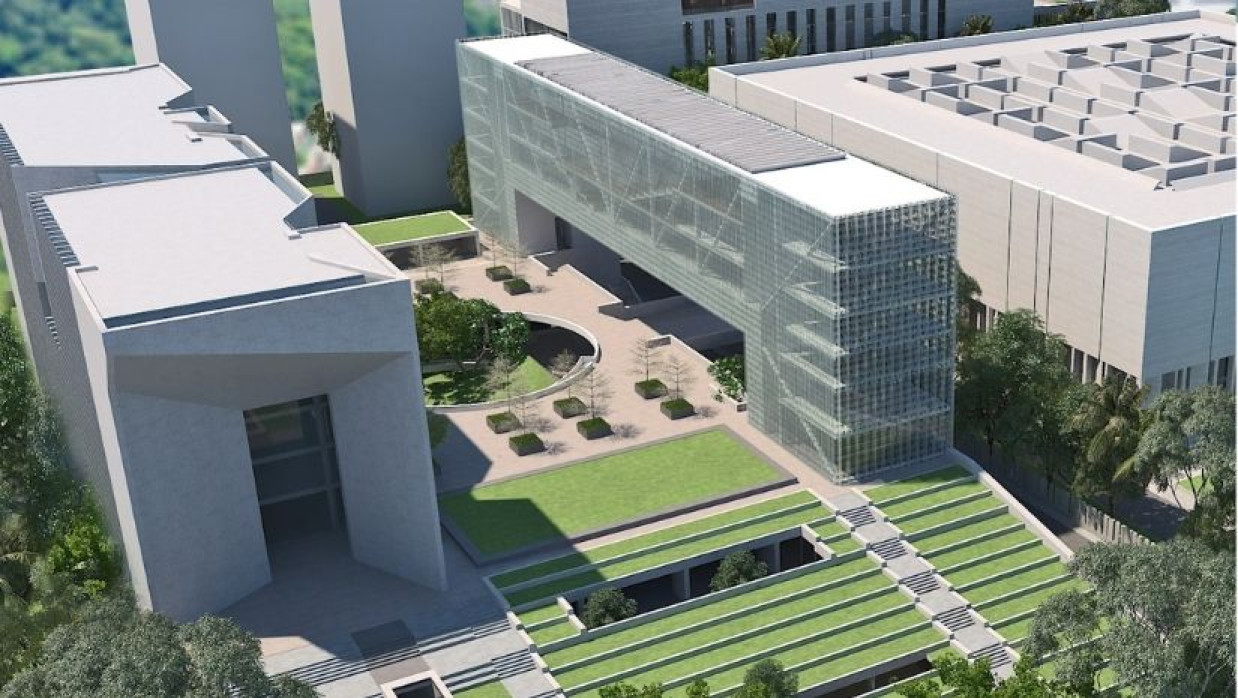
A multi-storied, multi-dimensional complex is being built at a cost of nearly Tk 600 crore to modernise the Sufia Kamal National Public Library in the capital. The Department of Public Libraries hopes to complete construction, which has been continuing for over three years, by December 2027. Once finished, the world-class facility is expected to start operations in January 2028.
Officials say the revamped library will offer state-of-the-art technology, expansive reading spaces, and child- and disability-friendly amenities.
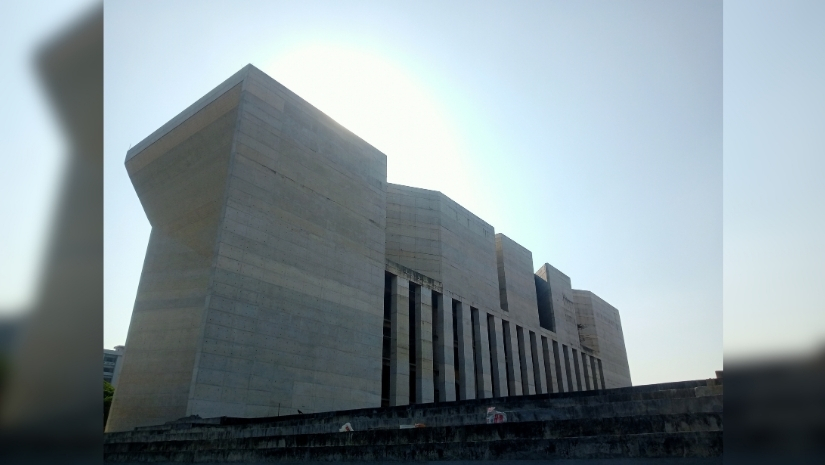
Sources at the department said around 60 per cent of the work, which began in October 2022, has already been completed. Progress has been slow due to the eye-catching and complex design that requires advanced construction materials. The project deadline has already been extended once through revision, and another extension until December 2027 is now being sought.
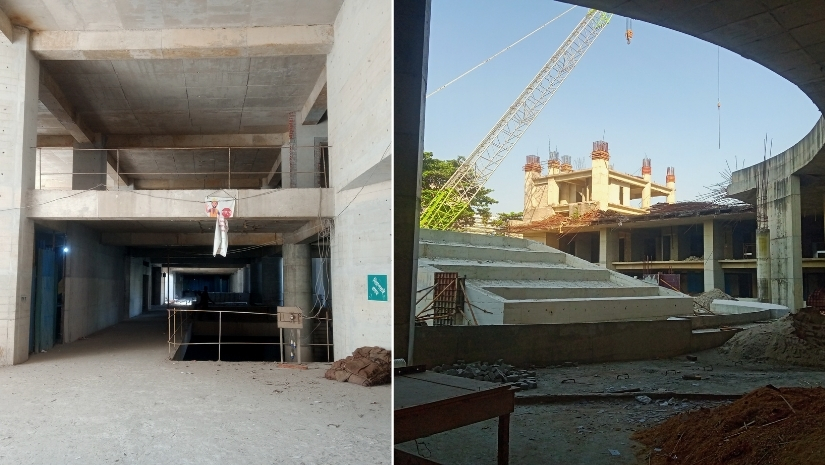
The modernisation plan was first conceived in 2014. The architectural design was finalised through competition in 2019. In May 2021, the Executive Committee of the National Economic Council (ECNEC) approved the project with an estimated cost of Tk 524.25 crore.
Despite the ongoing construction, reading activities continue at considerable expense. Two floors of the Institution of Engineers, Bangladesh (IEB) building are being rented at Tk 1,614,514 per month, while office operations from Hotel InterContinental cost over Tk 600,000 monthly.
Principal Librarian (Deputy Director) AHM Kamruzzaman told The Daily Campus that the library, established in 1954 as the first government public library in what is now Bangladesh, holds historical significance. The country’s first public libraries were set up privately in 1854 in Rangpur, Jessore, Barishal and Bogura.
Currently, the department oversees 71 public libraries across 64 districts.
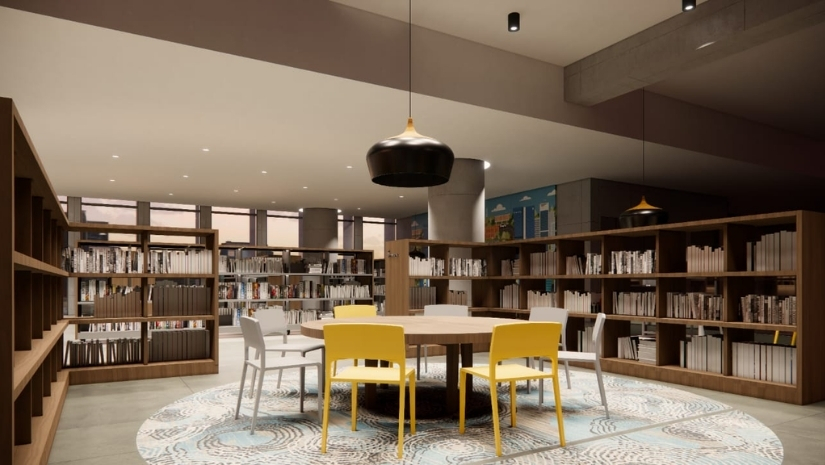
The library now has over 200,000 books, including 3,358 rare titles. Among the most valuable are palm-leaf manuscripts that are too fragile to handle and have not yet been deciphered.
What the new complex will offer
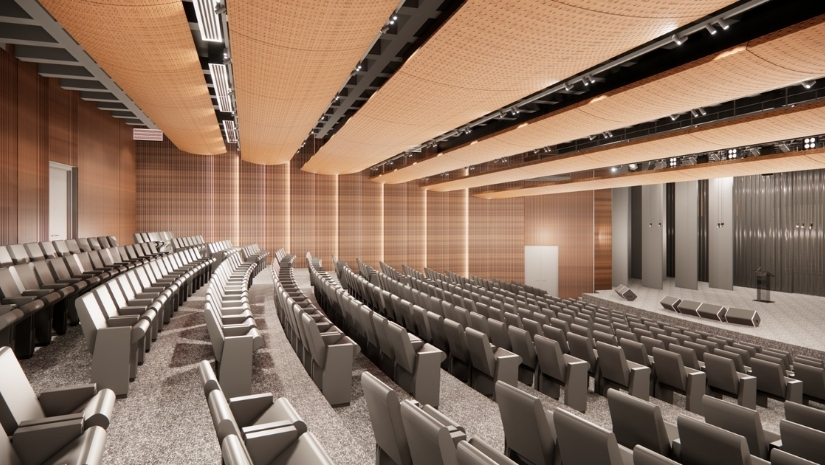
Senior Librarian (Senior Assistant Director) Khalid Mohammad Saifullah said the design is exceptional. Two large basements will house parking and three auditoriums (one with 500 seats, another with 334). There will also be three seminar halls. The basements alone will cover around 60,000 square metres.
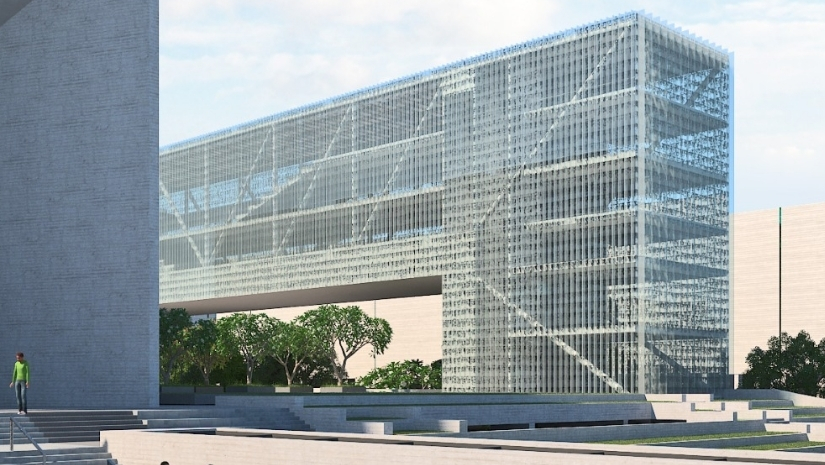
The ground and first floors will accommodate offices of the department and the library. Above the plaza level, one side will host the conventional library while the north side will feature a steel-and-glass e-library structure.
The e-library will include high-speed internet, computers, 3D facilities, podcast studios, and modern assistive devices for visually, hearing and speech-impaired users. A day-care centre, indoor games area and gymnasium are also planned.
Saifullah said reading rooms will accommodate 1,500 people at a time, with additional study spaces elsewhere. UHF RFID technology will prevent book theft. Soundproof discussion rooms, QR-code navigation (usable offline), virtual library tours, smart cards and e-payment systems will be introduced.
Six high-quality podcast and studio rooms will be available for rent.
Challenges and preservation efforts
Director General Monish Chakma said the new complex will serve not only as a library but also as a cultural hub with digital facilities suitable for events like international film festivals.
He noted that rare manuscripts, including palm-leaf texts, currently lack proper temperature-controlled storage. Discussions are underway with the National Archives for scientific preservation and possible transfer of the most fragile items.
Scanning of rare books into digital format is ongoing. Since 5 August, the department has collected 107 additional rare titles from 31 private libraries across the country for digitisation, with 52 already converted to PDF.
Officials remain hopeful that, despite delays caused by the complex steel structure and imported equipment, the iconic library will reopen as a world-class facility by early 2028.
 Follow The Daily Campus on Google News