Madrasah Education Must Not Be Confined to Traditional Frameworks: Education Minister
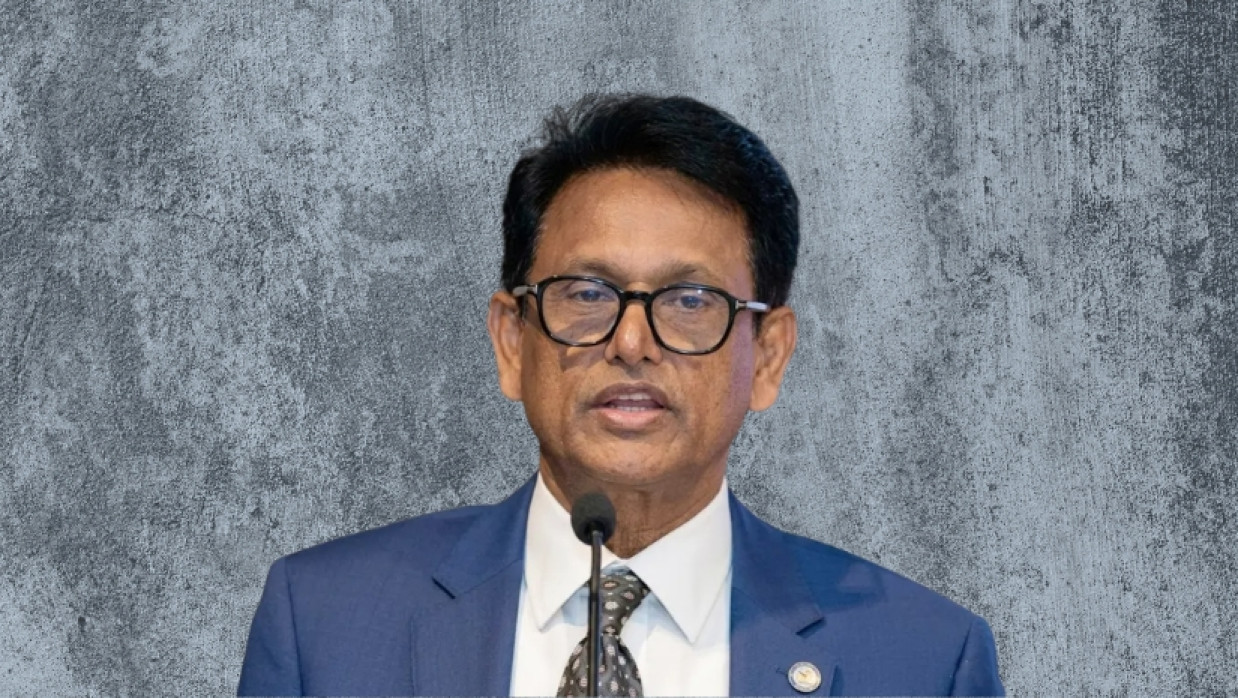
Dr. A N M Ehsanul Hoque Milon, Minister for Education and Primary and Mass Education, has emphasized the importance of transforming madrasah education into a modern, research-oriented, and skill-based system tailored to contemporary demands. He stated, "Madrasah education must not be kept confined within traditional structures; rather, this sector needs to be propelled forward in such a manner that its students acquire the capability to lead at both national and international levels."
The Minister made these remarks as the chief guest on Tuesday (30 June) at the "Best Institution Head and Outstanding Students Award Distribution" ceremony for Fazil and Kamil levels, affiliated with the Islamic Arabic University, held at the International Mother Language Institute in the capital.
The Education Minister said, "Madrasah education must not be restricted to conventional boundaries. We must build this sector so that its students develop the capacity to lead nationally and globally. In this regard, the Islamic Arabic University must play a more effective, research-driven, and well-planned role."
He added, "The core objective of Islamic education is to nurture individuals with strong moral values. There is no alternative to research, skilled teachers, and an up-to-date curriculum to modernize this sector and elevate it to international standards."
Dr. A N M Ehsanul Hoque Milon further noted, "In the past, there were various limitations in the structure and administrative management of madrasah education. Considering that ground reality, the government has taken initiatives to make the education system more integrated and effective. Special importance is also being attached to firmly connecting Fazil and Kamil education with mainstream higher education."
Highlighting the necessity of ethics- and value-based education, he said, "The need for moral and value-based education is being felt more than ever in our national education system. Islamic education can play a crucial role here. However, this requires skilled teachers, a modernized educational framework, and a practical curriculum."
Touching upon the teacher shortage in the madrasah sector, the Education Minister observed, "Many institutions are unable to recruit the required number of teachers. Finding proficient teachers, particularly in Islamic education, has emerged as a major challenge. To overcome this situation, the institutions concerned must become more active in curriculum development and upgrading the quality of education."
He further mentioned that complications regarding the salaries of some newly recruited madrasah teachers have arisen. The government is aware of the matter and is actively working on a solution. There are plans to make the future salary payment process easier, transparent, and more efficient through the introduction of the Electronic Fund Transfer (EFT) system.
Addressing the students, he said that merely achieving a certificate is not enough; they must prepare themselves through the acquisition of knowledge, research, and skills. Students of Islamic education must build the capability to contribute across all sectors of the country. Initiatives to connect Fazil and Kamil students with higher education, the BCS, and various other national opportunities were taken in the past, and these will be expanded further in the future.
The event was presided over by Professor Dr. Mohammad Abu Jafor Khan, Vice-Chancellor of the Islamic Arabic University. Abdul Khalek, Secretary of the Secondary and Higher Education Division, and Professor Dr. Khan Moinuddin Al Mahmud Sohel, Director General of the Directorate of Secondary and Higher Education (DSHE), were present as special guests.
Among others present at the event were the university's Pro-Vice-Chancellor (Academic) Dr. Mohammad Shahidul Islam, Pro-Vice-Chancellor (Administration) Dr. Mohammad Iliash Siddiqui, Treasurer Shahinul Islam, along with Vice-Chancellors from various universities, principals, teachers, and students from different institutions across the country.
 Follow The Daily Campus on Google News