
UN Warns of Decade’s Most Severe El Nino
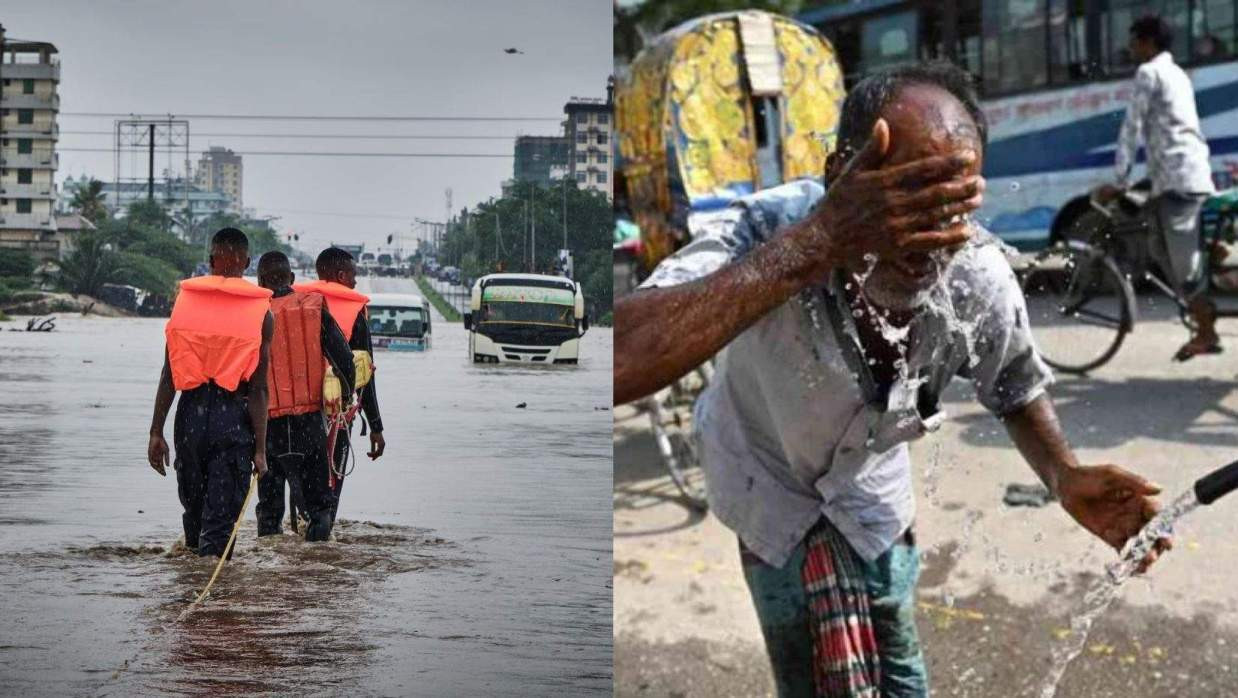
The United Nations has issued a critical global warning following a comprehensive assessment from the World Meteorological Authority (WMO), indicating that the planet is on the verge of facing one of the most powerful El Nino climate patterns observed in decades. The negative atmospheric shift is projected to trigger severe climate vulnerabilities across nations lining the Pacific Ocean and significantly destabilize weather systems in South Asia.
According to the UN report, which cites data released by the WMO, there is an 80 percent probability of the El Nino pattern establishing itself by September of this year, with the likelihood surging to 90 percent by November, as reported by The Guardian.
A Strong to Intense Thermal Spike Expected
El Nino represents a severe disruption in global natural climate patterns, typically bringing extreme thermal spikes to certain regions and catastrophic downpours to others. The WMO has categorized the incoming atmospheric cycle as potentially moderate to intensely strong, with independent climate scientists warning it could morph into the most potent El Nino witnessed this century.

Expressing deep concern over these projections, United Nations Secretary-General António Guterres urged the international community to treat the announcement as a critical climate emergency. He cautioned that El Nino acts as fuel on the fire of global warming, threatening devastating cross-border repercussions that will unfold with unprecedented velocity.
However, the WMO has desisted from officially labeling it the strongest El Nino of the century just yet, citing a degree of model uncertainty. WMO Secretary-General Celeste Saulo noted that distinct predictive models display significant variance, with some indicating extreme strength and others showing milder progressions. Despite these variations, the agency maintains that virtually all corners of the globe will likely experience above-normal temperatures over the next three months.
Drought Risks for South Asia, Floods Forecasted Elsewhere
The geographical fallout of the climate phenomenon will split the globe into contrasting disaster zones:
-
Heavy Rainfall and Floods: Typically triggered across South America, the southern United States, the Horn of Africa, and Central Asia.
-
Severe Droughts: Expected to grip parts of Central and North America, the Caribbean, Australia, Indonesia, and crucial belts in South Asia.
-
Historical Precedent: The recent 2023-24 El Nino was categorized among the five strongest in recorded history, acting as the primary catalyst behind the record-breaking global temperatures witnessed in 2024.
Following a historic, record-shattering May heatwave in Western Europe—specifically impacting the United Kingdom and Ireland—the WMO and the UK Met Office have warned that the world is on track to hit another record-breaking warm year well before 2030, potentially materializing as early as 2027 due to this accelerated El Nino return.
Global Food Security and Funding Crises
Gareth Redmond-King, an official at the British think tank ‘Energy and Climate Intelligence Unit’, termed the situation deeply alarming for the global food supply. The global food system is already under immense stress due to the overarching climate crisis and supply chain disruptions in fertilizer caused by the ongoing war involving Iran. Experts warn that the impending extreme weather anomalies will be catastrophic for farmers, shifting the crisis into a matter of life and death for vulnerable populations.
While some independent scientists have labeled the phenomenon a "Super El Nino," the WMO has rejected the terminology, stating it holds no scientific basis within their official classification system. These natural cycles typically repeat every few years and persist for 9 to 12 months.
Funding Shortfall for Early Warning Systems: While Early Warning Systems have successfully saved countless lives amid escalating climate disasters, the life-saving technology faces a severe funding crisis. Major donor countries, including the United Kingdom and the United States, have recently slashed their foreign aid budgets, triggering a resource crunch. WMO Secretary-General Celeste Saulo expressed profound concern over this shortfall, stating that while early warnings remain a top priority, global climate financing is nowhere near its required peak.
To counter the compounding disasters, UN Chief António Guterres has urged world leaders to deploy immediate, aggressive climate interventions. He emphasized that the definitive solution lies in abandoning fossil fuel dependency, accelerating the transition to renewable energy sources, and extending protective safety nets to marginalized, at-risk populations. He concluded that every global citizen must be brought under the equal protection of an operational early warning network, as unusually high thermal reserves trapped deep within the Pacific Ocean threaten to completely upend global weather grids in the coming years.
 Follow The Daily Campus on Google News