Bangladesh Generates 3 Million Tonnes of E-Waste Annually, Experts Call for Integrated Management Framework
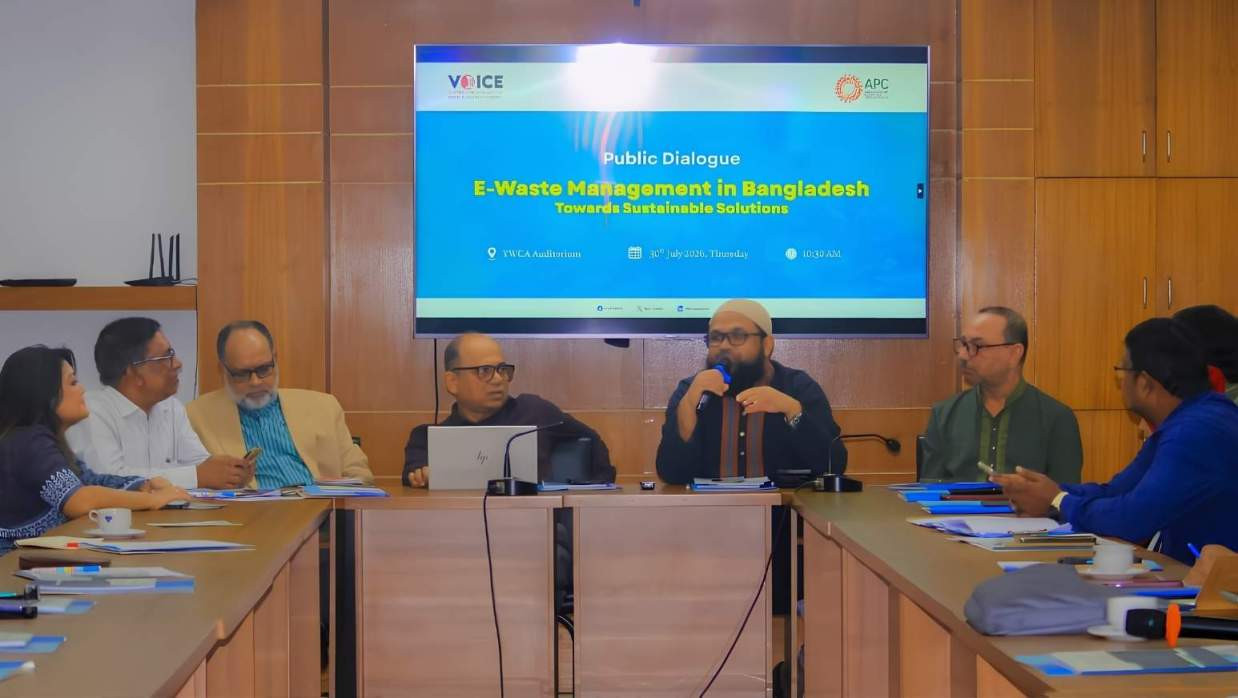
Bangladesh generates approximately 3 million (30 lakh) metric tons of electronic waste (e-waste) annually, a volume projected to climb to 4.62 million metric tons by 2035 if current trends continue, experts revealed at a national dialogue on Thursday (July 30).
Speakers highlighted that only 10% of the nation's e-waste currently undergoes formal recycling, while the remaining 90% is handled through informal channels, posing severe environmental and public health hazards.
The figures were presented during a national dialogue titled ‘E-Waste Management in Bangladesh: Towards Sustainable Solutions’, organized by rights-based organization VOICE with support from the Association for Progressive Communications (APC) at the YWCA Auditorium in Dhaka.
Presenting the core findings of VOICE’s recent evaluation report on the 'E-waste Management Rules, 2021', Deputy Director Musharrat Mahera outlined existing regulatory gaps and operational bottlenecks.
Addressing the event, Department of Environment Director Muhammad Solaiman Haider stressed that institutions must proactively identify their operational challenges and adopt responsible e-waste practices. He noted that sustainable e-waste management requires private sector investment, regional initiatives, and coordinated multi-stakeholder collaboration alongside government efforts.
Prof. Mostafizur Rahman of Jahangirnagar University's Department of Environmental Science warned that the expansion of renewable energy, particularly solar power installations, will significantly accelerate future e-waste accumulation. He urged for safe recycling systems, strengthened research, and formal integration between government, industry, and the informal sector.
DGHS Medical Waste Management Consultant Torit Kanti Biswas pointed out that policy formulation and public awareness alone cannot resolve the crisis without functional infrastructure, execution capacity, and sustainable financing mechanisms.
In his concluding remarks, VOICE Executive Director Ahmed Swapan Mahmud called for nationwide youth engagement through campaigns and workshops across public and private universities. Representatives from civil society organizations, recycling enterprises, and media outlets further urged the government to enforce an integrated national policy, establish rigorous monitoring systems, and promote a circular economy model to transform e-waste into economic resources.
 Follow The Daily Campus on Google News