Turned Away for Being a Private University Student, Md Jabed Now an ASP
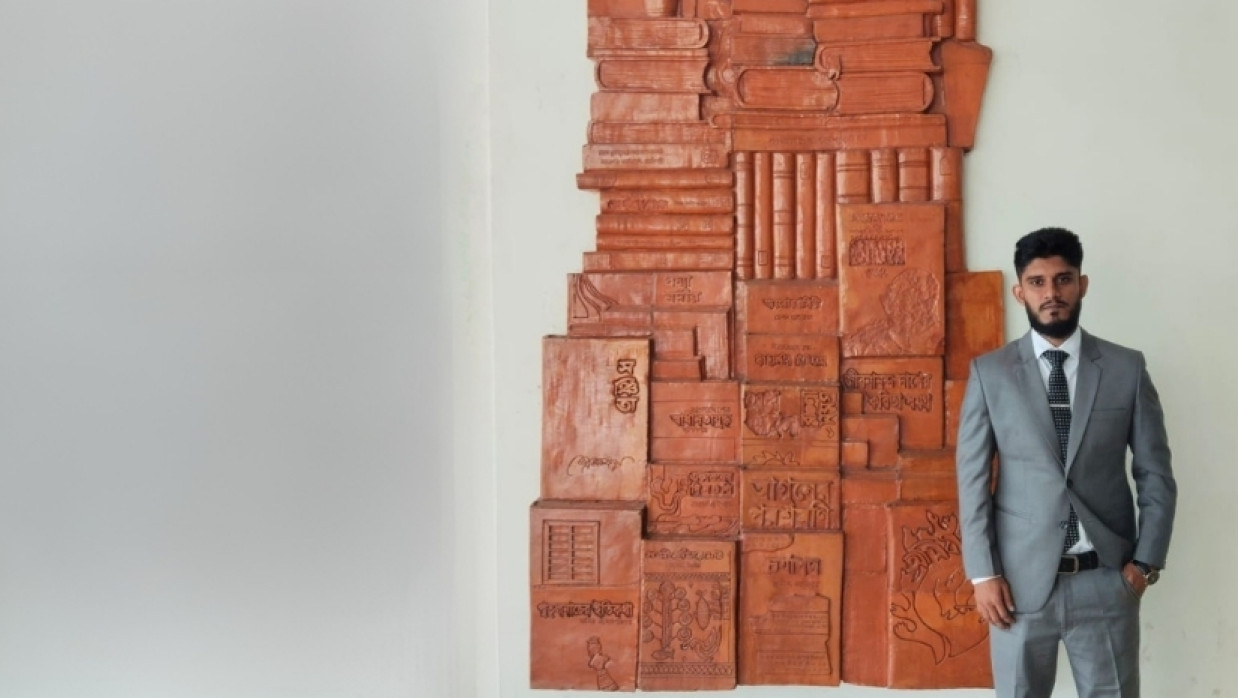
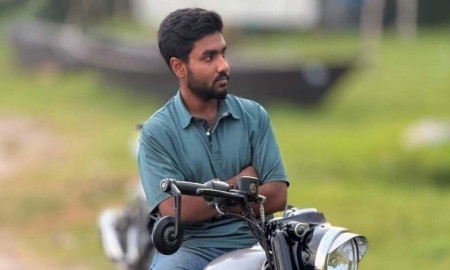
After three unsuccessful BCS attempts, Md Jabed Hossain secured 68th position in his fourth attempt and has been recommended for the post of Assistant Superintendent of Police in the 47th BCS.
Scoring a GPA of 4.17 in his HSC examinations and studying at a private university, Md Jabed Hossain often faced dismissive attitudes suggesting that he lacked merit. Instead of discouraging him, those experiences strengthened his determination to prove himself. After three unsuccessful attempts, Jabed ranked 68th in the 47th BCS and has been recommended for the police cadre as an Assistant Superintendent of Police.
His journey included several setbacks. He failed to qualify in the preliminary stage of the 44th BCS. In the 45th BCS, he was recommended for a non-cadre post as an Instructor. Although he passed both the preliminary and written examinations of the 46th BCS, he was unsuccessful at the viva voce stage.
Jabed is from Charandwip in Boalkhali, Chattogram. His father, Joynal Abedin, worked as a building construction contractor. Jabed and his younger sister are the family’s two children. His sister is currently a seventh-grade student at a school in Chattogram.
Jabed currently works as an assistant teacher at Saidpur Government Primary School. He passed SSC from Hawla High School in Boalkhali in 2014 and HSC from Sir Ashutosh Government College in 2016. He later earned a bachelor’s degree in Civil Engineering from Stamford University Bangladesh.
From a 4.17 GPA to Civil Engineering
Recalling his journey to The Daily Campus, Jabed said his initial ambition was to become a doctor.
“After passing the SSC exam with a GPA-5, I wanted to enroll in a college in the city. In our Boalkhali Upazila, the history of HSC results at Sir Ashutosh Government College wasn't very good—GPA-5s were rarely achieved. Because of that, I didn't want to get admitted there. Since childhood, my dream was to become a doctor, so after SSC I wanted to study in a city college where I could find a good, competitive environment. But since I was the only son of my parents, they wanted me to enroll in a college close to our upazila, especially since it was a government college,” he said.
He eventually enrolled at Sir Ashutosh Government College against his wishes.
“Being admitted to Sir Ashutosh Government College against my will caused me to lose interest in studying during my time there. Not having access to good coaching facilities pushed me further behind in my studies. My father wanted me to study Civil Engineering, as he worked as a building construction contractor. By the end of college, I too decided to study Civil Engineering. Since my confidence in my studies was low, I decided to pursue Civil Engineering at a private university. I hadn't studied throughout the year; I only studied for the final two months before the HSC exams, resulting in a GPA of 4.17,” Jabed said.
He did not sit for university admission tests after HSC, having already decided to attend a private university.
“At that time, I didn't know about the distinction society makes between public and private universities; I thought both were simply educational institutions. True to my thought, I acted and directly enrolled in the Civil Engineering department at Stamford University Bangladesh,” he said.
For his family, however, sending him to Dhaka for private university was a major financial challenge.
“Coming from a lower-middle-class family, we didn't have the financial capability to bear the expenses of a private university in Dhaka, nor did we have any savings in the bank to cover the costs. I still don't know how my father found the courage to enroll me in Dhaka. Interestingly, the day we went to Dhaka for admission was the first time both my father and I had ever set foot in the city,” he said.
‘I Didn't Even Fall Into the Category of a Student’
Jabed said his perception of the difference between public and private universities changed soon after he began university.
“Within a week of entering university, all my thoughts began to be proven wrong. It felt as though I had entered a different world. My close friends who got admitted to various public universities enjoyed soaring prestige, while I felt as though I didn't even fall into the category of a ‘student,’” he said.
He recalled facing similar attitudes when he returned to his former school and college to collect documents.
“A few days after starting university, when I came back to collect some documents from my school and college and people found out I was attending a private university, their facial expressions implied that ‘I had no merit, which is why I enrolled there, and that I was just somehow dragging my studies along with nothing to come of my life—that only those who got into public universities were successful,’” Jabed said.
The experience became a source of motivation rather than defeat as he continued pursuing his career goals.
Jabed’s Advice to Private University Students
Addressing private university students aspiring to join the BCS cadre, Jabed said they often have limited access to guidance because the BCS culture is relatively less prominent at private universities.
“The craze for BCS is relatively low in private universities, and you don't get much guidance from anyone. First, you need to analyze the syllabus to identify your weak and strong areas. Then, you have to plan and study each subject accordingly,” he said.
He advised candidates to focus on topics based on previous examination questions rather than studying without a clear strategy.
“You need to figure out which topics are important in each subject and where questions usually come from, and focus your reading on those topics. Before studying any topic, you should check what kind of questions were asked from it in past exams, and then read the topic-related details thoroughly,” he said.
Since the written examination is now held just two months after the preliminary examination, he recommended preparing for overlapping areas of both stages simultaneously.
“You should prepare for the common topics of both the preliminary and written syllabi simultaneously. You must also build your skills in reading newspapers, free-hand English writing, and translation,” he added.
‘Keep Alternative Paths in Your Career Plan’
For other job seekers, Jabed urged candidates not to allow repeated failures to undermine their confidence.
“Instead of getting frustrated, you must stay focused and prepare for the BCS with self-confidence. At the same time, you should keep alternative paths in your career plan so that if you don't succeed in the BCS for any reason, you can consider options like higher education, business, or other jobs,” he said.
He also advised candidates to avoid collecting too many books for the same subject.
“When choosing books, rather than buying multiple books from different publications for the same subject, you should follow just one book for the preliminary exam and a maximum of two publications for the written exam,” he said, while emphasising the importance of reading newspapers regularly.
 Follow The Daily Campus on Google News