Family Card Scheme Launches Today; 37,567 Women to Get Tk 2,500 Monthly
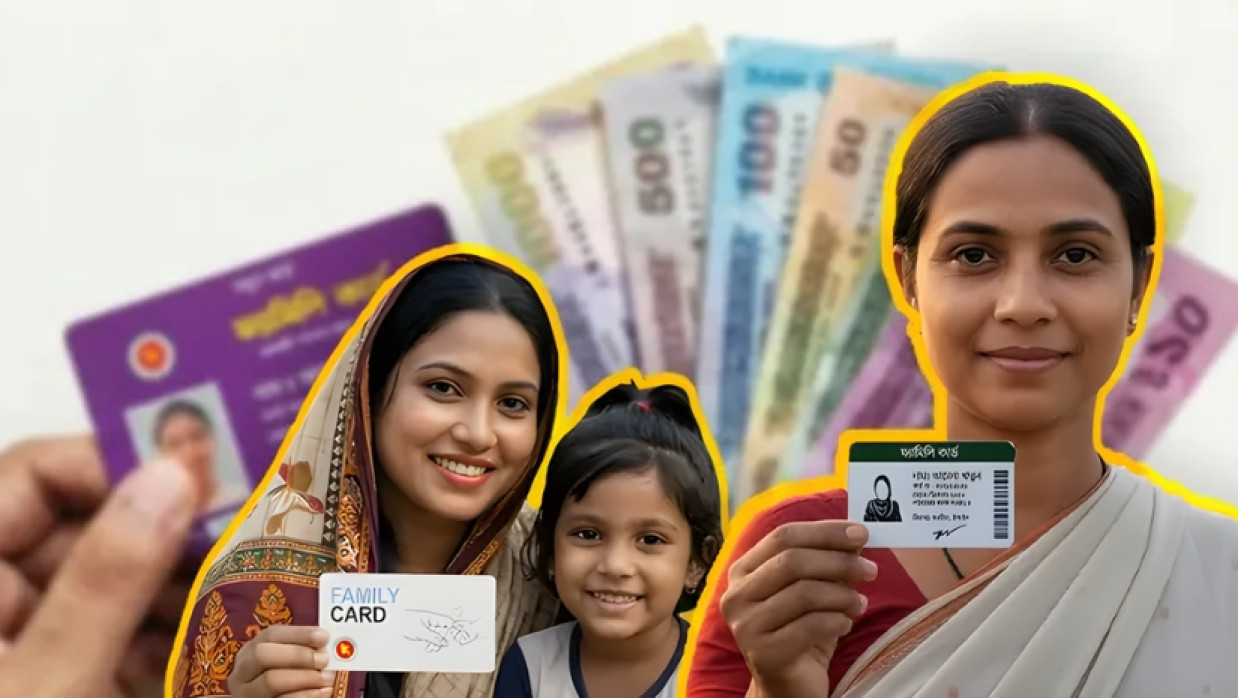
The government officially launched the ‘Family Card’ programme on Tuesday (10 March) to provide financial support to women-headed households. Under the initiative, each eligible family will receive Tk 2,500 per month directly through mobile wallets or bank accounts, allowing beneficiaries to access the funds from home.
Prime Minister Tarique Rahman is scheduled to formally inaugurate the programme at 10:00 a.m. at the T&T playground adjacent to Korail Basti in Banani, Dhaka. Senior officials from the Ministries of Social Welfare and Finance will also attend.
Speaking at a press conference organized by the Ministry of Social Welfare on Monday afternoon, Finance and Planning Minister Amir Khasru Mahmud Chowdhury said the selection of beneficiaries was conducted through a fully transparent and independent process. After collecting data from 67,854 women-headed households during the pilot phase, 37,567 families have been finally selected for the allowance.
The minister stated: “This is part of the commitment we made during the election. Considering the country’s economic capacity and social reality, this project has been undertaken.” He emphasized that no political influence or partisan bias was involved in preparing the list.
The Social Welfare Minister explained that each selected family will receive a modern smart card that is secure and long-lasting. One card will cover five family members. For joint or extended families with more members, the possibility of issuing multiple cards on a proportional basis will be considered.
Families already receiving other government allowances, pensions, or holding government jobs will not be eligible. Similarly, households with commercial licenses, large business establishments, luxury assets (such as cars, air conditioners, or savings certificates worth Tk 5 lakh or more) will be excluded.
The pilot phase will cover 13 wards in 13 city corporations and unions across 13 districts. Committees formed at district, upazila, union, and ward levels conducted door-to-door verification of families’ socio-economic conditions, number of members, education, housing, household assets, income, and remittance flows.
 Follow The Daily Campus on Google News