Bangladesh Has 25 Types of Primary Schools; Nearly Half of Students Attend Non-Government Schools
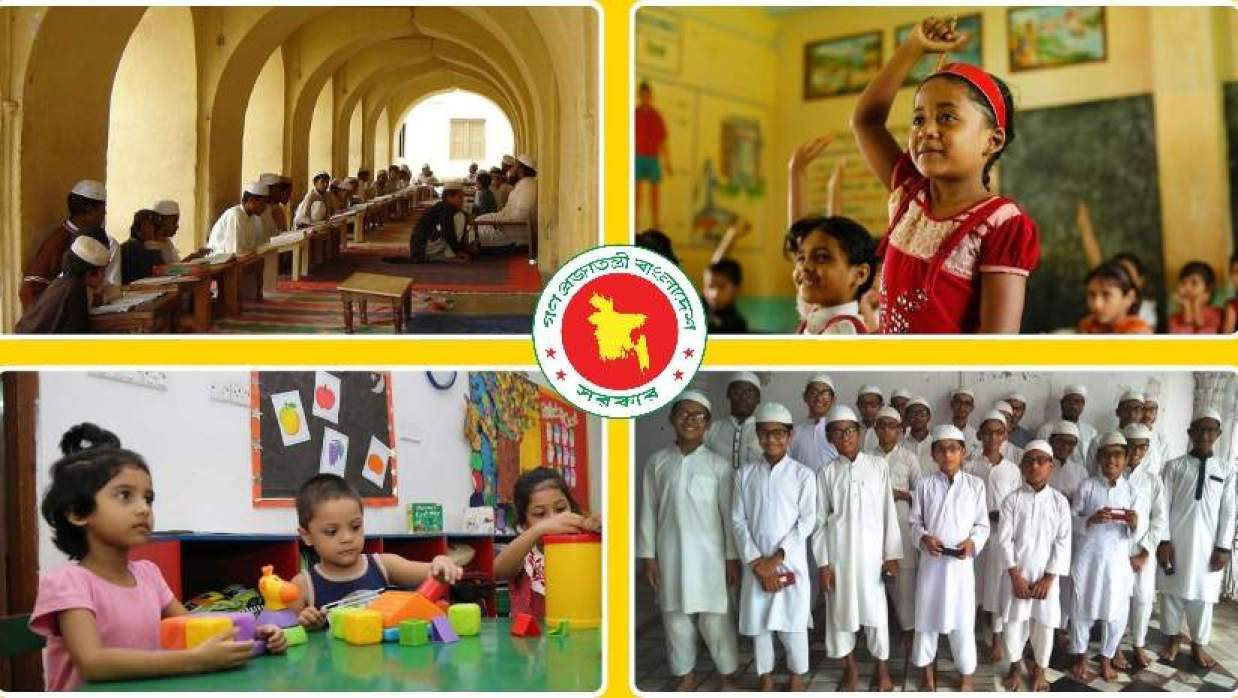
More than 20.1 million students are enrolled in primary education from pre-primary to Grade Five across 25 types of educational institutions in Bangladesh. Of them, around 10.6 million study at government primary schools, while nearly 9.6 million attend non-government institutions, accounting for about 48% of all students. Kindergartens alone have more than five million students.
The figures were revealed in the Bangladesh Education Information and Statistics Bureau's (BANBEIS) Education Survey 2025 report, which uses data from the Annual Primary School Census (APSC) 2024 conducted by the Directorate of Primary Education (DPE).
The institutions covered by the report include non-government schools, Ebtedayee madrasas, kindergartens, NGO schools, Ebtedayee sections attached to higher madrasas, primary sections attached to secondary schools, schools run by the Shishu Kalyan Trust, NGO learning centres and other institutions.
A total of 707,216 teachers work across these institutions, including 270,214 men and 437,002 women. Women account for 61.8% of the total teaching workforce. The institutions collectively have 9,853,962 male students and 10,329,086 female students.
65,000 government primary schools and 53,000 non-government institutions
Institution-wise data show that Bangladesh has 65,567 government primary schools and 26,299 kindergartens. However, according to information provided to parliament in July 2026 by Primary and Mass Education Minister Dr ANM Ehsanul Haque Milon, the number of kindergartens is 32,000.
The country also has 9,406 Ebtedayee sections attached to higher madrasas, 5,187 non-government schools, 3,413 Ebtedayee madrasas, 2,831 NGO schools and 2,767 primary sections attached to secondary schools. In addition, there are 1,727 NGO learning centres, 205 schools run by the Shishu Kalyan Trust and 1,205 institutions classified as other.
An analysis of teachers and students by institution type shows that government primary schools employ 383,624 teachers and enrol 10,617,962 students.
Kindergartens have 198,374 teachers and 5,008,850 students. Ebtedayee sections attached to higher madrasas have 31,183 teachers and 1,432,127 students, while non-government schools employ 31,477 teachers and enrol 686,195 students.
Ebtedayee madrasas have 19,480 teachers and 449,500 students. NGO schools employ 8,182 teachers and enrol 491,529 students. Primary sections attached to secondary schools have 21,647 teachers and 1,073,896 students.
NGO learning centres employ 3,813 teachers and serve 237,753 students. Schools run by the Shishu Kalyan Trust have 1,235 teachers and 27,681 students, while institutions classified as other employ 8,201 teachers and enrol 157,555 students.
The proportion of female teachers also varies by institution type. Women account for 65.9% of teachers in government primary schools, 64% in non-government schools and 62.1% in kindergartens. In contrast, women make up 31.4% of teachers in Ebtedayee madrasas and just 20.4% in Ebtedayee sections attached to higher madrasas. NGO learning centres have the highest proportion of female teachers, at 93.2%.
53% of pre-primary students study outside government schools
A substantial number of children also attend pre-primary classes outside government primary schools. According to the report, a total of 3,496,423 children were enrolled in pre-primary education in 2024. Of them, 1,632,426 attended government primary schools, accounting for 46.7% of all pre-primary students.
The remaining 1,863,997 children were enrolled in kindergartens and other types of institutions. This means 53.3% of pre-primary students were studying outside government primary schools.
Kindergartens alone enrolled 1,248,157 pre-primary children, representing 35.7% of the total. Secondary school-attached primary sections enrolled another 169,158 children, while non-government schools and NGO schools enrolled 112,556 and 111,590 children, respectively.
With such a large number of children receiving primary education at non-government institutions, questions have emerged over how these schools will be regulated and monitored and how the government plans to improve the quality of education they provide.
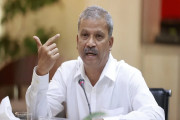
Shahina Ferdousi, director general of the Directorate of Primary Education and an additional secretary, told The Daily Campus that the issue primarily requires policy-level consideration.
“Those providing primary education in the non-government sector must come under government laws and regulations. They need to register and then obtain full registration by following the prescribed procedures. We have conducted extensive awareness campaigns and held meetings on this issue. Our officials at the district, divisional and upazila levels have encouraged non-government schools to register with the government, and we are continuing to work on this,” she said.
She said the government's decision was to bring all non-government schools under the registration system. Registration would enable these institutions to participate in various government programmes and bring their activities under official monitoring.
“Previously, the registration process was conducted offline. It has now been made easier through an online system so that schools can apply conveniently. As a result, the number of non-government primary schools coming under registration has increased compared with the past. These institutions are also receiving certain benefits. For example, some schools were previously unable to participate in scholarship programmes. Registration has expanded their opportunity to do so. Gradually, non-government institutions will become part of our programmes,” she added.
Ferdousi also said non-government schools had been instructed to follow the teaching methods prescribed by the government and use the textbooks provided by the authorities in their classrooms.
“We are regularly conducting awareness campaigns to encourage non-government institutions to follow the teaching methods prescribed by the government,” she said.
 Follow The Daily Campus on Google News