South Korea Eyes Modern Labs at Bangladesh's 2,217 Skills Training Centres
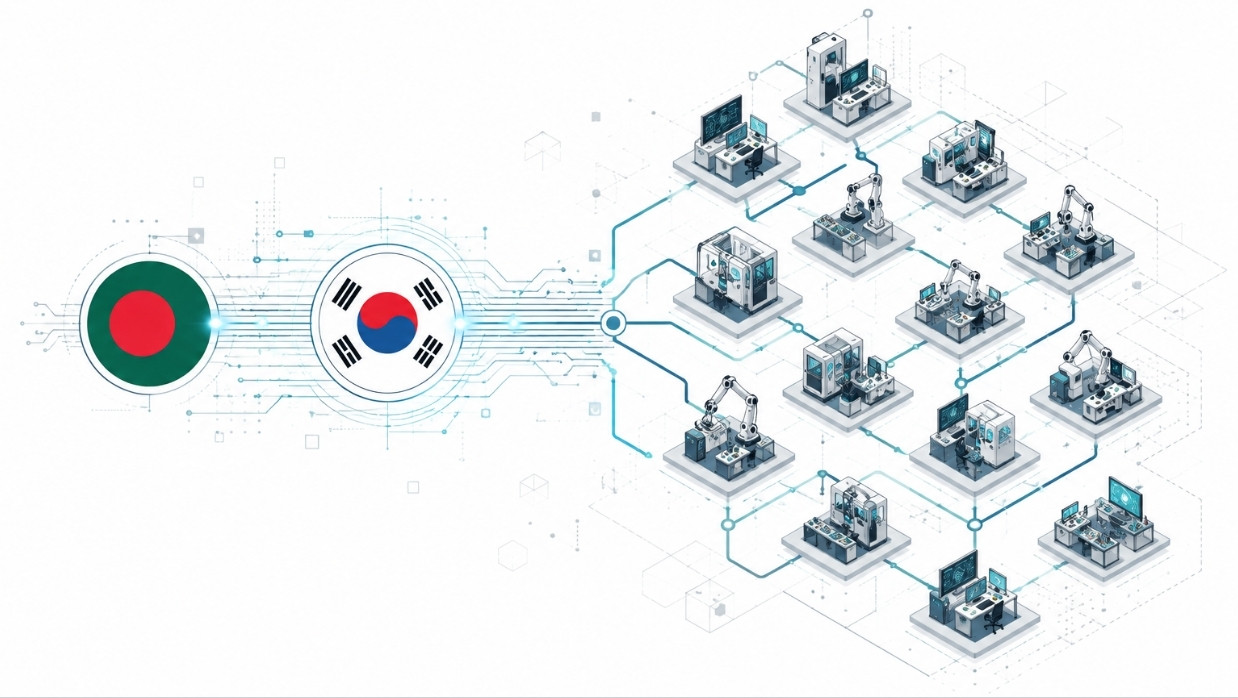
Bangladesh's National Skills Development Authority (NSDA) is in talks with a South Korean organisation to build modern laboratory facilities at all 2,217 of its registered skills training institutions, Executive Chairman Dr. Nazneen Kawser Chowdhury said, describing the initiative as part of a plan to establish a "complete digital skills ecosystem."
In an interview with The Daily Campus, Chowdhury said the proposal grew out of a recent discussion with a development partner over the limits of training courses alone.
"In a recent discussion with one development partner, I said that providing training of trainers (ToT) alone would leave a gap in capacity-building, because not all STPs have the modern lab facilities needed to apply modern training. I asked the partner organization to help build modern lab facilities at all 2,217 STPs, so that alongside ToT, a complete digital skills ecosystem could be established."
According to Dr. Chowdhury, the South Korean organisation has responded positively to the request. Fifteen of its technical experts are currently working on preparing a project proposal. The overall project will be finalized once the organisation travels to Bangladesh and delivers a presentation, she said.
NSDA is the regulatory body overseeing Bangladesh's skills development sector, responsible for curriculum development, certification and monitoring of Skills Training Providers, or STPs, nationwide. Chowdhury, who holds the rank of Secretary, took charge as Executive Chairman on 26 August last year.
The push for modern labs comes against the backdrop of a sharp expansion in the number of training centres under her tenure. Dr. Chowdhury said 1,417 training institutions have been registered with the NSDA from July 2024 to date, of which 64 percent were registered during her time in office. When she took charge, there were 614 training centres nationwide; as of a count up to 30 June, that figure had risen to 2,217, more than three and a half times the earlier total.
That rapid growth has come with strains on capacity. A count taken last week showed that of the 2,217 training centres, 1,153 are under-utilized, or being used below their intended capacity, largely because of a shortage of trainers that forces the same instructor to teach at multiple centres. Centres are meant to run training four times a year, she said, but many manage only two or three rounds.
Dr. Chowdhury framed the proposed South Korean project as addressing a related but distinct gap: even where centres are active, many lack the modern laboratory equipment needed to deliver up-to-date training. Pairing new labs with training-of-trainers support, she said, was intended to build a fuller digital skills ecosystem rather than isolated improvements at individual institutions.
The modern lab initiative sits within a broader long-term plan approved by the NSDA in February, which extends to 2030 and envisions a fully digital skills ecosystem in which assessors and trainers are managed through a central database and every ministry's training data is updated in real time.
Chowdhury did not provide a timeline for when the South Korean organisation's presentation or a final project agreement would take place, saying only that the overall project would be finalized once that presentation occurs.
 Follow The Daily Campus on Google News