Highly Educated Professionals, Including PhD Holders, Doctors and Engineers, Teaching in Primary Schools
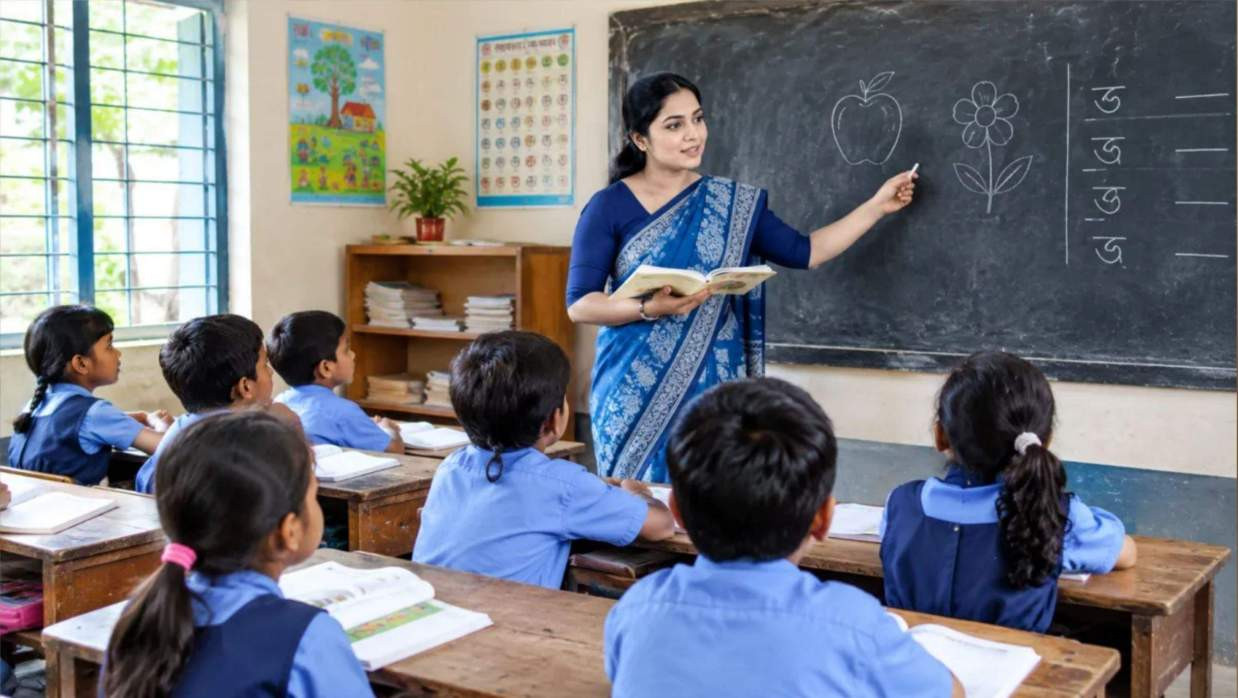
A decade ago, government primary schools in Bangladesh were largely staffed by teachers with higher secondary or HSC qualifications. That picture has changed, with growing numbers of highly educated people entering the profession.
Graduates in engineering, agriculture, law and computer science, as well as MPhil and PhD holders, are now teaching at the primary level. The workforce also includes teachers with medical qualifications. In total, people holding around 30 different types of academic qualifications are helping shape the future of young learners, with master's degree holders making up the largest group.
The information comes from statistics published by the Primary Education Information Management System (IPEMIS) as of October 20, 2026. IPEMIS is connected to the Directorate of Primary Education and operates with funding from UNICEF and the Asian Development Bank (ADB).
According to IPEMIS, government primary schools have 163,080 teachers with master's degrees, the largest group. The second-largest group comprises 99,991 teachers with bachelor's degrees (pass courses). There are 42,304 teachers with HSC qualifications and 20,984 with bachelor's honours degrees.
The figures also show that 13,119 teachers hold BSS degrees, 8,579 have passed the Secondary School Certificate (SSC) examination, and 7,710 hold Master of Business Administration (MBA) degrees.
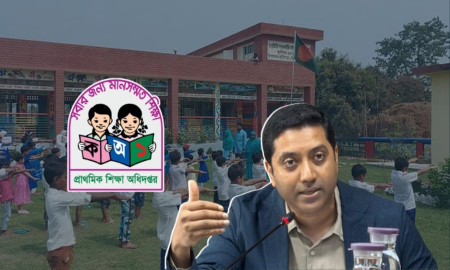
“The entry of MPhil and PhD holders, as well as doctors and engineers, into the teaching profession will improve the quality of education. This is a positive development for us.”
Bobby Hajjaj, State Minister for Primary and Mass Education
Teachers with qualifications in religious education are also working in primary schools. These include 5,740 teachers with Kamil degrees, 1,901 with Fazil degrees, 1,239 who have passed the Alim examination and 412 with Dakhil qualifications.
The schools also employ teachers with specialised degrees in engineering, agriculture, law and computer science. A total of 1,617 teachers hold BSc engineering degrees, while 258 have BSc degrees in agriculture and 49 hold diplomas in agriculture.
In law, 386 teachers have LLM degrees and 315 hold LLB degrees. The workforce also includes 360 teachers with Master of Education (MEd) degrees, 288 with BEd honours degrees and 256 with BEd degrees.
Other qualifications represented include diplomas, held by 438 teachers, postgraduate diplomas held by 126, MATS qualifications held by 41 and BPED degrees held by 28 teachers.
The data also lists 23 teachers with nursing qualifications, 21 with BSc degrees in Computer Science and Engineering and 17 with MSc degrees in the subject. In addition, 10 teachers hold BAGED degrees and four have diplomas in computer technology.
There are also 42 teachers with MPhil or PhD degrees and four with Bachelor of Dental Surgery (BDS) qualifications.
State Minister for Primary and Mass Education Bobby Hajjaj told The Daily Campus that the entry of highly educated professionals into primary teaching would help improve educational standards.
Asked whether the ministry had plans to improve the living standards of highly qualified teachers entering the profession, Hajjaj said several initiatives had already been taken to improve the living standards of primary school teachers. The ministry was also arranging adequate training for teachers, he added.
Infrastructure and facilities in primary schools
Alongside the diversity of teachers' qualifications, government primary schools vary considerably in infrastructure and available facilities.
According to the data, Bangladesh has 65,569 government primary schools. Of these, 64,037 have electricity connections, 33,555 have internet access and 55,069 have playgrounds.
The building statistics cover a range of conditions, including good, repairable, usable, old, dilapidated, risky, abandoned and unusable structures.
The data lists 35,826 buildings in good condition, 17,992 requiring repairs and 16,672 classified as usable. There are also 13,950 old buildings, 11,060 dilapidated buildings and 7,479 considered risky.
In addition, 4,081 buildings have been abandoned, 1,799 are classified as unusable and 765 are under construction. The condition of another 46 buildings is listed as unknown.
A significant number of government primary schools are located in disaster-prone areas, according to the figures. There are 27,968 schools in flood-prone areas and 16,844 in waterlogging-prone areas. Another 11,152 are in cyclone-prone areas, 6,945 in river erosion zones, 6,590 in storm-surge-prone areas and 1,489 in landslide-prone areas.
School facilities and accessibility
The data also provides figures on other facilities available at government primary schools.
Book corners are available at 62,557 schools, while 60,969 have Liberation War corners. A total of 39,570 schools have honesty stores, 35,256 have ramps, 29,713 have walls dedicated to humanitarian messages and 29,139 have Shaheed Minars.
Sign language tutors are available at 309 schools.
Women account for two-thirds of primary school teachers
Women make up more than twice the number of male teachers in government primary schools across the country.
Of the teachers working in more than 65,000 government primary schools, 248,795 are women, accounting for 66.89 per cent of the total. Male teachers number 123,203, or 33.098 per cent, according to the figures.
Teachers aged 36 to 45 form the largest group
Age-based statistics show that teachers aged between 36 and 45 form the largest group, numbering 155,727.
There are 108,574 teachers aged between 46 and 55, while 83,071 are aged between 26 and 35. Another 24,520 teachers are older than 56.
Thousands of schools in disaster-prone areas
The data highlights the extent to which primary schools are located in areas vulnerable to natural disasters. Besides the 27,968 schools in flood-prone areas, 16,844 are in waterlogging-prone areas and 11,152 in cyclone-prone areas.
Schools located in river erosion zones number 6,945, while 6,590 are in storm-surge-prone areas and 1,489 in landslide-prone areas.
A total of 9,919 schools are also used as shelters. Their presence in disaster-prone areas highlights the dual role of primary educational institutions as places of learning and emergency shelters during disasters.
Location-based statistics show that 4,030 government primary schools are situated in municipalities and 1,404 in city corporation areas.
The data also lists 1,589 schools under the 1,500 Schools Project and 1,266 schools for children with disabilities.
 Follow The Daily Campus on Google News