Education Should Not Be Limited to Preparing Students for Jobs: PM Tarique
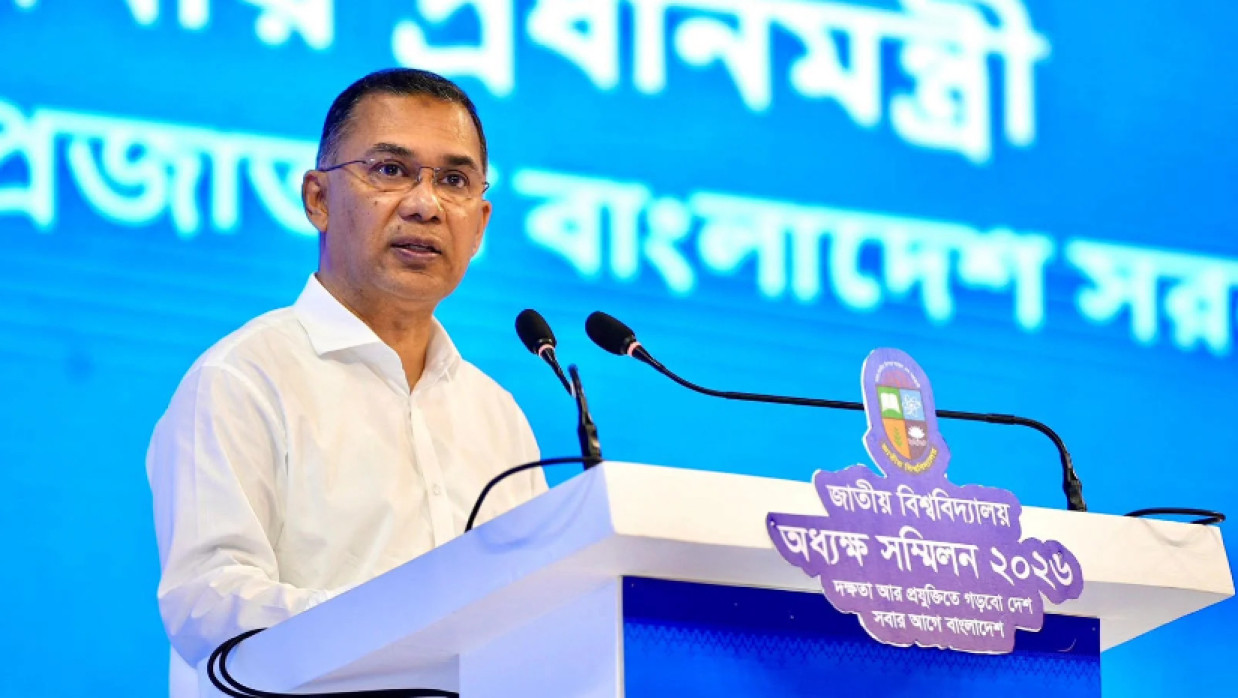
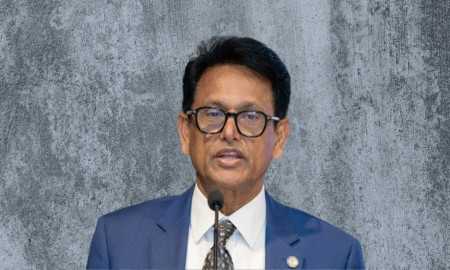
Prime Minister Tarique Rahman has called for higher education to go beyond job preparation, urging colleges to develop students' human values, creativity, critical thinking and leadership through literature, philosophy, history, science, sociology and cultural activities. He also stressed modernising higher education through technology, practical skills and entrepreneurship.
He made the remarks as the chief guest at the National University’s College Principals’ Conference 2026 at Shaheed Suhrawardy Indoor Stadium in Mirpur, Dhaka, on Saturday (November 28). More than 2,300 principals from colleges affiliated with the National University attended the conference.
The prime minister said, “There is not much ultimate success in limiting education to job preparation alone; rather, opportunities should be created for students to develop human values, creativity, reasoning and leadership qualities through literature, philosophy, history, science, sociology and cultural practices.”
Highlighting the importance of principals, he said, “You are the heads of colleges, the principals. A principal is not merely the administrative head of an institution; you are its leader and moral compass. You are at the centre of academic leadership and the architects of building future generations. Much depends on your talent, qualifications, decisions, wisdom and foresight in developing the future potential of teachers. To create higher education opportunities for everyone, whether in cities or villages, Begum Khaleda Zia established the National University on October 21, 1992. The institution currently has nearly 2,500 affiliated colleges.”
He said the number of colleges and opportunities for higher education had increased over the past 16 years, alongside a rise in student enrolment. However, questions remain over whether the expansion has led to improvements in the quality of education, he said, urging teachers and all concerned to reflect on the issue.
“During the period of fascism, the country's education system, like everything else, was severely damaged. In a fascism-free Bangladesh, let us all work together to build a better education system. Perhaps now is the time to make the education system more modern and appropriate for the times,” he said.
Tarique Rahman said college principals must lead efforts to reform and modernise the education system. He stressed that teacher training was essential to ensure educators could effectively engage with technology-based learning.
“There is a saying that practice makes a man perfect. The more trained a teacher is, the more proficient they become,” he said, calling for a shift from teacher-centred methods to student-centred and research-oriented teaching. He said a “Train the Trainer” programme could play an effective role in this regard.
Emphasising technology-based education to address the challenges of the Fourth Industrial Revolution, the prime minister said, “If teachers and students cannot adapt themselves to modern and technology-dependent education systems, the number of certificate-dependent educated people will increase every year, but unemployment will probably not decrease.”
He said half of the world's population was still unable to enjoy the benefits of the Third Industrial Revolution, while the world had already entered the era of the Fourth Industrial Revolution. Higher education institutions must move away from conventional teaching and introduce technology-driven, innovation-oriented and skills-based education suited to employment, he said.
He also pointed to advances in artificial intelligence, robotics, big data, the Internet of Things, blockchain, automation, genetic engineering, biotechnology, cybersecurity and 5G technology, saying these innovations were bringing major changes to the future world of work.
Stressing the need to connect education with professional skills, Tarique Rahman said, “Education gives people strength, while a specific goal transforms that strength into success. Education without a goal is like a journey without direction, while goal-oriented education is an effective guide to building a successful future. Therefore, success lies in transforming acquired knowledge into skills suitable for the workplace. Industry-academia collaboration is indispensable for transforming the power of education into professional skills.”
He further said educational institutions would build the foundation of knowledge, while education should transform that knowledge into practical skills. Students, in turn, would become future innovators, entrepreneurs and drivers of economic development.
To this end, he called for opportunities for experienced and skilled officials from different industries to teach as guest lecturers at colleges and universities. He also urged industrial entrepreneurs to arrange internships, industrial attachments and hands-on training for students.
The prime minister said students who gained targeted skills and practical experience during their academic years would be able to become entrepreneurs instead of waiting for jobs after graduation. They would also be capable of creating employment opportunities for others, he said.
He also stressed teaching multiple languages to expand students' international connections and employment opportunities. Tarique Rahman said, “For this, it is extremely important for colleges to provide students with opportunities to learn Arabic, Mandarin, Japanese, Korean, French, German, Italian or any other internationally demanded language, thereby opening up more doors of opportunity for themselves through global communication.”
He also called on National University-affiliated colleges to expand career counselling, internships, skills development, language clubs and entrepreneurship opportunities.
Addressing the teacher shortage at colleges, the prime minister urged the authorities concerned to take steps to fill vacant posts and improve teacher training. “To ensure the smooth operation of educational activities, address college-based teacher shortages, fill vacant posts, recruit and post teachers where necessary, and improve teachers' training and skills, I urge the education minister and secretary to take initiatives involving the Directorate of Secondary and Higher Education, NTRCA, National University authorities and all concerned,” he said.
He also called for initiatives to install solar power systems on college rooftops where such facilities are suitable, including those at National University-affiliated institutions.
The prime minister further urged college authorities to adopt a positive approach towards protecting the interests of financially disadvantaged students, marginalised communities and students with special needs.
 Follow The Daily Campus on Google News