DU says DUCSU activities are ‘undesirable, unexpected and unacceptable’
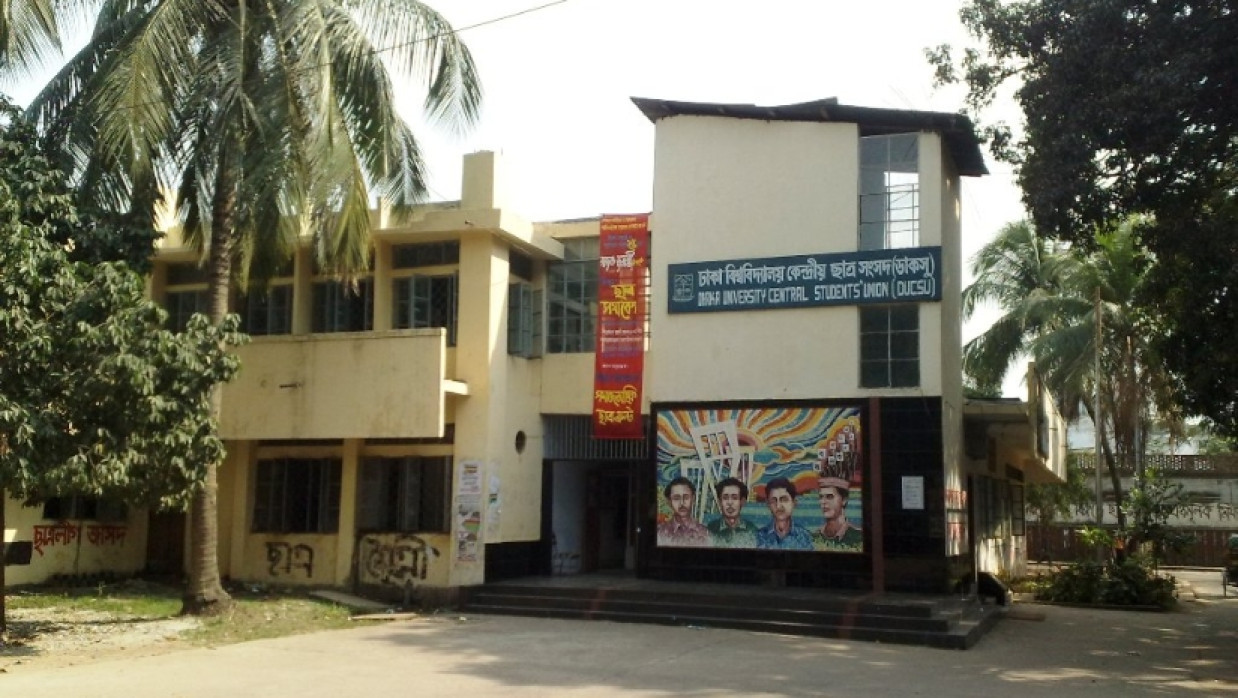
The University of Dhaka has described several recent activities of the Dhaka University Central Students’ Union (DUCSU) as “undesirable, unexpected and unacceptable”, saying they were carried out without following the university’s laws, regulations and administrative procedures. The university made the statement in a press release issued on Monday (September 14) by Faruk Mahmud, deputy director of its Public Relations Office.
According to the release, several reports published by different media outlets regarding DUCSU had come to the university authorities’ attention. The university said some of the activities reported were inconsistent with its existing laws, regulations, policies and administrative structure.
The administration said it supports and upholds the memory of the July mass uprising. As part of that commitment, the foundation stone of a July memorial was inaugurated at the university’s Mall Chattar on August 5 in the presence of the vice-chancellor, members of the university community and relatives of those killed during the uprising.
DUCSU memorials allegedly installed without approval
The university said Article 24(a) of the Dhaka University Order, 1973 places responsibility for the supervision, maintenance and control of university property with the Syndicate. It also cited a note under Chapter XIV, Section 4 of the Dhaka University Ordinances and Regulations, which states that the students’ union must take decisions subject to the directions of the vice-chancellor.
Against this backdrop, the administration said DUCSU had installed memorial structures named “Nirbhik July” beside the DUCSU building near the Arts Building and in front of the Central Library without obtaining permission from, or holding discussions with, the Syndicate or vice-chancellor. The university described the installations as beyond DUCSU’s jurisdiction under its existing laws.
Jinnah portrait draws university objection
The administration also said it had taken note of the display of portraits of Muhammad Ali Jinnah, then governor-general of Pakistan, and Abdul Malek, described in the release as a former student leader, at the DUCSU museum.
The university said displaying portraits of individuals it considers to be in conflict with the history of the Language Movement and Bangladesh’s independence was not acceptable. It warned that administrative action would be taken against those responsible under the university’s existing rules and regulations.
Teacher-rating website also questioned
The university also criticised DUCSU for launching a website to evaluate university teachers without approval.
According to the administration, teacher evaluation is an important academic and institutional matter and no individual, organisation or student union can independently establish a separate evaluation system. The university further alleged that the website had made teachers’ personal information publicly available, which it described as a punishable offence under the law.
Dhaka University said it already has its own approved policy for teaching evaluation, which has been approved at the highest level of the university and is awaiting implementation. It said establishing a separate evaluation system outside that approved policy was therefore unacceptable and could damage the university’s reputation.
No scope for parallel administration
The university said there would be no scope for establishing any form of “dual administration” on campus.
“DUCSU is an important student-representative institution, but all of its activities must be conducted within the university’s laws, regulations, policies and administrative structure. Any attempt to establish a parallel structure or process by bypassing the university administration’s authority will be firmly resisted.”
The administration said it would not compromise on institutional discipline or on protecting the historical significance of the Language Movement and Liberation War. It warned that strict administrative action would be taken under existing rules if anyone undertakes construction of structures or establishes separate administrative mechanisms without university approval.
 Follow The Daily Campus on Google News