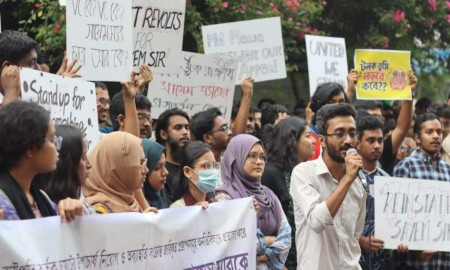
International Mother Language Day Observed with Deep Respect Across Bangladesh
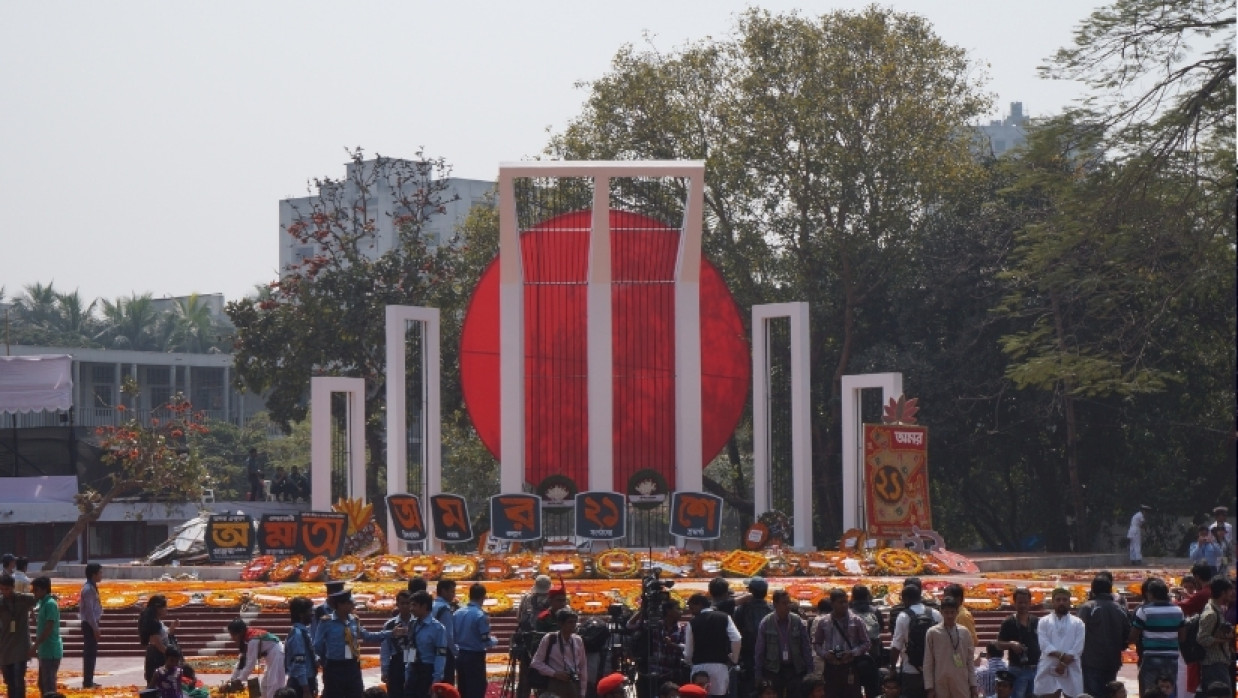
International Mother Language Day is being observed today (Saturday, 21 February) with due solemnity. The 74th anniversary of the Language Movement and Martyrs' Day is marked nationwide through extensive programs. The formal observance began at 12:01 am with wreath-laying at the Central Shaheed Minar.
President Mohammad Sahabuddin and Prime Minister Tarique Rahman paid tribute first by placing wreaths. From 12:40 am onward, leaders and activists from various political, social, and cultural organizations, along with people from all walks of life, offered their respects at the monument. At dawn, floral tributes, Fateha, and Quran Khwani were held at the graves of language martyrs in Azimpur graveyard.
Special prayers for the salvation of the martyrs' souls were organized in mosques, temples, and other places of worship across the country. DMP has deployed around 15,000 personnel for security at the Central Shaheed Minar and surrounding areas, with RAB maintaining law and order nationwide.
On 21 February 1952, police opened fire on students demanding Bangla as the state language, resulting in the martyrdom of Abul Barkat, Abdus Salam, Rafiq Uddin Ahmed, Shafiur Rahman, and Abdul Jabbar, among others. This event became the foundation of the Language Movement, which later fueled the struggle for self-rule and ultimately Bangladesh's independence in 1971.
The movement began in late 1947 in Dhaka and gained momentum in 1948. On 21 February 1952, students defied Section 144 and took to the streets, leading to the tragic shootings. The next day, despite repression, people protested again. A makeshift monument was built overnight on 23 February in the Medical College hostel ground, which was demolished by authorities on 26 February.
In 1954, the United Front's victory in provincial elections led to Bangla being recognized as a state language on 7 May in the Constituent Assembly. It was formally included as Pakistan's second state language through constitutional amendment on 29 February 1956. In 1987, the 'Bangla Language Implementation Bill' was passed in Parliament and came into effect on 8 March.
UNESCO recognized 21 February as International Mother Language Day in 1999, and it has been observed globally since 2000 to promote linguistic and cultural diversity.
 Follow The Daily Campus on Google News