Language Diversity at Khulna University
Indigenous Students Seek More Space for Mother Tongues
Daily classes, seminars and cultural events at Khulna University (KU) are primarily conducted in Bangla and English. Yet amid this dominant language environment, many indigenous students quietly ask where their own mother tongues stand. The issue becomes more visible around International Mother Language Day or during their own cultural programs.
Indigenous students across various disciplines believe mother tongue is not just a communication tool. It is the core of their history, culture and identity. They feel the institutional education system offers very limited scope to learn or practice their languages. As a result, younger generations are gradually drifting away from their mother tongues.
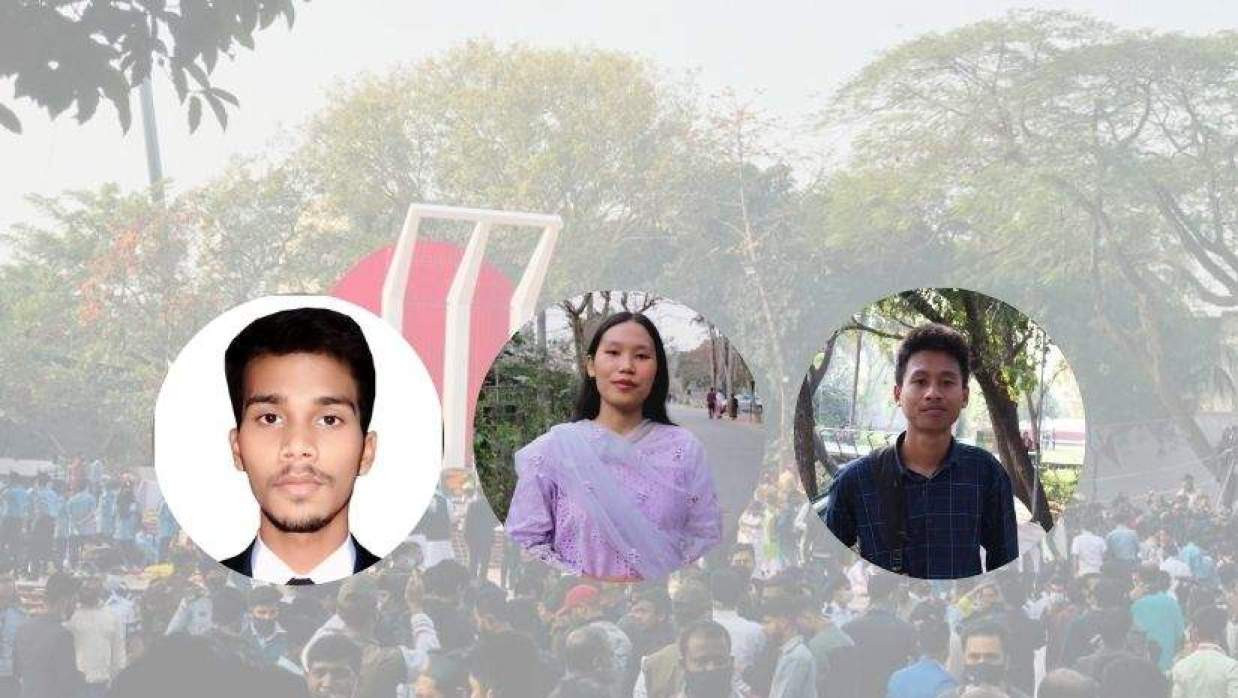
Law Discipline student John Jidan Tudu says he grew up in a Santal family and speaks Santali at home. However, university life has forced him to become fully accustomed to Bangla and English. He often feels the opportunity to even think in his own language is shrinking.
Mass Communication and Journalism first-year student Rohila Ching Marma says she speaks Marma at home but most of her student life has been in Bangla. She has to maintain a balance between the two languages. In her view, mother tongue keeps people connected to their culture. When they sing or tell stories in their own language, it brings a unique sense of confidence.
Drawing and Printmaking Discipline student Pushpita Tripura believes preserving language is not only an individual responsibility. Institutional initiatives are also essential. She says they occasionally speak Tripura among friends but written practice is almost absent. Regular language-based cultural events or minority language days at the university would raise awareness among everyone.
UNESCO reports indicate that many indigenous languages worldwide are at risk of extinction. In Bangladesh too, several minority languages are endangered due to reduced intergenerational use. In this context, stakeholders feel higher education institutions must take steps to protect linguistic diversity.
While various cultural organizations at Khulna University showcase diversity every year, practice of indigenous languages remains limited. Students believe administrative support and curriculum-based initiatives could bring positive change in language preservation.
Mother tongue is not merely a collection of words. It carries the memory, emotions and identity of an ethnic group. Indigenous students at KhU want their languages to receive equal dignity in the campus’s multilingual reality. Protecting linguistic diversity would make the university truly more inclusive.
 Follow The Daily Campus on Google News