
What is behind the CUET VC appointment?

What is behind the appointment of Professor Sheikh Shariful Alam as the new Vice-Chancellor of Chittagong University of Engineering and Technology (CUET)? The question is not simply about one appointment, but about how vice-chancellors are appointed and removed, how much autonomy a university has over its own leadership, and what happens when such decisions are repeatedly made from outside the institution.
Last year, classes and examinations at Khulna University of Engineering and Technology (KUET) remained suspended for a long time following allegations that a teacher had been physically assaulted. Amid continuous student protests, the Ministry of Education relieved KUET Vice-Chancellor Dr Muhammad Masud and Pro-Vice-Chancellor Dr Sheikh Shariful Alam of their duties on April 25.
Afterward, Professor Md Hazrat Ali of CUET's Department of Civil Engineering was appointed acting Vice-Chancellor of KUET, but he was relieved of the responsibility within a month. Now the situation appears to have turned around, as Professor Sheikh Shariful Alam, who was relieved of his duties as Pro-Vice-Chancellor of KUET amid disputes between teachers and students, has been appointed Vice-Chancellor of CUET.
But why CUET? Professor Abu Sadat Muhammad Sayem of CUET's Department of Mechanical Engineering was appointed Vice-Chancellor on July 27, yet just 56 days later, on September 21, he was relieved of the position and Professor Shariful was appointed in his place.
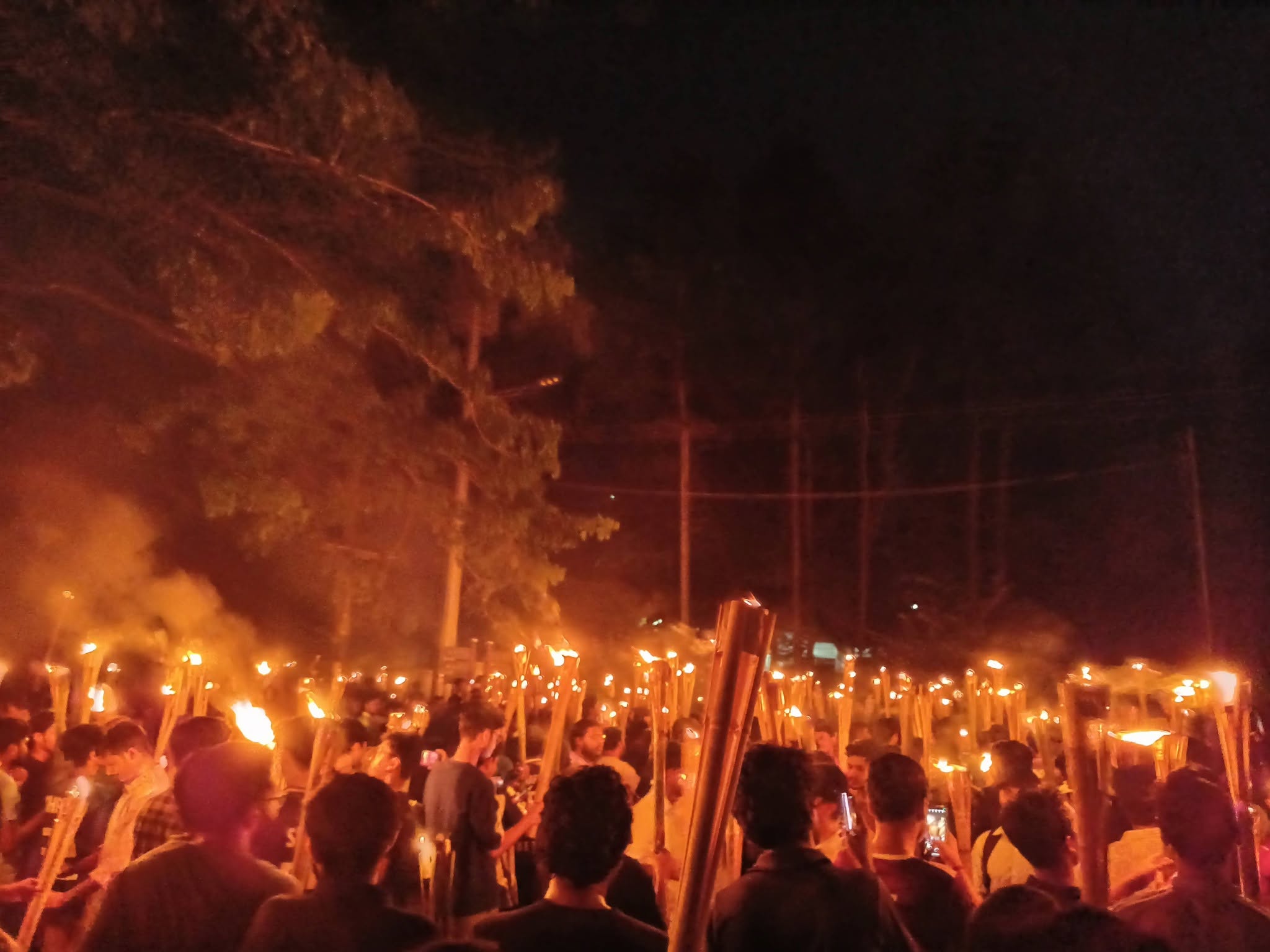
The students have since been protesting and boycotting classes and examinations, demanding Sayem's reinstatement, and they have also written an open letter to the Prime Minister. So the questions naturally arise: Why was Professor Sayem removed after only 56 days, why was a teacher from another university appointed in his place, and why was Professor Shariful chosen for CUET?
What does the law say?
Before asking why the decision was made, it is necessary to understand what the law says. Under Section 10(1) of the Chittagong University of Engineering and Technology Act, 2003, the Vice-Chancellor is appointed for a four-year term from among senior engineering educators associated with engineering education and research.
Section 10(2), however, gives the Chancellor the authority to relieve the Vice-Chancellor from office without assigning any reason. Section 10(3) also provides that when the office of Vice-Chancellor becomes vacant, or when the Vice-Chancellor is unable to perform his duties because of leave, absence, illness or another reason, the Pro-Vice-Chancellor will act as Vice-Chancellor until a new Vice-Chancellor assumes office, unless the Chancellor decides otherwise.
Therefore, the law does provide the authority to remove a Vice-Chancellor before completion of the four-year term. But the existence of such a legal provision does not necessarily answer every question surrounding its use, particularly when an appointment is cancelled within two months of being made.
Professor Abu Sadat Muhammad Sayem was removed after just 56 days, yet no detailed explanation has been made public as to why such an abrupt change was considered necessary. If the law allows a Vice-Chancellor to be removed without showing cause, what safeguards exist against arbitrary use of that authority, and when an appointment made for four years is cancelled within two months, should the university community not at least be told why?
Why are the students opposed?
The students' opposition is another important part of the story. Professor Sayem had only spent a short time as Vice-Chancellor, but students have continued to demand his reinstatement after his removal, with their protests disrupting classes and examinations and pushing the university into another period of uncertainty.
There is also a broader concern that has been raised for years: why should a university repeatedly have to accept leadership from outside its own academic community? There may be legitimate circumstances in which an experienced academic from another institution is selected to lead a university, but when an institution has hundreds of professors and experienced academics of its own, such an appointment should have a clear rationale.

Why should CUET's teachers and students have to accept a professor from another university as the person responsible for leading their institution? Why should the university's own academic community not have a meaningful role in determining who is best placed to lead it?
These questions are not unreasonable, particularly when the university has a large pool of senior academics with experience in teaching, research and administration. For nearly a decade, there have been calls to end what many academics and students see as the practice of treating Vice-Chancellor appointments as administrative placements rather than academic leadership decisions.
A university is not merely another government office. Its leadership affects teaching, research, student welfare and institutional culture, and the person sitting in the Vice-Chancellor's chair therefore carries a responsibility that extends well beyond administration.
Why Professor Shariful?
Professor Shariful's previous role makes the appointment particularly interesting. He was relieved of his duties as Pro-Vice-Chancellor of KUET during the interim government after a period of conflict between teachers and students, and he has now been appointed Vice-Chancellor of another engineering university.
This does not, by itself, establish that his appointment was politically motivated. But it does raise a legitimate question about the criteria used to make the appointment, particularly when his previous administrative experience at KUET is part of the public record.
If Professor Shariful was considered suitable to lead CUET, why was he not appointed Vice-Chancellor of KUET when that position became vacant? If he was ahead in the selection process because of his academic or administrative credentials, why was CUET considered the appropriate institution for him?
And if political considerations played a role, who made that consideration and on what basis? These questions cannot be answered through speculation alone, but the lack of a transparent explanation leaves space for precisely such questions.
What is behind the chair?
There is another question that is perhaps even more difficult. Why does a professor remain determined to take charge of a university when a significant section of its students is openly opposing his appointment?
A teacher's respect is ultimately earned in the classroom and the laboratory, while administrative positions are temporary. So why insist on occupying the chair when students are saying they do not want him to lead the institution?
Is there something so attractive about the Vice-Chancellor's chair? More importantly, how can a Vice-Chancellor effectively administer a university when the students whose academic lives he is expected to oversee are refusing to accept his leadership?
These are not merely questions about Professor Shariful personally. They are questions about the appointment system itself, and about whether the process gives sufficient consideration to the confidence and acceptance of the university community.
What happens to CUET's institutional identity?
Perhaps the biggest question is one of institutional self-respect. Why should CUET repeatedly have to look beyond its own academic community when deciding who should lead it?
During the interim government, a professor from CUET was appointed to lead KUET, but he could not remain there for long. Now a professor from KUET has been appointed to lead CUET, and his appointment has been met with resistance from students.
It may be too early to say whether there is any institutional conflict between the two universities, and there is certainly no basis to establish such a connection simply from these events. But the pattern itself is difficult to ignore when leadership is repeatedly being transferred between two institutions amid controversy.
When a university's leadership is repeatedly determined through decisions made outside the institution, an obvious question emerges: how much institutional autonomy does that university actually possess? CUET is not short of qualified academics, so if its own teachers are capable of teaching, conducting research and supervising students, why are they repeatedly bypassed when it comes to the institution's highest administrative position?
The cost of instability
Whatever the reasons behind the appointments and removals, one consequence is already visible: academic instability. Repeated changes in university leadership can disrupt long-term planning, research supervision and institutional reform, while students ultimately bear the cost when classes and examinations are suspended because of disputes over administration.
The current situation has already affected CUET's academic activities. A dispute that began over a leadership decision has therefore developed into a wider academic problem, affecting precisely the students and teachers whom the university administration is supposed to serve.
There is also the matter of the appointment notification itself. The third condition of the notification reportedly requires the Vice-Chancellor to reside on campus as the university's full-time chief executive, yet media reports on September 25 said that Professor Shariful had joined the university virtually.
If the appointment requires full-time residence on campus, this too deserves clarification. Why was virtual joining necessary, was it because of the protests, and if so, how long can a Vice-Chancellor realistically administer a university from outside the campus?
Who is responsible?
Ultimately, the responsibility lies with the system that makes these appointments. Who recommended Professor Sheikh Shariful Alam for the CUET Vice-Chancellor position, who decided that he was the appropriate person to lead CUET, and why was Professor Abu Sadat Muhammad Sayem removed after only 56 days?
Why was a teacher from another university selected when CUET itself has a large pool of senior professors? And if there are compelling reasons behind these decisions, why have they not been clearly explained to the university community?
There have long been complaints about the way Vice-Chancellors are selected, including allegations that appointments can become subject to political preferences and administrative considerations. Whether such claims apply to this particular appointment cannot be established without evidence, but that is precisely why transparency matters.
When an appointment is made without a clear explanation, questions about political influence naturally emerge. When that appointment is followed by student protests, suspended academic activities and resistance from teachers, the government cannot simply treat the matter as an ordinary administrative decision.
The Ministry of Education has a responsibility to ensure that Vice-Chancellor appointments are not reduced to a process of accommodating competing interests. Teachers who are committed to education and research should be given the opportunity to lead universities based on their academic credentials, administrative ability and the confidence they command within their institutions.
A university's Vice-Chancellor should not merely be someone who can occupy the chair. The more important question is whether that person can lead the university, and whether the process through which that person reaches the chair is worthy of the institution they are expected to serve.
 Follow The Daily Campus on Google News