Myanmar to Take Back 300,000 Rohingya From Bangladesh if 'Rakhine Security Improves'
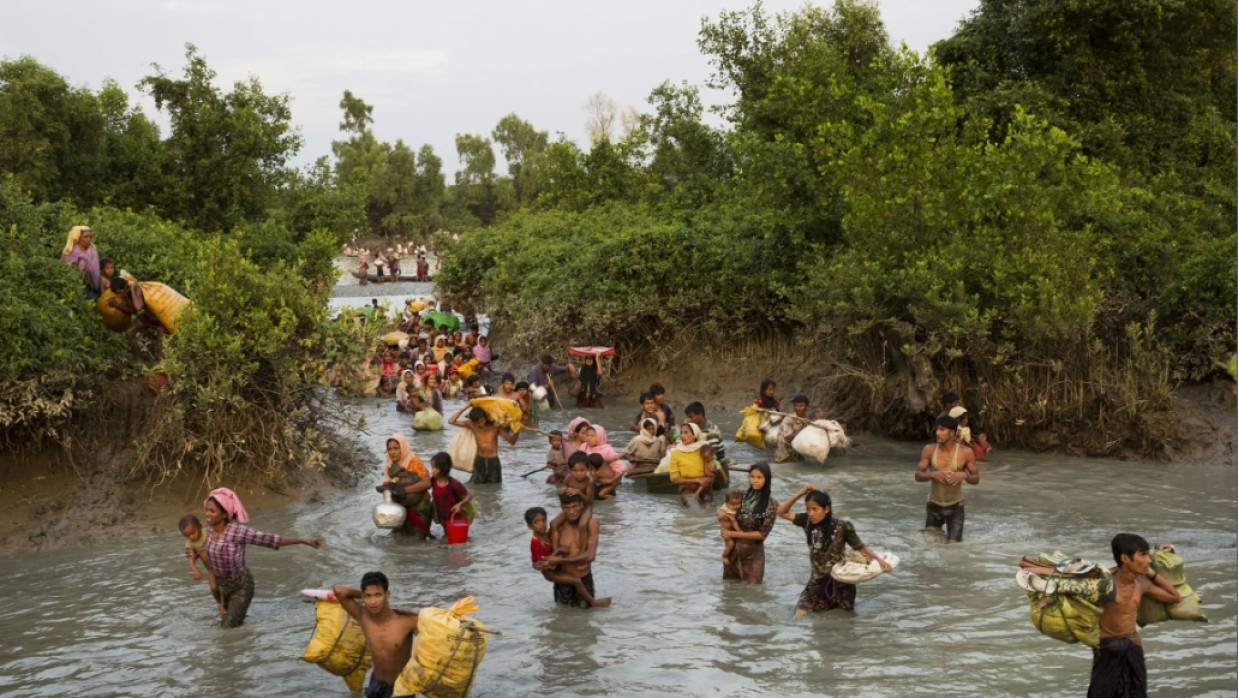
Myanmar’s military-backed government says it is willing to repatriate around 300,000 Rohingya refugees currently living in Bangladesh once the security situation improves in Rakhine State.
Myanmar’s Ministry of Foreign Affairs said on Saturday that the government had confirmed the refugees were originally residents of Rakhine State in western Myanmar. The statement comes as the Rohingya refugee crisis enters its ninth year.
In 2017, nearly 700,000 Rohingya fled to Bangladesh following a brutal military operation. According to Bangladeshi figures, the number was more than 800,000. Several hundred thousand Rohingya refugees had already been living in Bangladesh after earlier fleeing violence by the Myanmar military and ethnic militias. The scale, organised nature and brutality of the 2017 military operation led the United Nations and the international community to widely raise allegations of genocide and ethnic cleansing.
Myanmar, formerly known as Burma, does not recognise the Rohingya among the country’s 135 officially recognised ethnic groups. Authorities refer to them as “Bengali”, implying that they are illegal immigrants from Bangladesh. According to Myanmar officials, the country had verified a list of 828,824 refugees provided by Bangladesh by the end of July. Of the 426,545 people whose identities were verified, authorities confirmed that 308,797 had been residents of Rakhine State.
The Myanmar Foreign Ministry said the identities of 113,507 people could not be successfully verified. It also claimed that 4,241 people had been involved in terrorist activities. According to the ministry’s statement, Myanmar will continue working with Bangladesh to repatriate the verified Rohingya residents once the security situation in Rakhine becomes stable.
The ministry also rejected claims that more than one million people had been displaced from Rakhine. It said more than 540,000 people had entered Bangladesh after violence broke out in 2017, while more than 200,000 remained in northern Rakhine.
Myanmar and Bangladesh agreed in 2018 on a two-year framework for repatriation. Its implementation stalled after the military ousted the elected government of Aung San Suu Kyi in a coup in 2021, followed by widespread armed resistance against the junta.
Repatriation Efforts Have Repeatedly Failed
Fresh fighting between the Myanmar military and the Rakhine-based armed group Arakan Army (AA) began in 2023 over control of the region, displacing many more people. More refugees fled to Bangladesh and other countries to escape the conflict. The Arakan Army now controls large parts of Rakhine after capturing extensive territory.
In recent years, worsening conditions in refugee camps, major cuts in international humanitarian assistance and uncertainty over returning to Myanmar have prompted some Rohingya to risk their lives crossing the sea by boat to Malaysia and Indonesia. Some have died while attempting the journey.
In July, Malaysian Prime Minister Anwar Ibrahim said Myanmar had agreed to take back 5,000 Rohingya refugees living in Malaysia as part of a repatriation initiative. However, Myanmar Foreign Ministry official Han Win Aung told the Associated Press at the time that the programme was limited to verified Myanmar nationals held in Malaysian detention centres.
 Follow The Daily Campus on Google News