Education Minister Worried About Holding Exams for Gopalganj Students
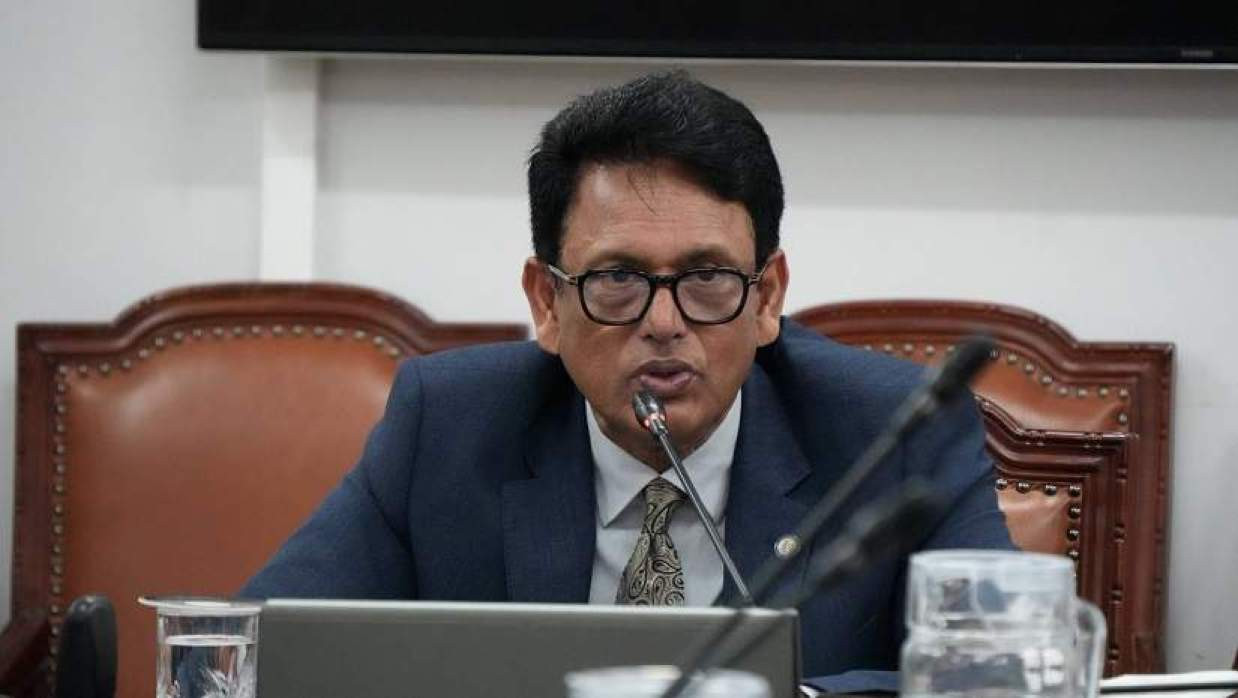
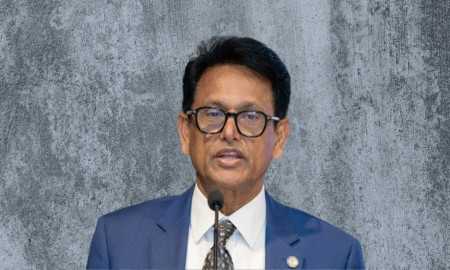
Education and Primary and Mass Education Minister Dr ANM Ehsanul Haque Milon has expressed concern over holding examinations for students in Gopalganj, saying the government does not want them to remain idle and fall into drug or mobile phone addiction because of changes in one or two subjects.
“I am worried about how we will hold examinations in Gopalganj. We do not want them to sit idle unnecessarily and become addicted to drugs or mobile phones because of changes in one or two subjects. We do not want that,” he said.
The minister made the remarks while addressing the National University Principals' Conference 2026 at Shaheed Suhrawardy Indoor Stadium in Mirpur, Dhaka, on Saturday (November 28).
Recalling the education initiatives under former president Ziaur Rahman, Milon said he had given the nation independence, sovereignty and the opportunity to see the truth. He also recalled bringing beds for students in halls of residence, saying the education system had deteriorated in the past, with buildings at Salimullah Hall collapsing and no one available to provide boards.
He said educational institutions had been established unnecessarily in some areas while others had been left without institutions, reflecting a lack of coordination during the previous period.
Highlighting education initiatives during the tenure of former prime minister Khaleda Zia, the minister said she had introduced the National University Act to help organise the country's education system. He also referred to the Private University Act of 1992, which he said aimed to accelerate education and improve the system through modern technology.
Criticising the education system over the past 17 years, Milon said it had been pushed backwards and the nation had been led into darkness. He alleged that curricula had been developed secretly, depriving sections of the population of education.
Regarding Prime Minister Tarique Rahman's education plans, Milon said the prime minister was working enthusiastically on education policy and the government was moving forward with his initiatives. He acknowledged that mistakes had been made in some areas but said they would be addressed correctly next year, InshaAllah.
He said the government had introduced new textbooks for Class Four this year. Following discussions on sports and youth affairs, and consultations with the Cultural Affairs Minister, the government had also presented its plans for cultural and sports activities to Prime Minister Tarique Rahman.
Emphasising technical education, Milon said the prime minister wanted to strengthen technical education in the country and had introduced new textbooks for Class Six as part of technical education.
The minister said the government had received the highest education budget in the country's history this year, attributing it to the prime minister's efforts to address education from multiple aspects. He said the country could not progress through rhetoric alone and needed effective measures every year, adding that Tarique Rahman had taken such initiatives.
Milon said the prime minister repeatedly emphasised improving education quality rather than prioritising infrastructure. He said the prime minister regularly discussed nine issues with them, including how to advance technical education and transform the country's large population into a skilled workforce.
Expressing concern over the quality of education and teacher-student ratios at National University-affiliated colleges, the minister said the university was searching for subjects and students without properly considering enrolment figures or GPA requirements. He said many colleges offered honours programmes but had few or no students.
“I was on my way here when I visited a college and saw one teacher and one student. One teacher, three students. There are subjects where teachers are available but students are not,” he said.
He said reports showed similar imbalances at several universities, with some honours programmes having teachers but no students, while others had students but no teachers.
Highlighting inconsistencies in examination script evaluation, Milon said he had reviewed SSC examination scripts and found that grades had changed in 52,000 cases. He questioned who had initially evaluated the scripts, noting that teachers themselves had done so. He also said grades had changed in 23,000 cases in the HSC examinations and questioned whether teachers needed to pay greater attention to the evaluation process.
The minister said SSC and HSC pass rates had been low and questioned whether the responsibility lay with the government, the education system or teachers. He said everyone needed to work together to reorganise the education system properly, building on what he described as good initiatives taken by the previous government.
Regarding admission arrangements, Milon said there were 1.5 million seats, but only around 600,000 had been made available. He said approximately 290,000 students who had received referred results would sit for examinations in the coming days.
“We do not want them to sit idle unnecessarily and become addicted to drugs or mobile phones because of changes in one or two subjects. We do not want that. That is why we have arranged examinations this time for those who received referred results. We have also announced the results of those who applied for re-scrutiny, and admission arrangements have already been made for them,” he said.
Addressing teachers' protests, the minister said the prime minister had previously stated at an event for teachers and employees that teachers would not have to take to the streets to secure their jobs. Milon said the government had taken responsibility for teachers' employment and would ensure their demands were met by the prime minister while fulfilling its own responsibilities.
However, he urged government and MPO-listed teachers not to leave classrooms and take to the streets to press their demands.
Addressing college principals, Milon urged them to return to their institutions, listen to the prime minister's speech and consider how they could develop their institutions in the coming days.
At the end of his speech, the minister recalled Ziaur Rahman, saying they had received him but lost him prematurely. He also recalled Khaleda Zia, saying she had worked to establish democracy in the country and had departed during difficult times. He prayed for the good health of Tarique Rahman, whom he described as someone through whom the country had received a new life, and asked Allah to grant the teaching community the ability to fulfil its responsibilities.
 Follow The Daily Campus on Google News