40,000 Students to Get Free Laptops
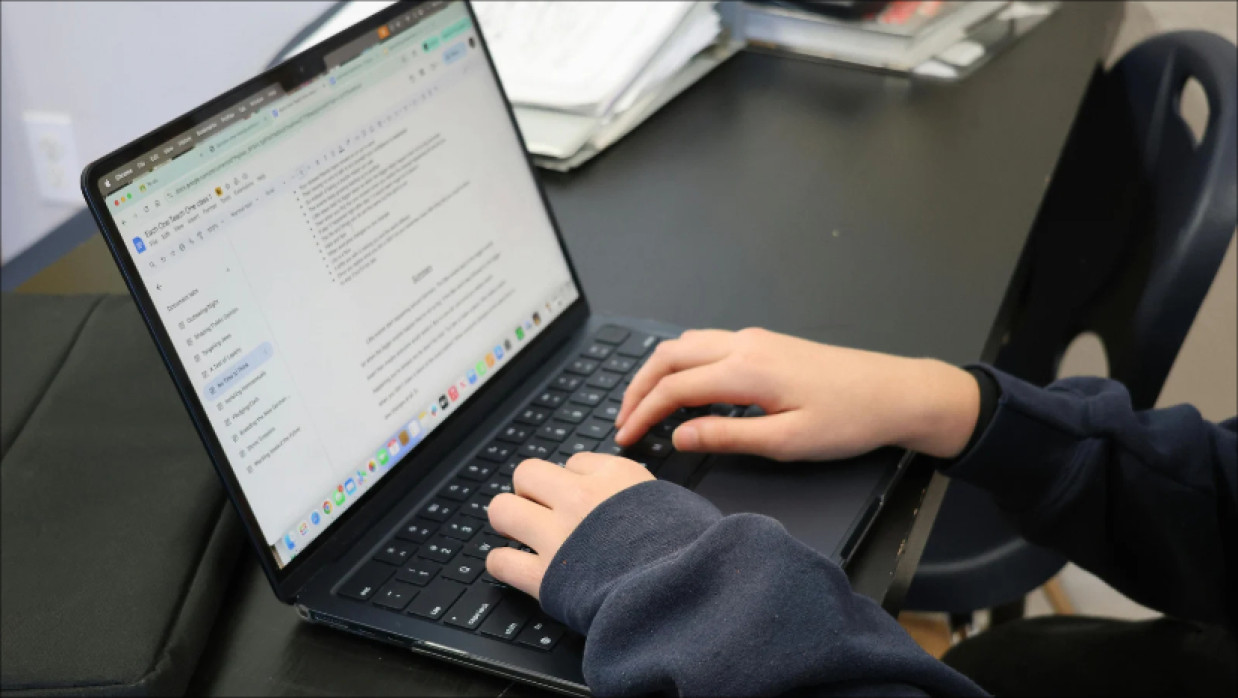
The government has decided to provide laptops to 40,000 students who achieved Golden GPA-5 in the 2026 Secondary School Certificate (SSC) and equivalent examinations. The decision was disclosed at the first meeting of the Parliamentary Standing Committee on the Ministry of Education, held at the Jatiya Sangsad Bhaban on September 10, according to a report by the Bangladesh Sangbad Sangstha (BSS).
Abdul Khaleque, senior secretary of the Secondary and Higher Education Division, told the meeting that a proposed budget of Tk 57,301.68 crore had been allocated for the division for the 2026-27 fiscal year, 42.7 per cent higher than the previous revised budget.
As part of efforts to meet international standards, the government has decided to give one laptop each to approximately 40,000 students who secured Golden GPA in 2026 to promote academic excellence and technological skills.
According to sources concerned, the committee meeting discussed several new proposals for the country's education sector. The meeting's minutes stated that the BNP-led government had taken the initiative to provide laptops to the Golden GPA achievers.
The government has also taken what was described as a historic step to transfer outstanding dues owed to around 70,000 retired teachers and employees directly to their bank accounts through the Electronic Fund Transfer (EFT) and iBAS++ systems.
The committee unanimously thanked Prime Minister Tarique Rahman for the initiative.
Earlier, Education and Primary and Mass Education Minister Dr ANM Ehsanul Haque Milon had announced at an event in Khulna that all students securing GPA-5 in the SSC examinations would receive tablets.
Later, in a post published on the education minister's media cell on September 1, the initiative to provide laptops to students achieving Golden GPA-5 was announced.
“This year, laptops will be provided to students who achieve Golden GPA-5 in the SSC and equivalent examinations,” the post said.
Parliamentary committee proposes education reforms
At the meeting, the parliamentary standing committee also made a series of proposals and recommendations to ensure the transparent use of education-sector funds, identify existing problems and develop solutions, eliminate irregularities and corruption in educational institutions, investigate the reasons behind declining secondary-level student enrolment, expand teacher training, improve education quality and promote technical education.
Committee Chairman Md Selim Bhuiyan said a series of decisions had been taken at the first meeting to improve the quality of education.
He said annual assessments and a modern curriculum were essential if Bangladeshi students were to be brought in line with international standards.
“We want learning-outcome assessment systems to be introduced not only annually but also at intervals of three or six months,” he said.
The committee will make further detailed recommendations at its upcoming meetings to ensure quality education, he added. A press conference will also be organised to present the education roadmap in detail.
International standards and annual assessment
The parliamentary committee reviewed the existing assessment system in the country's education sector, noting that a higher pass rate alone could not be considered a true measure of educational success.
Committee members stressed the need to move away from flawed conventional practices and introduce annual learning-outcome assessments alongside a globally competitive curriculum.
They also proposed developing a long-term, sustainable national education vision modelled on Malaysia, so that fundamental aspects of education policy, curricula and textbooks would not repeatedly change whenever the government or ministry leadership changed.
Committee member Reza Kibria said specific annual international benchmarks were necessary to ensure Bangladeshi students did not fall behind in global assessments of core subjects such as mathematics and science.
The parliamentary committee made seven recommendations to improve the quality of education.
Key proposals include developing an annual measurement system to assess progress towards international education standards and having committee members inspect schools and colleges to ensure the proper use of allocated funds and help build a corruption-free environment.
The committee also recommended ensuring the attendance of officials from the National University, all education boards and their subordinate offices at future meetings.
It proposed preparing separate lists to expedite payment of outstanding dues to teachers who are Haj pilgrims or suffering from incurable diseases. The committee also recommended speeding up the process of paying outstanding allowances, subject to budget availability.
Educationists have described the committee's initiatives and recommendations as timely and potentially transformative. They said the emphasis on annual learning-outcome assessments and a world-class curriculum, rather than relying on pass rates as an artificial indicator of success, could play an important role in bringing about qualitative changes in the education system.
 Follow The Daily Campus on Google News