Government considers allowing SSC failures to retake exams within three months
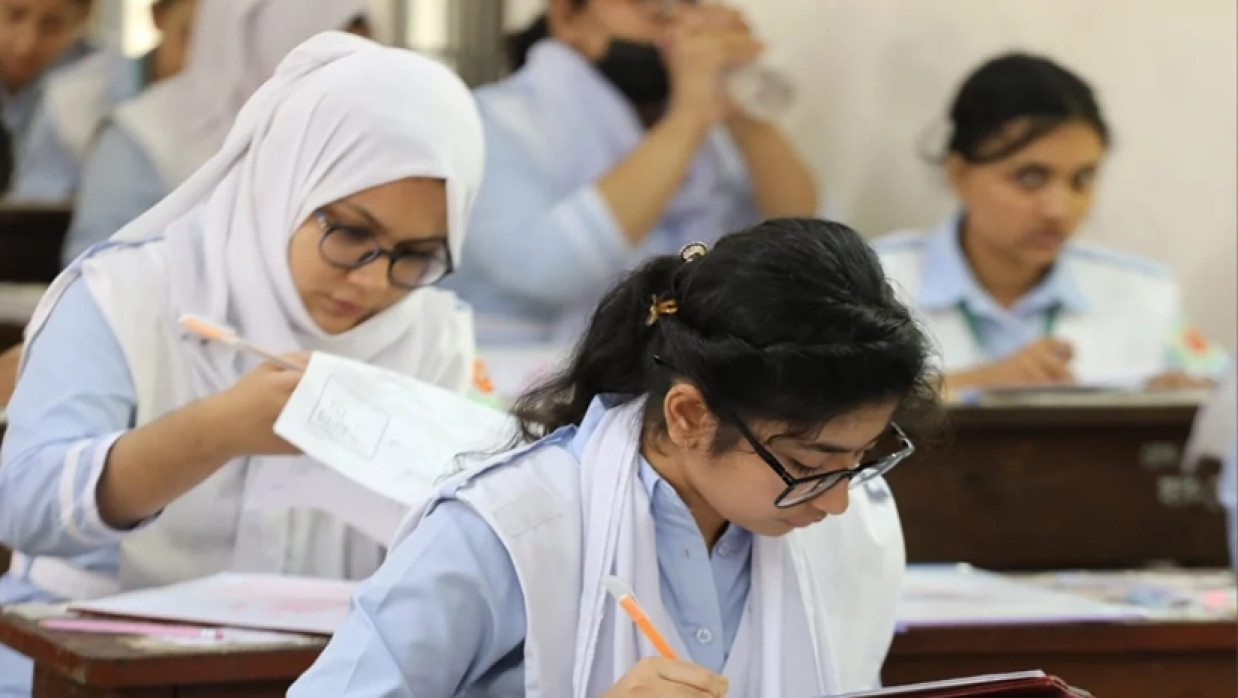
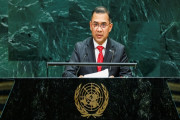
The government will positively consider a proposal to allow students who failed the Secondary School Certificate (SSC) examinations to retake the tests within three months instead of waiting a year, Prime Minister’s Education Adviser Dr Mahdi Amin has said.
The government will try to make a decision as soon as possible on creating an opportunity for students to sit for fresh examinations in the subjects they failed, he said.
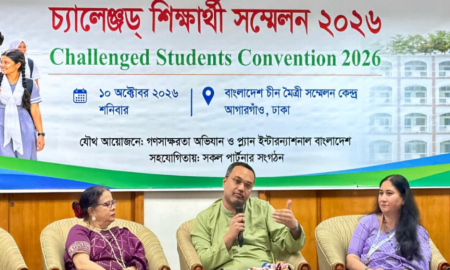
Mahdi Amin made the remarks on Saturday (October 10) while speaking at the Challenged Students Conference 2026, jointly organised by the Campaign for Popular Education (CAMPE) and Plan International Bangladesh at the Windy Town venue of the Bangladesh-China Friendship Conference Centre in Agargaon, Dhaka.
Mahdi Amin said around 609,000 students had failed to achieve their expected results in this year’s SSC examinations. The government could not avoid its responsibility towards the future of such a large number of students, he said, adding that the prime minister had instructed the authorities to create suitable training and employment opportunities for them.
Training and employment opportunities
The education adviser said achieving good results in the SSC examinations did not guarantee success in life, just as poor results did not necessarily mean failure. Some people excel in sports, others in culture, scientific innovation or business, he said.
A poor result in one subject does not erase a student's other talents and creativity. Therefore, a person's worth should not be assessed solely on the basis of formal education or academic certificates, he added.
Mahdi Amin said the government was taking steps, following the prime minister's instructions, to prepare a list of students who failed the SSC examinations and arrange training and career development opportunities based on their abilities and interests.
Some students could receive training at technical training centres, while others could be brought into technical and vocational education. The government would also consider opportunities for initial financing for students with promising business ideas, he said.
He added that the government was planning to create overseas employment opportunities by offering language courses in Japanese, Korean, Chinese and languages spoken in various Eastern European countries.
Mahdi Amin expressed hope that many students would be able to enter employment directly after completing three to six months of language education and technical training.
Three-month retake proposal
Addressing the proposal to allow students to retake examinations, Mahdi Amin said teachers and parents at the conference had suggested that students should not have to wait a full year to sit for another examination, but should instead be allowed to do so within three months.
“The government will consider the matter in the most positive way possible,” he said, adding that efforts would be made to reach a decision quickly.
He said students might perform poorly for various reasons, including financial hardship, a shortage of good teachers at educational institutions, inadequate infrastructure, illness or family problems. A student should not be labelled a poor student simply because they performed badly in one subject, he added.
The government must identify the reasons behind poor results and take coordinated measures to address them, he said.
Where schools lack good science teachers, arrangements must be made to provide teachers. Where classrooms are insufficient, infrastructure must be developed, while students facing financial hardship should receive necessary assistance, he added.
Mahdi Amin said there was no single reason why around 609,000 students had failed to achieve their expected results. The government's response, therefore, must be multifaceted.
He said the state had responsibilities towards students who achieved good results as well as those who failed to meet expectations. The prime minister had instructed the government to ensure that no student felt neglected because of their examination results, he added.
“The government will stand beside the students with the utmost sincerity,” he said.
Changes to answer-script re-evaluation
Mahdi Amin also referred to changes in the system for re-evaluating examination answer scripts. Previously, re-evaluation mainly involved checking whether marks had been added or deducted correctly, he said.
The authorities have now taken an initiative to conduct a comprehensive evaluation of answer scripts, he added. If such changes could be implemented within a short period, he believed the government could also take positive steps towards allowing unsuccessful students to retake their examinations quickly.
He said the government wanted to create opportunities not only for students who achieved good results but also for those who failed to meet expectations or did not pass.
A coordinated initiative would be undertaken to help shape students' futures, drawing on the views of experts, teachers, parents and other relevant stakeholders, he added.
At the conference, students facing various challenges, teachers and parents from different parts of the country shared their experiences and views. Discussions covered the reasons students fail examinations, the mental pressure they face as a result, and possible ways to overcome the situation.
The conference was jointly organised by the Campaign for Popular Education and Plan International Bangladesh. Students, parents, teachers, education officials, researchers, development partners and representatives of relevant government and private institutions attended the event.
The programme was moderated by Rasheda K. Chowdhury, executive director of the Campaign for Popular Education and an educationist.
 Follow The Daily Campus on Google News