
From 76 to Nearly 2.7 Lakh: Tracking 25 Years of GPA-5 Ups and Downs in Bangladesh’s SSC Exams
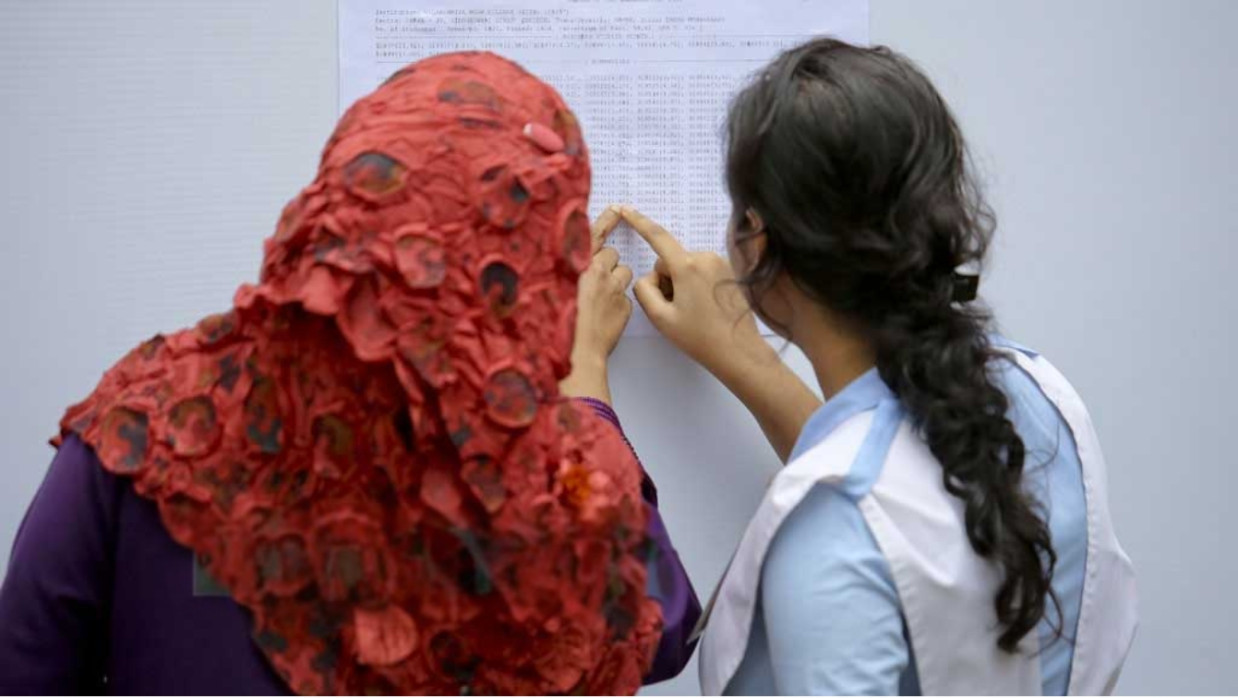
The grading system in Bangladesh’s Secondary School Certificate examinations began with a mere 76 students achieving the highest grade. Over the past 25 years, the number of GPA-5 recipients has experienced a dramatic trajectory, slowly climbing into the thousands, surging past a quarter of a million, and recently entering a notable downward correction.
Prior to 2001, academic excellence was measured using traditional letter marks for scores of 80 and above. When the new grading framework was introduced that year, 786,220 candidates sat for the SSC exams, recording a pass rate of 35.22 percent. Only 76 students secured a GPA-5, meaning roughly 10 out of every 100,000 examinees, or just 0.0096665 percent of the total pool, earned the top tier.
The following year saw a slight increase. In 2002, out of 1,005,937 examinees and a 40.66 percent pass rate, 327 students achieved a GPA-5, representing about 0.03 percent of candidates. By 2003, when the grading system was also extended to the Higher Secondary Certificate exams, the SSC pass rate stood at 35.91 percent among 921,024 candidates. That year, 1,389 students, or 0.15 percent, secured a GPA-5.
The first major structural shift arrived in 2004 with the integration of fourth-subject marks into the grade point calculation. This single policy change caused the number of GPA-5 recipients to multiply nearly eightfold in one year. Out of 756,387 candidates and a 48.03 percent pass rate, 8,597 students achieved the highest grade, crossing the 1.1 percent mark.
Steady growth continued through the middle of the decade. In 2005, a total of 751,421 candidates participated, with a 52.57 percent pass rate yielding 15,631 GPA-5 recipients, or 1.6 percent of the total. By 2006, the pass rate rose to 59.47 percent among 784,815 candidates, pushing the GPA-5 count to 24,384, or 3.12 percent. The upward trend held in 2007, with 25,732 students securing a GPA-5 among 792,165 test-takers and a 57.37 percent pass rate, accounting for 3.24 percent of the cohort.
The year 2008 marked the beginning of a rapid expansion. Although the total number of examinees dropped by 48,556 compared to the previous year, leaving 743,609 candidates, the pass rate jumped to 70.81 percent. Consequently, GPA-5 recipients surged to 41,917, representing 5.6 percent of the examinees. In 2009, out of 797,891 candidates and a slightly lower pass rate of 67.41 percent, the number of top scorers increased by 4,017, bringing the total to 45,934, or 5.75 percent.
This momentum accelerated dramatically in 2010. The total number of candidates reached 912,577, and the pass rate climbed to 78.91 percent. The number of GPA-5 achievers swelled by 16,200 from the previous year, hitting 62,134, or 6.8 percent. The following year, in 2011, a pool of 986,650 candidates yielded an 82.16 percent pass rate, with 62,288 students securing a GPA-5, amounting to 6.4 percent. In 2012, the candidate pool expanded to 1,048,144, resulting in an 86.32 percent pass rate and 65,252 top scorers, or 6.23 percent of the total.
The 2013 and 2014 cycles witnessed unprecedented statistical expansion. In 2013, the number of examinees jumped by 248,890 to reach 1,297,034. With an 89.03 percent pass rate, GPA-5 recipients increased by 25,974, totaling 91,226, or 7 percent of the examinees. The following year established a historic milestone. In 2014, out of 1,432,727 candidates and a 91.34 percent pass rate, 142,276 students secured a GPA-5. Just 13 years after the system's launch, the number of top achievers had crossed the one-lakh threshold, accounting for nearly 10 percent of all test-takers.
Following the 2014 landmark, GPA-5 numbers fluctuated but never dropped below 100,000. In 2015, the figure stood at 111,901, slightly decreasing to 109,761 in 2016, and dipping again to 104,761 in 2017. A minor rebound occurred in 2018, with 110,629 students earning a GPA-5, representing 5.46 percent of total candidates. In 2019, the count settled at 105,594, or 4.96 percent.
The onset of the pandemic era introduced extraordinary volatility to the grading landscape. In 2020, top scorers increased to 135,898, comprising 5 percent of the examinees. The 2021 academic year saw a massive leap, with the GPA-5 count rising by 47,442 to reach 183,340.
This culminated in an all-time 25-year high in 2022. That year, a staggering 269,602 students achieved a GPA-5, marking an increase of 86,262 over the previous year and representing a 3,547-fold expansion from the original 76 students in 2001.
However, this peak was immediately followed by a steady decline. In 2023, the number of GPA-5 recipients fell by 86,024, bringing the total down to 183,578. The downward trend continued in 2024, with 182,129 students securing the top grade, comprising 98,776 female and 83,353 male candidates. Most recently, in 2025, the figure dropped further to 139,032, consisting of 73,616 female and 65,416 male students. In just three years from the 2022 summit, the total number of top-tier grades decreased by 130,570.
Education analysts observe that this 25-year chronicle is not merely a reflection of changing student merit. The historical data underscores how systemic shifts—ranging from question paper formats and evaluation methodologies to mark distributions, examination structures, and result publication policies—have fundamentally shaped the statistical landscape of Bangladesh's secondary education system.
 Follow The Daily Campus on Google News