Education minister says innovation must improve lives, not just introduce new technology
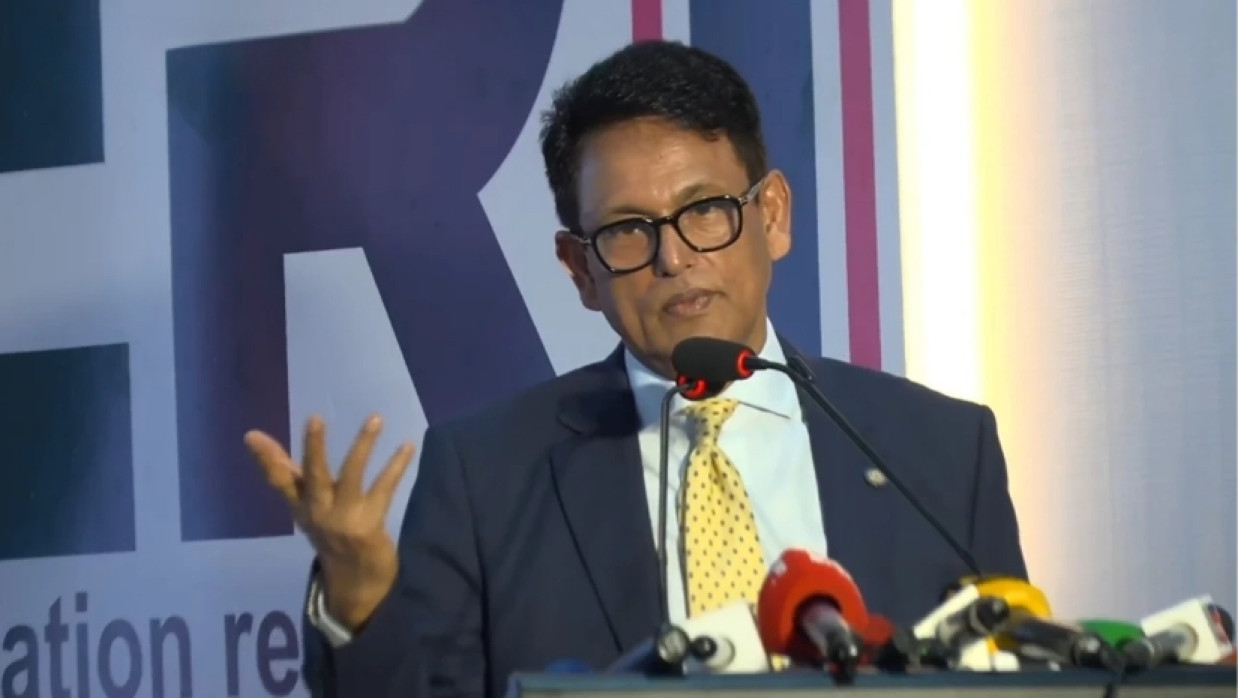
The true value of innovation lies not in technological novelty but in its ability to bring positive changes to people's lives, Education and Primary and Mass Education Minister Dr ANM Ehsanul Haque Milon has said.
“We need people who understand technology, adapt its application to real-world conditions and develop effective solutions to local problems,” he said while addressing the 38th convocation of the Islamic University of Technology (IUT) on Sunday (October 11).
Addressing the graduates, Milon said they were beginning their professional careers in a world where artificial intelligence, automation and technological changes were continuously creating new realities.
He urged them to keep learning, master new technologies and develop the ability to question their outcomes. An artificial intelligence system may provide an answer within seconds, he said, but determining whether that answer is accurate, reliable and safe remains a human responsibility.
“Technology can generate answers, but the responsibility for verifying those answers rests with people,” the minister said.
He encouraged the graduates to conduct research, remain curious and think about questions that have yet to receive satisfactory answers. He said the country needed people who could understand technology, adapt it to their circumstances and develop practical solutions to local challenges.
An effective innovation could be a machine that saves people's time, a tool that makes healthcare more affordable or a production process that reduces waste in factories, Milon said.
“The true value of innovation lies not only in the novelty of the technology, but also in its ability to bring positive changes to people's lives,” he said.
The minister stressed the importance of listening to the people who would use a solution before developing it. Their capabilities, needs and the environments in which they live and work must be taken into account, he said.
He called for particular attention to people who have limited financial means to access essential services, urging engineers and technology professionals to explore ways to make those services more accessible.
Milon said the government's responsibility was to ensure that education equipped young people with the skills and confidence needed to contribute to a changing economy.
He said universities needed to produce graduates capable of working effectively in professional settings, contributing to research and developing technologies suited to the country's needs.
The success of these efforts, he said, would become evident when young people acquired the skills needed to secure meaningful employment, research improved productivity and innovation made essential services more accessible and affordable.
The minister also emphasised the need to strengthen ties between universities and industries through meaningful internships, practical projects and research opportunities focused on solving specific industrial problems.
University research could help industries improve production quality, use energy more efficiently, develop new products and strengthen their ability to compete internationally, he said.
He added that research could also help address major challenges in agriculture, healthcare, water management and the environment.
 Follow The Daily Campus on Google News