Massive Gold Prices Fall Worldwide, Drop Eight Times Locally as Experts Urge Caution
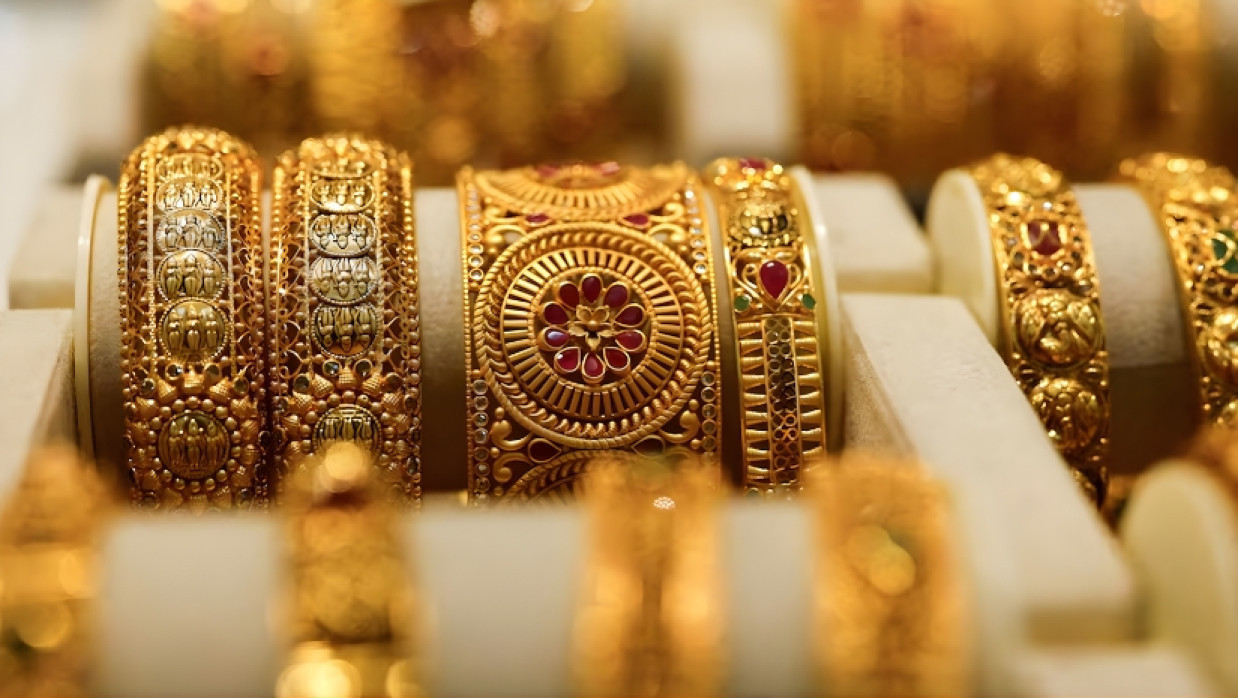
The price of 22-carat gold in Bangladesh fell to Tk 201,146 per bhori on Friday, 20 November, its lowest in 13 months. Eight price cuts this month have taken Tk 28,508 off a bhori, including nearly Tk 11,000 on Friday alone. Jewellers expect the lower prices to draw buyers back ahead of the wedding season, while analysts urge caution for those buying gold for a quick profit.
On the international market, gold fell below $3,700 an ounce on Thursday, 19 November, for the first time since September. That put it about a third below its record of $5,589.38 an ounce on 28 January. A stronger US dollar, rising US Treasury yields and expectations of a possible interest rate rise in December have weighed on gold, analysts said.
The Bangladesh Jewellers Association (Bajus) revised prices 11 times in November up to Friday, cutting them eight times and raising them three times. On Friday, it cut the price of 22-carat gold by Tk 10,954 per bhori and that of 21-carat gold by Tk 10,439 to Tk 192,106. The price of 18-carat gold fell by Tk 10,982 to Tk 164,987 per bhori, while traditionally produced gold fell by Tk 7,348 to Tk 134,836. Silver also became cheaper by Tk 350 per bhori.
For Bangladesh’s jewellers, the fall comes after record prices slowed sales and left many buyers who paid more facing losses. Dewan Aminul Islam, a former general secretary of Bajus, told the media he expected jewellery sales to pick up as families prepared for weddings. He estimated that mining an ounce of gold cost $2,200 and said a $1,000 profit would put the price at $3,200. In his view, the market was correcting after a long period of overvaluation, and a recovery would take time as investor confidence had weakened.
Why gold has fallen
Ole S Hansen, head of commodity strategy at Denmark’s Saxo Bank, told Reuters that a stronger dollar, higher inflation-adjusted interest rates and expectations of tighter US monetary policy had made gold and silver less attractive. Gold pays no interest, so investors give up more income by holding it when bond yields rise. Silver, too, has fallen sharply from its peak this year.
Suki Cooper, head of commodities research at Standard Chartered, said gold can behave like a commodity or a currency, depending on market conditions and investor sentiment. Growing demand for physical gold had supported prices from 2022, she said. More recently, gold has traded more like a currency, leaving its price under pressure as the dollar strengthened.
Until early 2025, long-term investors had been cutting their gold holdings through exchange-traded funds (ETFs), releasing gold onto the market. That trend then reversed, with funds including SPDR Gold Shares adding about 800 tonnes between them. Cooper said there were plenty of buyers but few willing sellers, which helped drive up prices.
By the end of 2025, gold ETFs held more than 4,000 tonnes. The World Gold Council said the funds attracted a record $89 billion that year, much of it from North America. Their total assets more than doubled to $559 billion.
Cooper said a weaker dollar, lower bond yields and concern over global debt had helped lift gold to its January record. Investors who held little gold began buying more. Evan Mills, an adviser at Scholar Financial Advising in Winston-Salem in the US, said low returns on cash and expectations of further rate cuts had encouraged investors to buy gold to protect their purchasing power.
After January, the speed of the rally began to worry investors just as talk turned to a possible US rate rise. When conflict spread in the Middle East, investors who needed cash sold gold because they could readily find buyers, Cooper said. Those sales drove the first sharp fall, after which investors turned their attention to the US Federal Reserve’s next move.
What the fall means for investors
Federal Reserve Governor Christopher Waller said this week that a rate rise of half a percentage point might be needed to curb inflation. Mills said US money market funds could now pay 4 to 5 per cent, while gold holders had to find a buyer to turn their investment into cash. He said gold supply remained tight, but bonds, shares and other investments had become more attractive.
Mills urged investors to consider why they were buying. Those counting on annual gains of 20 to 30 per cent risked disappointment, particularly if they bought after a steep rise. Higher inflation-adjusted interest rates and a further rise in the dollar could put more pressure on gold in the short term, he said.
For someone who bought at January’s peak and holds a small amount of gold as long-term protection, Mills saw less cause for concern. Gold can gain when the dollar weakens or political uncertainty weighs on other investments, he said. The price paid still matters, particularly for anyone relying on gold for much of their investment growth.
Marc Chandler, managing partner and chief market strategist at Bannockburn Capital Markets, said gold could fall to between $3,500 and $3,600 an ounce. He described the decline so far as relatively orderly but said price charts had yet to show that gold had reached a bottom. He urged buyers looking for a bargain to wait for signs of a sustained upturn.
Chandler said higher interest rates had reduced the appeal of assets such as gold and bitcoin, neither of which pays interest. Despite the losses facing some individual investors, gold remained expensive by historical standards. Its 10-year moving average was about $2,127 an ounce, compared with about $1,666 over 20 years, he said.
Why some buyers are holding on
Central banks have continued to buy gold even as some individual investors sell. According to the World Gold Council, central bank purchases were highest in September, although total buying so far this year was 7 per cent lower than in the same period last year. Chandler said surveys pointed to continued buying and noted that Poland, a NATO member, had ranked among the leading buyers for much of the year.
Amy Gower, head of metals and mining strategy at Morgan Stanley, told CNBC’s Squawk Box Europe that investors still had reasons to hold gold despite this year’s fall. Philip Diehl, a former US Mint director and now president of the Austin-based coin distributor US Money Reserve, also expected the longer-term rise to resume. He said abrupt shifts in US trade policy, changing geopolitical alliances and the war in Iran had unsettled the market.
Diehl compared the war’s impact on gold to that of a Category 5 hurricane. He believed US voters had signalled support for ending the war two weeks earlier and said that could change the outlook. He expected gold prices to rise again in 2027 if oil prices returned to more normal levels and lower energy costs helped interest rates stabilise.
In Bangladesh, gold cost Tk 170 per bhori during the Liberation War, compared with a record Tk 286,000 this January, about 1,682 times as much. Bajus figures show that 22-carat gold cost Tk 6,900 per bhori in 2000 and doubled in price over the next five years. It reached Tk 42,165 in 2010, changed little through 2015 and then rose by Tk 26,852 per bhori over the following five years.
The rise accelerated after the pandemic. Gold reached Tk 1 lakh per bhori on 21 July 2023 and Tk 2 lakh in October 2025, before approaching Tk 3 lakh this January. With the price now back near Tk 2 lakh, jewellers are looking to the coming wedding season for a recovery in sales.
 Follow The Daily Campus on Google News