Education Day 2026: 64 years after the movement, inequality remains a concern
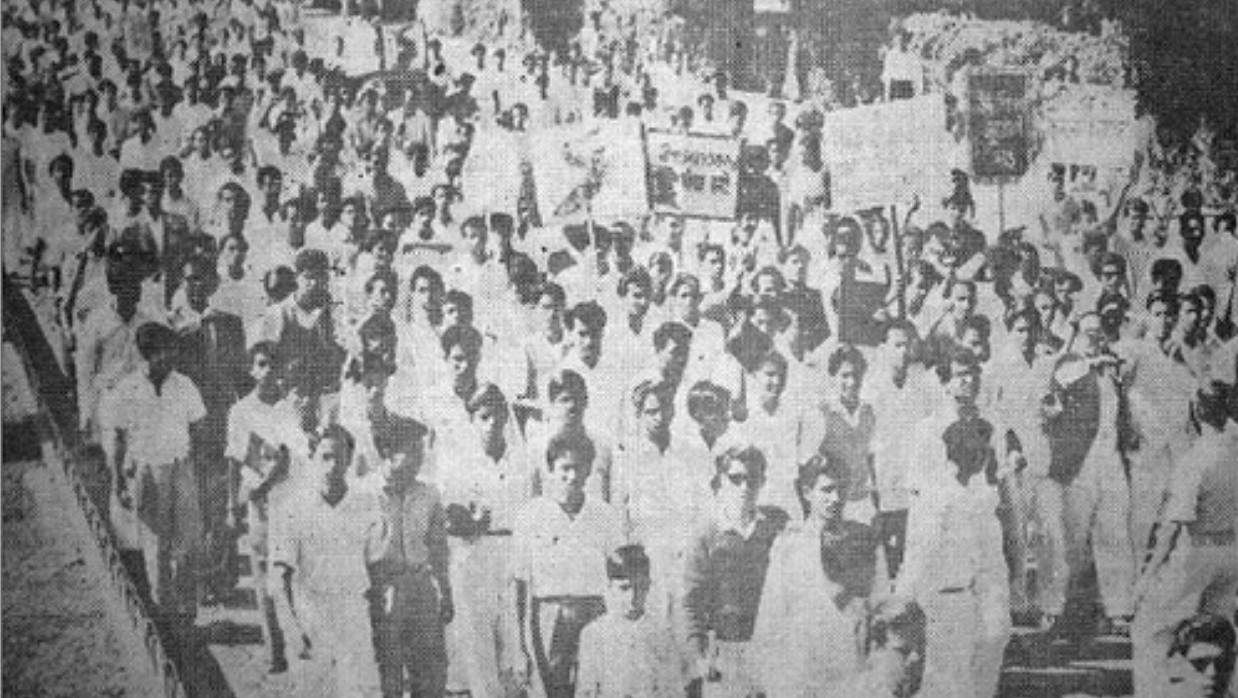
Students gave their lives in 1962 protesting unequal access to education. Sixty-four years later, questions over education costs, quality, inequality and a stable national education policy remain unresolved, while no major official programme has been announced for Education Day this year.
Today marks the 64th anniversary of Education Day, commemorating the student movement of September 17, 1962, in what was then East Pakistan. Students took to the streets demanding education as a right and protesting the proposed education policies of the Ayub Khan government.
Several people, including students, were killed when police opened fire on protesters in Dhaka. The day is observed every year to remember their sacrifice and the broader movement for equal access to education.
Why did students take to the streets in 1962?
In 1959, Pakistan’s military ruler Ayub Khan formed an education commission headed by Education Secretary SM Sharif. The commission’s recommendations, later known as the Sharif Commission Report, covered issues including the duration and financing of education.
Some of its proposals on education costs drew strong opposition. Historical accounts say the report questioned the feasibility of providing education at low cost and described the idea of free education as unrealistic.
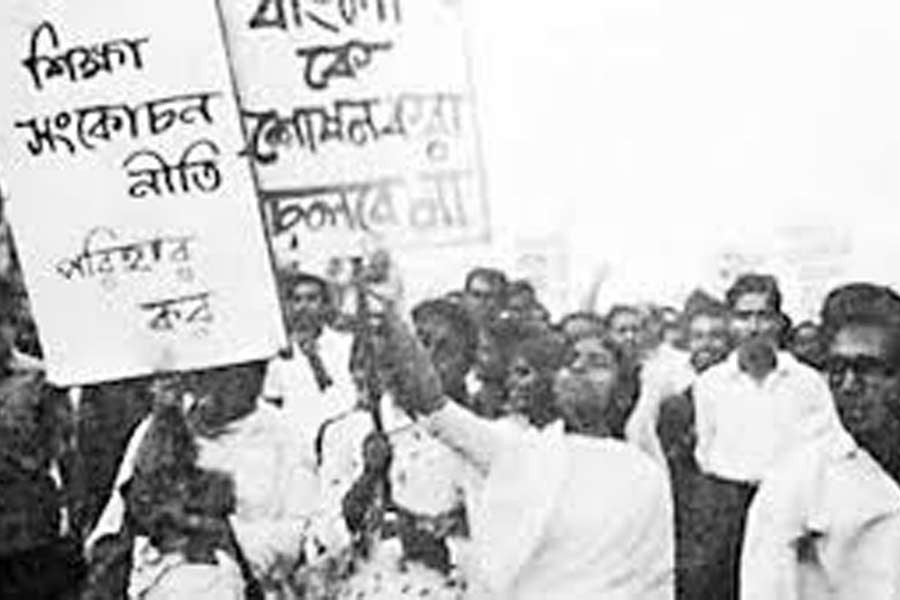
The proposed extension of degree courses from two years to three years also became an immediate trigger for student protests. The movement gradually spread to educational institutions across the country.
September 17 and the bloodshed
On September 17, 1962, students from Dhaka University and other educational institutions took to the streets to protest the proposed education policy. Strikes and demonstrations were held, with ordinary people also joining the protests in Dhaka, leading to clashes with police in several places.
Police opened fire near the High Court area in Dhaka. Historical sources identify Nabakumar School student Babul, bus conductor Golam Mostafa and domestic worker Wajullah among those killed.
The reported death toll varies between sources. An official account recorded one death, 73 injuries and 59 arrests, while protesters put the number of deaths at three.
The movement continued after the violence, and implementation of the Sharif Commission’s recommendations was later suspended.
What remains unresolved after 64 years?
The 1962 movement centred on keeping education accessible to ordinary people and opposing policies that would restrict educational opportunities. Bangladesh has since significantly expanded access to education from primary to higher education, but questions over cost, quality, unequal opportunities and long-term policy stability remain.
The Education Ministry’s stated goals include ensuring equal educational opportunities regardless of geographical, social or economic circumstances. It also says education should not be treated as a commodity primarily for profit.
However, analyses published around Education Day this year have again highlighted the need for a stable, long-term national education policy.
From access to quality education
The central question in 1962 was whether access to education would be restricted. Today, that question has expanded to include the quality of education, differences between urban and rural students, access to higher education for poorer families and the relevance of education to employment.
The government’s stated education objectives include making education practical, creative and science-oriented while reducing socioeconomic and gender disparities.
This makes September 17 more than a day of historical remembrance. It also raises the continuing question of how Bangladesh can provide equal educational opportunities while building a coherent and sustainable education system.
A call for a national education commission
Professor Mohammad Mujibur Rahman of the Institute of Education and Research at Dhaka University argues that many of the aspirations behind the 1962 movement remain unfulfilled.
“The main demands and aspirations of the 1962 education movement have still not been realised. Our students wanted an education system based on the civilisation, culture and values of this land. But we still have not developed an education system of our own.”
He said Bangladesh should develop its education system around its own historical and cultural foundations while modernising it over time.
“Our own education system should have been based on our heritage, culture and history. It could have been changed and modernised over time. Oxford, for example, has its own traditions and foundations. It has modernised over time while retaining those foundations. We should have done the same.”
According to Professor Mujibur Rahman, Bangladesh needs a national education philosophy before making repeated changes to education policy, curriculum and textbooks.
“The first thing we need is a national education commission. This government clearly promised before coming to power that it would form a commission for education reform. That commitment should be implemented. But beyond that promise, a commission is essential to resolve the long-standing complexities in the education sector.”
He said the commission should include representatives from different sections of society rather than being dominated by any particular political group. It should then establish a national education philosophy, which would provide the basis for education policy, curriculum and textbooks.
He also said the commission should determine the roles of general education, madrasa education, technical and vocational education, and decide issues ranging from teacher quality and technology use to the expansion of universities.
Education inequality remains
Professor Mujibur Rahman said the nature of educational inequality has changed since 1962 but remains a major concern.
“The main basis of the 1962 movement was to remove inequality in education. At that time, the inequality was between West Pakistan and East Pakistan. Today, that inequality has expanded further between the rich and the poor.”
He argued that access to quality education increasingly depends on a family’s financial capacity.
“If you want to ensure a good education today, you need a lot of money. If you have enough money, you can provide your child with a good education; otherwise, you cannot.”
He also pointed to children who enter work instead of attending school as evidence of continuing inequality.
“Children who should be reading books and going to school are working in tea shops, canteens and other jobs. The 1962 demand to make education accessible to ordinary people has still not been fulfilled. Rather, inequality in education has increased in different ways.”
No major Education Day programme announced
There appears to be no major government programme or specific nationwide instruction for educational institutions to observe Education Day this year, according to officials contacted by The Daily Campus.
Shamim Al Mamun, deputy director of the General Administration Branch at the Directorate of Secondary and Higher Education (DSHE), said he was not aware of any instruction regarding Education Day.
“No, I have not received anything yet, or I am not aware of it. I have not received any such instruction.”
Mohammad Asif Ahmed, information officer at the Ministry of Primary and Mass Education, also said he was not aware of any specific instruction for the day.
“As far as I know, there is no specific instruction for this day.”
However, Md Shawkat Hossain Molla, deputy director of the DSHE’s HRM branch, said there was an instruction concerning the observance of the day, but he could not provide details immediately.
“There is an instruction. I am in a meeting with sir. I will let you know after the meeting.”
 Follow The Daily Campus on Google News