
Russia tightens quarantine amid fears of plague outbreak, calls grow for flight restrictions
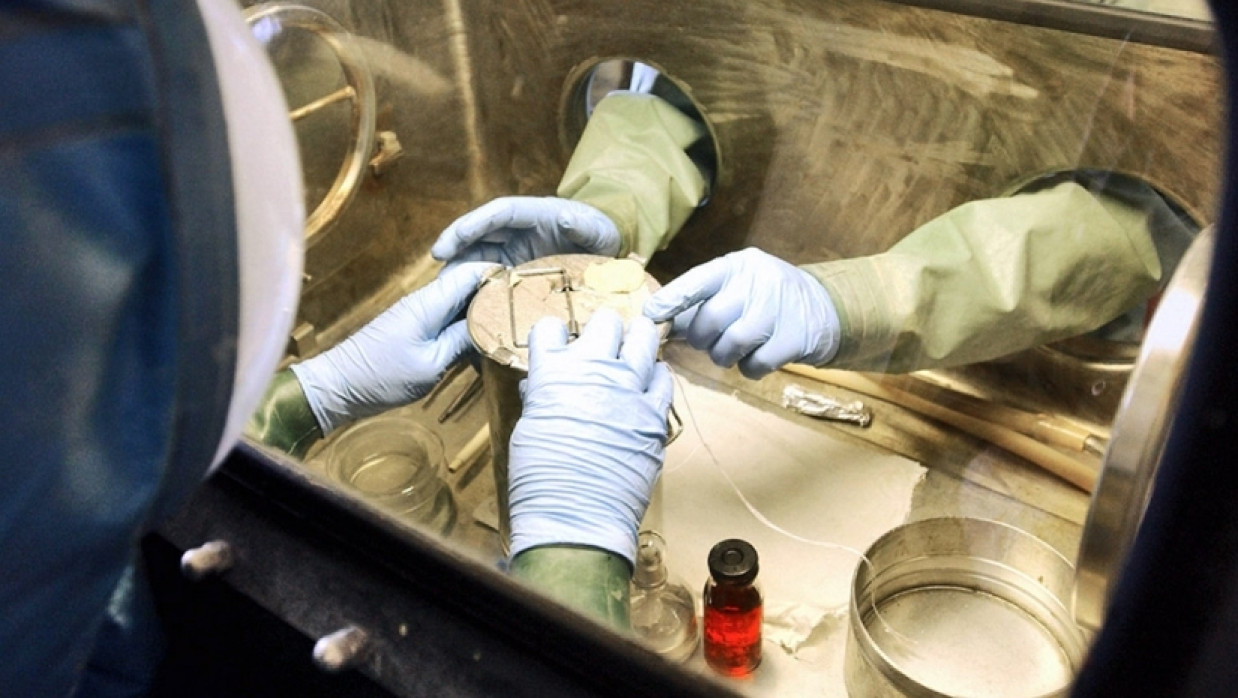
Dozens of people have been placed in isolation after a 28-year-old laboratory worker at a Russian research institute that studies plague and other dangerous infectious diseases died from pneumonia of “unknown” origin.
The woman, identified by local media as Darya Shipilova, worked at the Irkutsk Research Anti-Plague Institute of Siberia in Shelekhov, a town in eastern Russia. Russian health authorities said no microorganism linked to her professional work was found in samples taken from her.
Russia’s consumer and health watchdog Rospotrebnadzor said there was no evidence so far connecting the woman’s death to her work at the laboratory. It also said the health situation in the region remained stable.
However, Rospotrebnadzor chief Anna Popova travelled to Irkutsk on Friday for an emergency meeting of the regional anti-epidemic commission. Regional Governor Igor Kobzev said the meeting was related to a “suspected case of a particularly dangerous infection” affecting a resident.
The institute where Shipilova worked told CNN on Monday that it had no comment on the incident.
Hospitals placed under quarantine
Authorities in the Irkutsk region have introduced a series of measures to prevent the possible spread of infection. Maxim Modin, mayor of the Shelekhovsky district, said the authorities were implementing a “comprehensive set of anti-epidemic measures.”
The hospital ward where the researcher was treated has been placed under quarantine, while several departments have stopped admitting or discharging patients, Modin said. Local media have also reported that other hospitals in the region were closed.
Authorities cancelled an annual community clean-up event scheduled for the weekend, with local reports linking the decision to the incident.
The woman’s death was confirmed by officials last week. While residents told CNN there were no visible changes in Shelekhov, some said people were becoming anxious over the reports.
Unofficial reports from the independent regional outlet Liudi Baikala said nearly 200 people were under observation.
Rospotrebnadzor said several people who had contact with the researcher were diagnosed with Covid-19 and rhinovirus, a common cause of the cold, according to Russia’s state-run TASS news agency.
Kremlin spokesman Dmitry Peskov urged people not to rely on rumours or unverified reports.
“One should rely on official statements from Rospotrebnadzor rather than listening to various rumors and speculation.”
WHO says risk to public is low
The World Health Organization said it was in contact with Russian health authorities to verify the incident, including the circumstances surrounding the death, laboratory tests and their results.
“Based on unofficial information available, the public health risk to the general population appears to be low,” the WHO said.
Despite the assessment, several countries in the region have taken precautionary measures.
Kazakhstan’s Health Ministry said the risk was “very low” but that it was monitoring the situation and had introduced health and quarantine checks at state border crossings.
Uzbekistan said it had increased the readiness of authorities responsible for dealing with highly infectious diseases. Kyrgyzstan, which is about 1,500 miles from Irkutsk, also announced quarantine controls at its state border crossings.
Alexander Chepurnov, a Siberian virologist, said the strict measures were designed to prevent an infection from spreading if there had been exposure.
“After any suspected exposure, staff are instructed to immediately report it, decontaminate, undergo medical assessment and be isolated in a separate dedicated facility for however long they might be infectious.”
Officials say plague has not been confirmed
Concerns about plague emerged after Alexei Tsydenov, head of the neighbouring republic of Buryatia, said the researcher had died “possibly from the plague.” He also noted that there had been no outbreak of plague in his region.
Gennady Onishchenko, a former head of Rospotrebnadzor, said the infection was “most likely not the plague.” He told TASS that even if plague were confirmed, he did not expect it to spread, adding that colder weather would likely reduce transmission.
Pneumonic plague is a serious bacterial infection that affects the lungs. It is caused by Yersinia pestis, the same bacterium responsible for other forms of plague.
Angela Rasmussen, a virologist at the Vaccine and Infectious Disease Organization, said pneumonic plague can be deadly but is not highly transmissible. She said a person generally needs to be exposed to a high amount of the bacteria to become infected, making it different from respiratory illnesses such as Covid-19.
The US Centers for Disease Control and Prevention says people with pneumonic plague can develop fever, headache, weakness and rapidly developing pneumonia, along with breathing difficulties, chest pain and coughing. The illness can also cause bloody or watery mucus.
The World Health Organization says plague has a high fatality rate but can be treated with antibiotics if detected early.
US monitoring situation
The US State Department said it was aware of reports about the possible death from pneumonic plague in Russia and was monitoring the situation with the US Centers for Disease Control and Prevention and other agencies.
“Many details have not been confirmed. We encourage Russian authorities to share accurate information quickly and openly.”
US Secretary of State Marco Rubio said the administration was watching the situation closely but did not believe there was immediate cause for alarm.
The institute where the researcher worked employs around 95 researchers, according to its website, and is responsible for monitoring and preventing outbreaks of high-risk bacterial and viral diseases across Siberia and Russia’s Far East.
An aluminum plant near the laboratory has also instructed its employees to wear masks as a precaution. Its director, Artem Fominikh, said conflicting reports were circulating and called for calm.
 Follow The Daily Campus on Google News