No Legal Bar to 2026–27 University Admission Tests
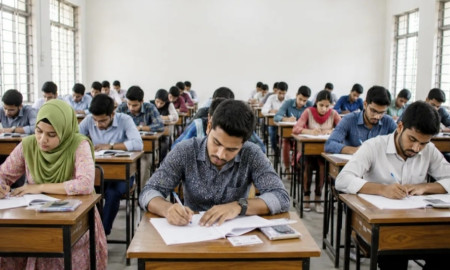
The Supreme Court's Appellate Division on Monday suspended a High Court order that had halted admission tests for the 2026-27 academic session at all public universities in Bangladesh, including Bangladesh University of Engineering and Technology (BUET), medical colleges and Dhaka University.
The decision clears the way for universities to hold their admission tests according to their previously announced schedules, with no remaining legal impediment from the High Court order.
The order was passed on Monday (November 23) by a regular full bench of the Appellate Division, led by Chief Justice Zubayer Rahman Chowdhury.
The state had filed an appeal seeking a stay on the High Court order suspending the admission tests. The matter was listed for hearing before the Appellate Division's regular full bench on Monday.
Earlier, on Thursday (November 19), Justice Md Rezaul Haque, sitting in the Appellate Division's Chamber Court, referred the state's application to the full bench for hearing and fixed November 23 as the date. The Chamber Court, however, did not stay the High Court order at that time.
Attorney General Barrister Md Ruhul Quddus Kajal and Additional Attorney General Barrister Anik R Haque represented the state at the hearing. Senior lawyer Barrister M Abdul Qaiyum and lawyer Barrister Kamrun Nahar Mahmud Dipa appeared for the writ petitioner.
Explaining the Chamber Court's order, Kamrun Nahar Mahmud Dipa and Barrister Abdul Qaiyum Liton said the state had sought a stay on the High Court decision. The Chamber Court did not grant a stay but referred the application to the full bench, fixing November 23 for the hearing.
On Wednesday (November 18), the High Court, following an initial hearing on a writ petition, ordered the suspension of admission tests at all public universities, including BUET, medical colleges and Dhaka University, until December 31. The court also issued a rule in this regard.
The High Court directed authorities to keep online admission application portals open. As an alternative arrangement, it also instructed universities to allow eligible candidates who were sitting supplementary Higher Secondary Certificate (HSC) examinations or seeking re-evaluation of their answer scripts to apply conditionally for admission tests, in line with a decision by the University Grants Commission (UGC).
The state subsequently filed an application with the Appellate Division seeking a stay on the High Court order. After hearing the matter at the Chamber Court on Thursday, the application was referred to the full bench.
The purpose of the writ petition
Lawyer Kamrun Nahar Mahmud filed the writ petition on November 12, alleging that the schedules for public university admission tests had not been coordinated with the publication of HSC re-evaluation results and the results of supplementary examinations for students who failed in two subjects, excluding the fourth subject.
The petition stated that around 450,000 students had failed in two subjects in this year's HSC examinations and had been given an opportunity to sit supplementary examinations. Those examinations are scheduled to be held in December, with the Education Minister saying that their results would be published on December 23.
However, Dhaka University is scheduled to begin its admission process on December 5. As a result, admission tests for three of its faculties are expected to take place before the supplementary examination results are published. This could prevent students who pass the supplementary examinations from taking the admission tests within the scheduled timeframe.
The writ petition also stated that the University Grants Commission had asked public universities to begin their admission tests from January. However, Dhaka University and other universities had not adequately considered the request when setting their admission schedules.
The petition sought directions to coordinate admission test schedules so that all eligible students could have an equal opportunity to sit the public university admission tests after the publication of supplementary examination and answer script re-evaluation results.
 Follow The Daily Campus on Google News